
Marketing my small business has never been more critical than it is in 2026, especially for specialized service providers working with financial advisors. The competitive landscape demands a strategic approach that combines traditional marketing wisdom with modern digital tactics. Whether you're just starting out or looking to refine your existing efforts, understanding the fundamentals of effective marketing can transform how you attract and retain clients in the financial services sector.
Understanding Your Unique Position in the Market
Financial advisors face unprecedented marketing challenges in 2026. Compliance requirements, market saturation, and evolving client expectations create barriers that many struggle to overcome. As someone marketing my small business specifically to this audience, you need to recognize that your value proposition extends beyond simply creating ads.
Your expertise lies in understanding both the technical aspects of advertising and the regulatory environment financial advisors navigate daily. This dual knowledge creates a powerful differentiator in the marketplace.
Identifying Your Ideal Client Profile
Before launching any marketing campaign, define exactly who you serve. Not all financial advisors require the same services or have identical pain points. Consider these characteristics:
- Firm size and structure: Independent RIAs versus larger broker-dealers
- Asset under management thresholds: Advisors managing $50M versus $500M have different needs
- Target client demographics: Advisors serving retirees need different messaging than those targeting young professionals
- Growth stage: Established practices versus newer advisors building their books
Creating detailed client personas helps you craft marketing messages that resonate. When you understand whether you're speaking to a solo advisor struggling to generate leads or a mid-sized firm looking to scale their client acquisition, your messaging becomes significantly more effective.

Building a Foundation for Marketing Success
Marketing my small business requires more than sporadic social media posts or occasional networking. You need infrastructure that supports consistent, measurable efforts. This foundation includes your brand positioning, messaging framework, and the systems that deliver your services.
Crafting Your Core Message
Financial advisors receive countless pitches from marketing vendors. Your message must cut through the noise by addressing specific, measurable outcomes. Instead of promising "more leads," articulate how your ad services deliver qualified prospects who meet specific AUM thresholds or demographic criteria.
Developing a blog about industry trends establishes credibility and demonstrates your expertise in the financial advisory space. Write about topics like compliance-friendly advertising strategies, cost-per-acquisition benchmarks for financial services, or case studies showing ROI from targeted campaigns.
Your messaging should emphasize:
- Compliance expertise specific to financial services advertising
- Proven track record with measurable results
- Understanding of advisor pain points around client acquisition
- Ability to target high-net-worth prospects effectively
| Messaging Element | Weak Approach | Strong Approach |
|---|---|---|
| Value Proposition | "We create great ads" | "We generate qualified leads for advisors managing $50M+" |
| Differentiation | "Years of experience" | "Former compliance officer who understands SEC advertising rules" |
| Results | "Increased visibility" | "Average 23% reduction in cost-per-lead within 90 days" |
Digital Marketing Strategies That Drive Results
When marketing my small business to financial advisors in 2026, digital channels offer unmatched targeting precision and measurable outcomes. However, success requires more than simply running ads or posting content.
Content Marketing for Authority Building
Financial advisors trust experts who demonstrate deep knowledge of their industry. Creating valuable content positions you as that expert. Focus on topics that address real challenges:
- Regulatory changes affecting advisor marketing
- Comparative analysis of advertising platforms for financial services
- Case studies showing specific campaign results
- Best practices for nurturing high-net-worth prospects
The tools for financial advisors ecosystem continues evolving rapidly. Your content should help advisors understand how advertising fits within their broader technology stack, including CRM systems and prospecting tools for financial advisors.
Publishing consistently matters more than volume. Two high-quality articles monthly outperform eight mediocre posts. Each piece should demonstrate your understanding of the financial advisory business and provide actionable insights.
Strategic Paid Advertising
As someone who creates ads for financial advisors, your own advertising strategy serves as a powerful proof of concept. When marketing my small business through paid channels, focus on platforms where decision-makers spend time.
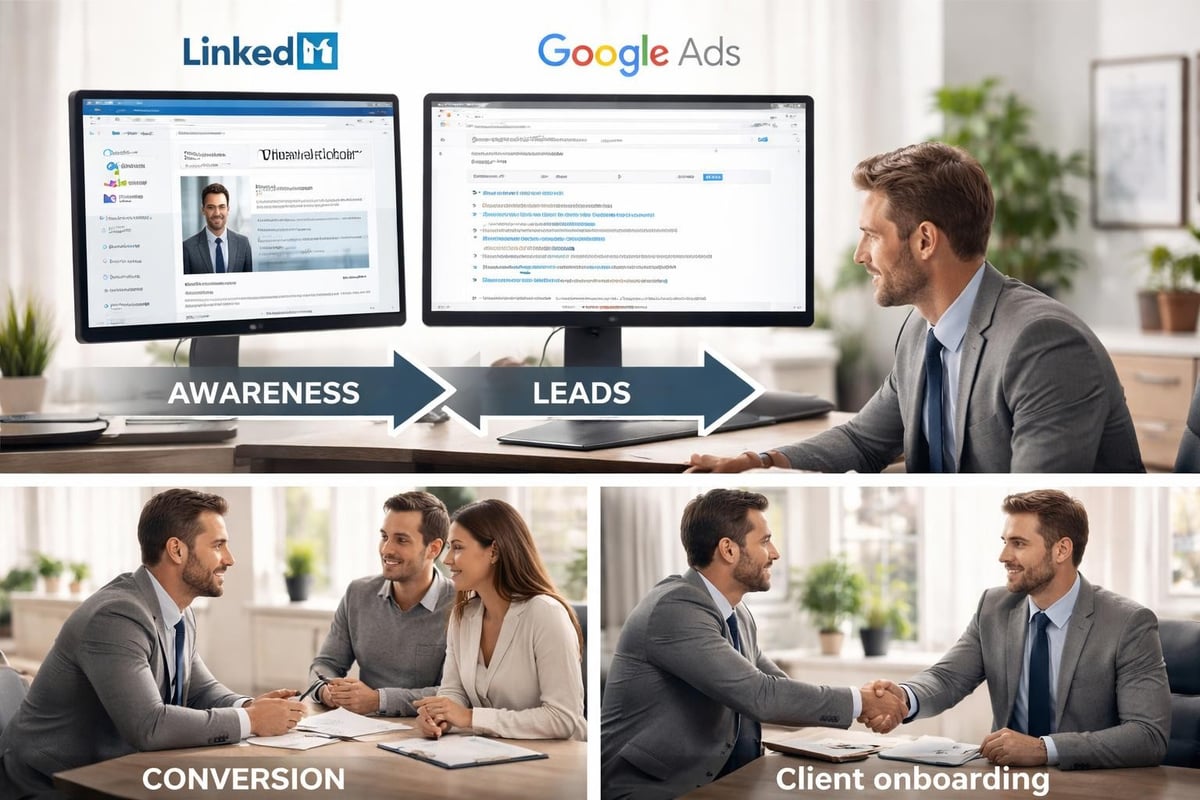
LinkedIn offers exceptional targeting for reaching financial advisors. You can segment by job title, company size, seniority level, and even specific skills or certifications. Create campaigns that speak directly to the advisor's growth stage:
- New advisors need help establishing their initial client base
- Growing practices require systems to scale acquisition efficiently
- Established firms seek optimization and improved ROI metrics
Google Ads work well for capturing intent-driven searches. Advisors actively searching for "compliance-friendly advertising for RIAs" or "lead generation for financial advisors" represent high-intent prospects.
Leveraging Strategic Partnerships and Networking
Marketing my small business doesn't happen in isolation. The financial advisory industry runs on relationships and referrals. Building strategic partnerships amplifies your reach and credibility significantly.
Cultivating Referral Relationships
Identify complementary service providers who work with your target audience but don't compete directly. These might include:
- CRM consultants specializing in RIA CRM implementations
- Financial planning software vendors
- Compliance consultants and attorneys
- Practice management coaches
- Technology integrators building RIA tech stacks
Create formal referral partnerships with clear expectations. When a CRM consultant implements new software for an advisor, that advisor often needs help generating leads to justify the investment. Your ad services become the natural next step.
Offer value before asking for referrals. Provide partner organizations with co-branded educational content, joint webinars, or resources they can share with their clients. This reciprocity builds stronger relationships than simple commission arrangements.
Industry Engagement and Thought Leadership
Financial advisors attend specific conferences, participate in particular online communities, and consume content from recognized industry sources. Your visibility in these spaces directly impacts your credibility.
Consider these engagement strategies:
- Speaking opportunities: Present at regional FPA or NAPFA chapters about advertising strategies
- Podcast appearances: Share insights on shows targeting financial advisors
- Contributing articles: Write for industry publications like Financial Advisor Magazine or InvestmentNews
- Online communities: Provide valuable advice in LinkedIn groups and specialized forums
Marketing strategies for small businesses increasingly emphasize community building over traditional advertising. When marketing my small business, participating authentically in advisor communities creates awareness and trust simultaneously.
Measuring and Optimizing Your Marketing Efforts
Effective marketing requires continuous measurement and optimization. As someone who delivers marketing services to financial advisors, demonstrating your own analytical rigor strengthens your credibility significantly.
Key Metrics to Track
Different marketing activities require different measurement approaches. Track metrics that align with your specific goals:
| Marketing Activity | Primary Metrics | Secondary Metrics |
|---|---|---|
| Content Marketing | Website traffic, time on page | Email signups, content downloads |
| Paid Advertising | Cost per lead, conversion rate | Click-through rate, impression share |
| Email Campaigns | Open rate, click rate | Unsubscribe rate, forward rate |
| Networking/Events | Qualified conversations, follow-up meetings | Business cards collected, LinkedIn connections |
When marketing my small business, I focus on metrics that predict revenue rather than vanity numbers. A thousand LinkedIn followers means nothing if none become clients. Ten engaged prospects who fit your ideal client profile matter exponentially more.
Building a Testing Culture
Marketing effectiveness improves through systematic testing. Even small businesses can implement rigorous testing frameworks:
- A/B test email subject lines to identify messaging that resonates
- Test different landing page headlines to improve conversion rates
- Experiment with ad creative variations to reduce acquisition costs
- Try different content formats to see what drives engagement
Document your tests and results meticulously. This data becomes valuable intellectual property that informs future decisions. When you can show a financial advisor that you've tested 47 different ad variations to optimize their cost per lead, you demonstrate commitment to results.

Automation and Efficiency in Marketing Execution
Marketing my small business efficiently requires leveraging technology to automate repetitive tasks while maintaining personalization where it matters. Financial advisors appreciate efficiency, making this approach doubly important.
Marketing Technology Stack
The right tools amplify your effectiveness without requiring massive budgets. Consider these categories:
Email marketing platforms enable segmented campaigns based on prospect behavior. When an advisor downloads your guide on Facebook advertising for RIAs, they automatically receive a follow-up sequence about your ad creation services.
CRM systems ensure no prospect falls through the cracks. Track every interaction, schedule follow-ups automatically, and maintain detailed notes about each advisor's specific needs and interests. Understanding CRM solutions for financial advisors helps you speak their language.
Social media scheduling tools maintain consistent presence without consuming hours daily. Batch-create content monthly, schedule strategically, and engage authentically when prospects comment or reach out.
Analytics dashboards consolidate data from multiple sources into actionable insights. Rather than logging into five different platforms, see your complete marketing performance at a glance.
Personalization at Scale
Automation doesn't mean generic communication. Use technology to personalize marketing based on advisor characteristics:
- Advisors managing retirement-focused practices receive content about marketing to pre-retirees
- Solo advisors get information about cost-effective advertising strategies
- Growing firms see case studies about scaling client acquisition systems
Marketing automation platforms allow this segmentation without manual effort. When marketing my small business through small business marketing tools, the goal is achieving personal relevance at scale.
Creating Compelling Offers and Lead Magnets
Generic "schedule a consultation" calls-to-action rarely convert sophisticated prospects like financial advisors. Your offers must provide immediate value while demonstrating expertise.
Educational Resources as Conversion Tools
Create lead magnets that address specific pain points:
- Compliance Checklist: "The SEC-Compliant Social Media Advertising Guide for RIAs"
- Cost Benchmarking Report: "What Financial Advisors Actually Pay for Client Acquisition in 2026"
- Strategy Template: "The 90-Day LinkedIn Lead Generation Plan for Fee-Only Advisors"
- Case Study Collection: "How Five RIAs Cut Their Cost-Per-Lead by 40%"
These resources accomplish multiple objectives. They demonstrate expertise, provide genuine value, qualify prospects by interest area, and create natural opportunities for follow-up conversations.
When an advisor downloads your compliance guide, your follow-up email might offer a free audit of their current advertising for regulatory risks. This low-commitment next step moves the relationship forward naturally.
Trial Offers and Risk Reversal
Financial advisors are inherently risk-averse, particularly regarding marketing expenditures with unproven vendors. Structure offers that minimize perceived risk:
- Pilot campaigns with defined budgets and clear success metrics
- Performance guarantees tied to specific outcomes
- Audit-first approaches where you analyze current efforts before proposing solutions
- Phased engagements starting with strategy before execution
The marketing tools for financial advisors landscape includes numerous options. Positioning yourself as a guide who helps advisors navigate these choices rather than just another vendor creates differentiation.
Adapting to Industry Changes and Regulations
Marketing my small business in the financial services sector requires staying current with regulatory developments that affect both your services and your clients' businesses. The SEC, FINRA, and state regulators continuously update advertising and marketing rules.
Compliance as a Competitive Advantage
Most marketing agencies lack expertise in financial services regulations. Your knowledge of advertising rules becomes a significant differentiator. Stay informed about:
- Testimonial and endorsement rules affecting social proof in marketing
- Performance advertising requirements for return illustrations
- Record-keeping obligations for communications and advertisements
- Supervision requirements for social media and digital marketing
When marketing my small business, I emphasize compliance expertise prominently. Financial advisors need partners who prevent regulatory problems rather than creating them. Investing in SEO and content about regulatory topics positions you as that trusted partner.
Market Trend Awareness
Beyond regulations, understanding broader industry trends informs your marketing approach. The shift toward fee-only advice, increasing specialization among advisors, and technology adoption patterns all affect how you market and deliver services.
Read industry publications regularly, attend conferences when possible, and maintain relationships with advisors who provide market insights. This knowledge ensures your marketing remains relevant and your services address current challenges.
Marketing my small business successfully requires combining strategic thinking with consistent execution across multiple channels. For specialized service providers working with financial advisors, this means demonstrating deep industry knowledge while delivering measurable results that drive client growth. The strategies outlined here create a framework for attracting ideal clients and building long-term relationships within the financial advisory community. When you're ready to elevate your advertising efforts and connect with financial advisors seeking compliant, effective client acquisition solutions, Ryan Cook specializes in ad services and ad creation designed specifically for your unique needs.