Financial advisors face an increasingly competitive landscape where traditional lead generation methods no longer deliver the results they once did. The integration of artificial intelligence into marketing strategies has fundamentally changed how advisors identify, engage, and convert prospects into long-term clients. Lead generation AI represents a paradigm shift that combines predictive analytics, behavioral insights, and automation to create a more efficient and effective client acquisition process.
Understanding Lead Generation AI for Financial Services
Lead generation AI leverages machine learning algorithms and advanced data processing to identify potential clients who match specific criteria and demonstrate readiness to engage with financial advisory services. Unlike conventional methods that rely on broad targeting and manual qualification, artificial intelligence analyzes thousands of data points to predict which prospects are most likely to convert.
The technology works by processing information from multiple data sources including social media activity, professional networks, financial news consumption, and online behavior patterns. For financial advisors, this means identifying individuals experiencing life events such as career changes, retirement planning milestones, or wealth accumulation phases.
Key Components of AI-Powered Lead Systems
Modern lead generation AI platforms incorporate several critical elements that work together:
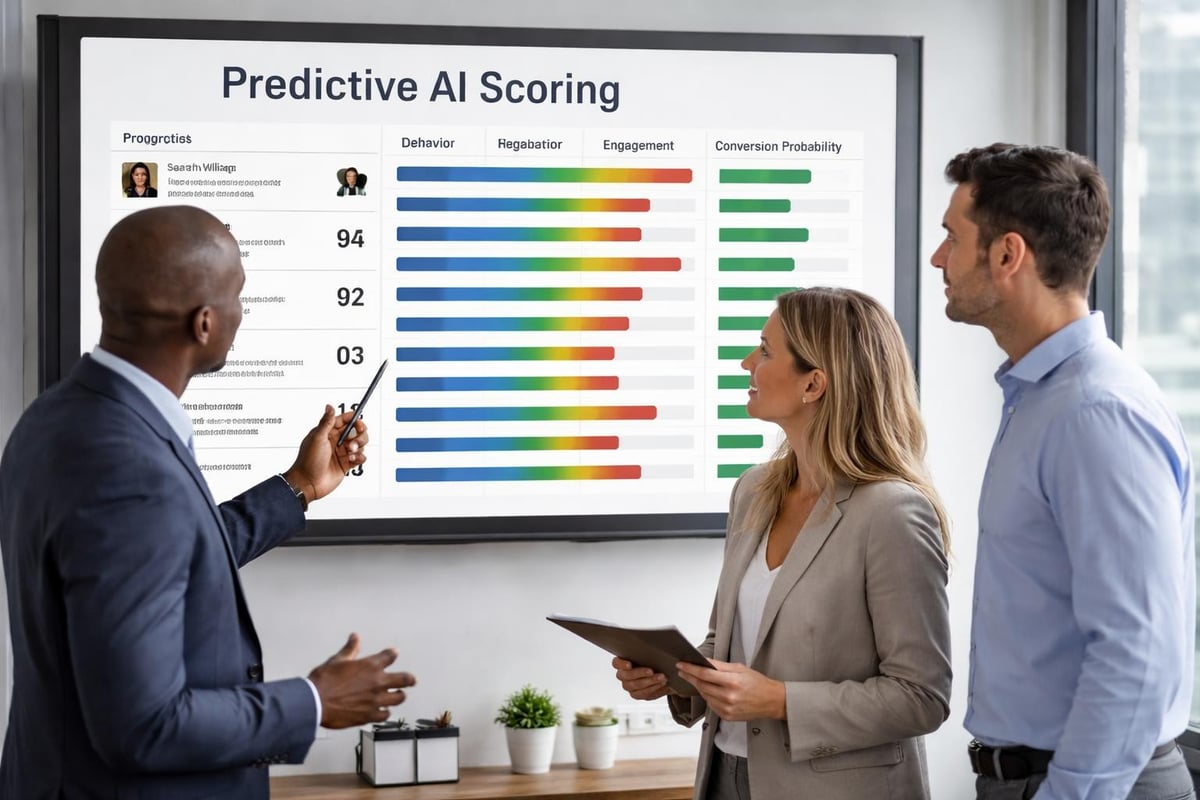
- Predictive scoring algorithms that rank prospects based on conversion likelihood
- Natural language processing for understanding client intent from online interactions
- Automated enrichment systems that gather comprehensive prospect information
- Integration capabilities with existing CRM and marketing tools
- Real-time data updates ensuring information accuracy and relevance
These components create a cohesive ecosystem that continuously learns and improves. The system becomes more accurate over time as it processes additional data and refines its understanding of what constitutes a qualified lead for your specific practice.
Strategic Implementation for Financial Advisor Marketing
Implementing lead generation AI requires a thoughtful approach that aligns with compliance requirements and client expectations in the financial services industry. The first step involves defining your ideal client profile with granular detail, including assets under management thresholds, age ranges, geographic locations, and specific financial planning needs.
Once parameters are established, AI systems can monitor digital channels for signals indicating prospect readiness. Someone researching retirement strategies, comparing 401(k) rollover options, or seeking estate planning information represents a warmer lead than general financial content consumers.
Data Integration and Quality Management
The effectiveness of lead generation AI depends heavily on data quality and integration depth. Financial advisors should ensure their systems connect with:
- Professional databases containing verified contact information and career details
- Wealth indicators that signal investable assets and financial capacity
- Behavioral tracking platforms monitoring content engagement and research patterns
- Compliance-approved data sources meeting regulatory standards for client acquisition
- CRM systems that centralize prospect information and interaction history
Effective strategies for generating high-quality online business leads emphasize the importance of combining multiple data streams. A prospect identified through a single channel provides limited insight, but someone appearing across professional networks, financial content platforms, and wealth-related searches demonstrates genuine interest.
Personalization and Targeting Capabilities
One of the most powerful aspects of lead generation AI is its ability to create hyper-personalized outreach at scale. The technology analyzes prospect behavior, preferences, and characteristics to craft messaging that resonates with individual needs and concerns.
For financial advisors, this means moving beyond generic investment pitches to addressing specific life situations. An AI system might identify a prospect who recently changed employers and serves content about 401(k) rollover strategies, while simultaneously targeting another prospect nearing retirement age with Social Security optimization information.
Behavioral Trigger Automation
| Trigger Type | AI Detection Method | Recommended Action |
|---|---|---|
| Job Change | LinkedIn updates, professional database monitoring | 401(k) rollover consultation offer |
| Home Purchase | Property records, mortgage applications | Estate planning and insurance review |
| Business Sale | SEC filings, business news aggregation | Wealth management and tax strategies |
| Inheritance | Probate records, trust formations | Legacy planning and investment guidance |
| Promotion/Raise | LinkedIn announcements, salary databases | Increased contribution strategies |
These triggers enable timely outreach when prospects are most receptive to financial advice. The AI continuously monitors for these events across your target demographic, ensuring no opportunity goes unnoticed.
Compliance Considerations in AI Lead Generation
Financial advisors operate under strict regulatory frameworks that govern client communications and data usage. Lead generation AI systems must be configured to respect these boundaries while maximizing effectiveness.
Privacy regulations such as GDPR, CCPA, and financial industry-specific rules require transparent data collection and usage practices. AI platforms should provide audit trails showing how prospect information was obtained and processed. Advisors need systems that allow prospects to opt out of communications and ensure data security throughout the lead nurturing process.
Marketing tools for financial advisors must balance sophistication with compliance, ensuring that automated outreach follows disclosure requirements and maintains appropriate professional standards.
Building Trust Through E-E-A-T Principles
Trust signals in lead generation have become increasingly important as prospects evaluate advisor credibility online. Lead generation AI can support Experience, Expertise, Authoritativeness, and Trustworthiness by:
- Identifying opportunities to showcase client success stories and testimonials
- Monitoring online reputation across review platforms and social channels
- Surfacing relevant credentials and certifications in prospect communications
- Tracking thought leadership opportunities in target prospect communities
The technology helps advisors build digital presence that demonstrates competence and reliability, factors that significantly influence prospect decision-making.

Measuring ROI and Performance Optimization
Understanding the financial impact of lead generation AI requires tracking metrics beyond simple lead volume. Financial advisors should monitor conversion rates, client lifetime value, and acquisition costs to assess system effectiveness.
Advanced analytics within AI platforms provide insights into which data sources, messaging approaches, and timing strategies produce the best results. A prospect contacted within 24 hours of displaying interest signals converts at significantly higher rates than those reached after several days.
Key Performance Indicators
- Cost per qualified lead: Total AI platform investment divided by marketing-qualified leads
- Lead-to-client conversion rate: Percentage of AI-generated leads becoming paying clients
- Assets under management per lead source: Average AUM from clients acquired through different channels
- Time to conversion: Days from initial contact to signed advisory agreement
- Engagement score trends: How prospect interaction patterns predict conversion likelihood
Regular performance reviews allow for system refinement. If AI-generated leads from professional network sources convert at higher rates than those from content engagement, advisors can adjust targeting parameters accordingly.
Integration with Existing Marketing Technology
Lead generation AI delivers maximum value when seamlessly connected to the broader marketing and sales technology ecosystem. For financial advisors, this typically includes CRM systems, email marketing platforms, calendar scheduling tools, and client portal software.
Prospecting tools for financial advisors work best when they communicate bidirectionally with other systems. When a prospect books a consultation through an AI-triggered email sequence, that information should automatically update the CRM, trigger calendar invitations, and initiate onboarding workflows.
The most effective implementations create a unified prospect experience where each interaction builds on previous ones. AI tracks which content a prospect consumed, which emails they opened, and which web pages they visited, enabling advisors to reference this context during conversations.
Technology Stack Considerations
Building an effective RIA tech stack requires selecting tools that integrate smoothly:
- Lead generation AI platform as the prospecting engine
- CRM system for relationship management and pipeline tracking
- Marketing automation for email sequences and content delivery
- Analytics dashboard consolidating performance metrics
- Compliance monitoring ensuring regulatory adherence across communications
This connected infrastructure eliminates manual data entry, reduces errors, and provides comprehensive visibility into the client acquisition process from initial identification through onboarding.
Advanced Applications and Future Trends
The evolution of lead generation AI continues accelerating with new capabilities emerging regularly. Agentic commerce and AI agents represent the next frontier, where autonomous systems can engage in sophisticated multi-turn conversations with prospects, answer questions, and qualify interest without human intervention.
For financial advisors, this means AI assistants capable of handling initial consultations, gathering financial information, and identifying specific planning needs before scheduling advisor meetings. These systems free advisors to focus on relationship-building and strategic planning rather than preliminary qualification.
Generative AI integration enables dynamic content creation tailored to individual prospect profiles. Rather than sending static email templates, systems can generate personalized investment insights, market commentary, and planning recommendations based on each prospect's unique situation and interests.

Voice and Conversational Interfaces
Voice-activated lead qualification represents an emerging application where prospects can interact with AI systems through natural speech. This technology lowers friction in the early engagement stages, allowing busy professionals to explore advisory services while commuting or multitasking.
Conversational AI platforms analyze speech patterns, sentiment, and specific language choices to assess prospect seriousness and pain points. A prospect asking detailed questions about tax-loss harvesting signals different needs than someone making general retirement inquiries.
Selecting the Right AI Tools and Platforms
The market offers numerous AI lead generation tools with varying capabilities, pricing models, and specializations. Financial advisors should evaluate platforms based on several criteria:
| Evaluation Factor | What to Look For | Why It Matters |
|---|---|---|
| Financial Services Focus | Industry-specific data sources and compliance features | Ensures regulatory adherence and relevant targeting |
| Integration Capabilities | API connections to popular RIA CRMs and tools | Prevents data silos and manual processes |
| Data Quality | Source verification and update frequency | Directly impacts lead accuracy and conversion |
| Scalability | Ability to grow with practice expansion | Protects long-term technology investment |
| Support and Training | Onboarding resources and ongoing assistance | Accelerates time to value and maximizes ROI |
Advisors should request demonstrations using their specific ideal client criteria and evaluate how well each platform identifies and scores relevant prospects. The best systems provide transparent scoring explanations, allowing advisors to understand why particular leads received high rankings.
Practical Implementation Strategies
Successful lead generation AI deployment follows a structured approach that minimizes disruption while maximizing learning:
Start with a focused segment rather than attempting to target all potential clients simultaneously. Choose one specific demographic such as pre-retirees with $500,000+ in investable assets or business owners approaching succession planning.
Establish baseline metrics by measuring current lead generation performance including sources, costs, conversion rates, and timeline. This provides comparison points for assessing AI system impact.
Run parallel campaigns maintaining some traditional lead generation efforts while testing AI-driven approaches. This controlled comparison reveals performance differences and builds confidence in new methods.
Monitor results weekly during initial implementation, adjusting targeting parameters and messaging based on early feedback. AI systems require several weeks to accumulate sufficient data for optimization, so patience during the learning phase is essential.
AI tools for financial advisors extend beyond lead generation to encompass portfolio management, client communication, and operational efficiency. Advisors who embrace these technologies position their practices for sustainable growth in an increasingly digital marketplace.
Content Strategy Enhancement Through AI
Lead generation AI doesn't just identify prospects; it also informs content creation by revealing what topics, formats, and messaging resonate with target audiences. By analyzing which content drives engagement and conversions, advisors can refine their thought leadership and educational marketing.
The technology tracks content consumption patterns across prospect segments, identifying which retirement planning topics interest pre-retirees versus which investment strategies appeal to mid-career accumulators. This intelligence guides blog topics, video scripts, webinar themes, and social media content.
Dynamic content delivery uses AI to serve different content to different prospect segments automatically. Someone researching 529 plans sees education funding content, while another prospect interested in business succession receives relevant case studies and strategies.
This personalized approach increases engagement rates significantly compared to one-size-fits-all content distribution. Prospects feel understood and valued when communications address their specific situations and concerns.
Building Sustainable Lead Generation Systems
Long-term success with lead generation AI requires viewing it as an evolving system rather than a set-and-forget solution. Markets change, prospect behavior shifts, and regulatory environments evolve, necessitating regular system reviews and adjustments.
Quarterly performance analyses should examine:
- Which prospect sources deliver highest-quality leads
- How scoring algorithms perform against actual conversion outcomes
- Whether targeting parameters still align with ideal client profiles
- What new data sources or capabilities have become available
- How competitors are using AI in their acquisition strategies
Advisors should also invest in team training to ensure staff members understand how to interpret AI insights and recommendations. The technology augments human judgment rather than replacing it, so cultivating data literacy across the organization maximizes value.
Lead generation AI represents a fundamental shift in how financial advisors identify and engage prospective clients, combining data intelligence with automation to create more efficient and effective acquisition processes. By implementing these systems thoughtfully with attention to compliance, integration, and continuous optimization, advisors can build sustainable growth engines that scale with their practices. When you're ready to transform your lead generation approach with targeted ad services designed specifically for financial advisors, Ryan Cook delivers the expertise and execution to help you connect with your ideal clients consistently and compliantly.