
Lead marketing has become the cornerstone of sustainable growth for financial advisors in 2026. The practice of systematically attracting, capturing, and nurturing potential clients transforms cold prospects into warm relationships ready for conversion. For financial advisory practices, where trust and credibility drive client acquisition, implementing a structured approach to lead generation and management creates predictable revenue streams and reduces reliance on sporadic referrals. Understanding the mechanics of effective lead marketing enables advisors to build robust client pipelines that fuel long-term business expansion.
Understanding Lead Marketing Fundamentals
Lead marketing encompasses the entire process of identifying potential clients, capturing their information, and guiding them through a journey that culminates in a business relationship. Unlike traditional outbound marketing that broadcasts messages to broad audiences, lead marketing focuses on attracting individuals already experiencing financial challenges or opportunities your services address.
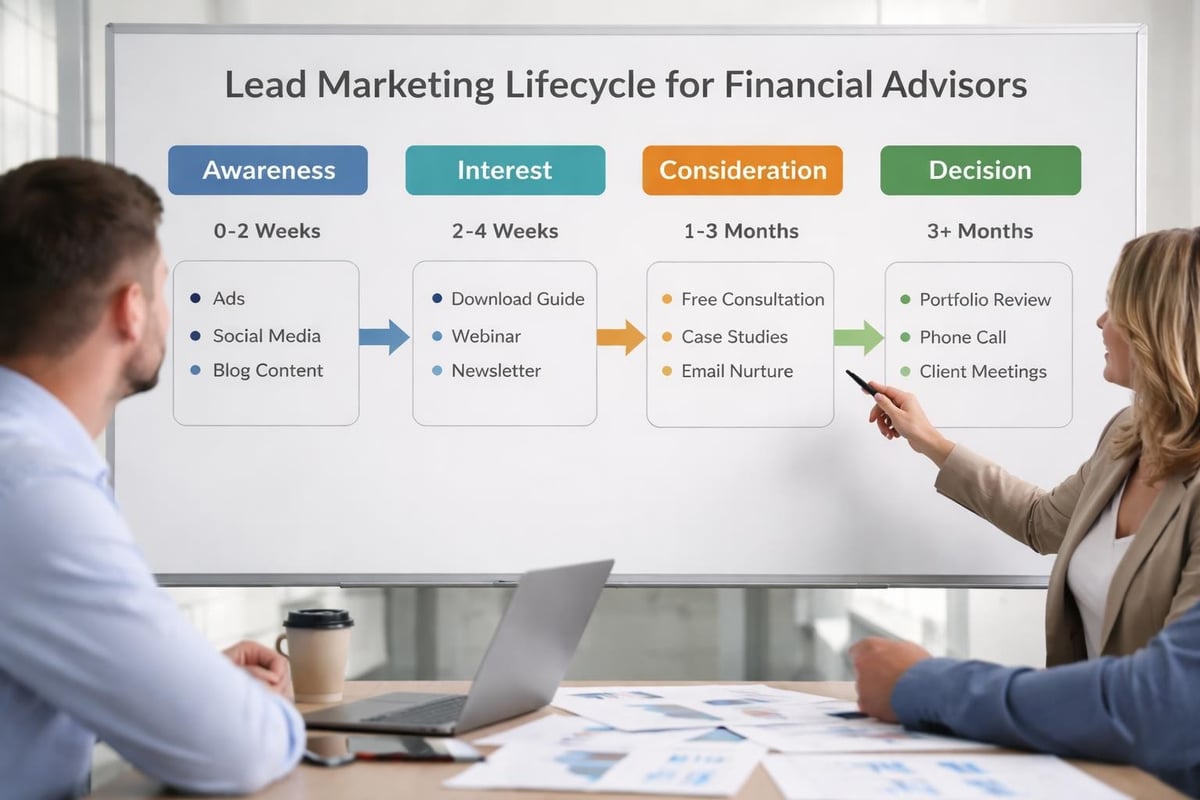
The Lead Marketing Lifecycle
The lead marketing process follows distinct stages that mirror the client decision-making journey. Awareness marks the initial phase where prospects discover your practice through content, advertisements, or referrals. Interest develops as they engage with your resources and educational materials. Consideration occurs when prospects actively evaluate your services against alternatives. Finally, decision represents the conversion point where leads become clients.
For financial advisors, this lifecycle typically extends longer than traditional B2C sales cycles. Prospects need time to build trust, understand your value proposition, and feel confident entrusting their financial futures to your guidance. Effective lead generation strategies recognize these extended timelines and provide nurturing touchpoints throughout each stage.
Strategic Lead Generation for Financial Advisors
Lead generation forms the foundation of successful lead marketing campaigns. Financial advisors must deploy multiple tactics simultaneously to maintain consistent prospect flow and protect against channel-specific disruptions.
Content Marketing as a Lead Magnet
High-value content attracts prospects searching for financial guidance and establishes your expertise before initial contact. Creating comprehensive resources that address specific client pain points positions your practice as the logical solution provider.
Consider developing:
- Retirement planning calculators customized for specific professions
- Tax optimization guides for high-income earners
- Estate planning checklists for business owners
- Market commentary videos explaining complex economic trends
- Educational webinars on timely financial topics
Each content piece should include clear calls-to-action that encourage prospects to exchange contact information for deeper insights. The importance of content marketing continues growing as consumers conduct extensive independent research before engaging financial professionals.
Paid Advertising Campaigns
Targeted advertising accelerates lead marketing efforts by placing your services directly in front of qualified prospects. For financial advisors in 2026, sophisticated targeting capabilities enable precision matching between your ideal client profile and ad delivery.
| Platform | Best For | Average Cost Per Lead | Conversion Timeline |
|---|---|---|---|
| Google Ads | High-intent searches | $150-$300 | 2-4 weeks |
| Professional targeting | $200-$400 | 4-8 weeks | |
| Demographic targeting | $100-$250 | 3-6 weeks | |
| YouTube | Educational content | $125-$275 | 4-10 weeks |
Professional ad services combine creative development with ongoing optimization to maximize return on advertising spend. Testing multiple ad variations, refining audience parameters, and analyzing conversion data separates profitable campaigns from budget drains.
Leveraging Digital Tools for Lead Capture
Modern CRM solutions for financial advisors streamline lead marketing by automating capture, scoring, and nurturing processes. Integration between your website, advertising platforms, and client management systems ensures no prospect falls through organizational cracks.
Installing web forms at strategic conversion points creates multiple entry opportunities for prospects at different readiness levels. Simple newsletter subscriptions capture early-stage awareness, while retirement analysis requests indicate stronger purchase intent. Live chat and web forms provide immediate engagement options that modern consumers expect.
Nurturing Leads Through the Decision Journey
Capturing contact information represents only the beginning of effective lead marketing. The nurturing phase determines whether prospects advance toward becoming clients or gradually disengage from your communications.
Email Marketing Sequences
Automated email sequences deliver consistent value while keeping your practice top-of-mind throughout extended decision timelines. Segmenting leads based on their interests, assets, or life stage enables personalized messaging that resonates with specific needs.
Effective email nurture sequences include:
- Welcome series introducing your team and philosophy
- Educational content addressing common financial concerns
- Client success stories demonstrating real outcomes
- Invitation to consultation or discovery meetings
- Periodic market insights and firm updates
Testing subject lines, send times, and content formats optimizes engagement rates. Financial advisors should aim for open rates above 25% and click-through rates exceeding 3% to indicate healthy list engagement.
Multi-Channel Touchpoint Strategy
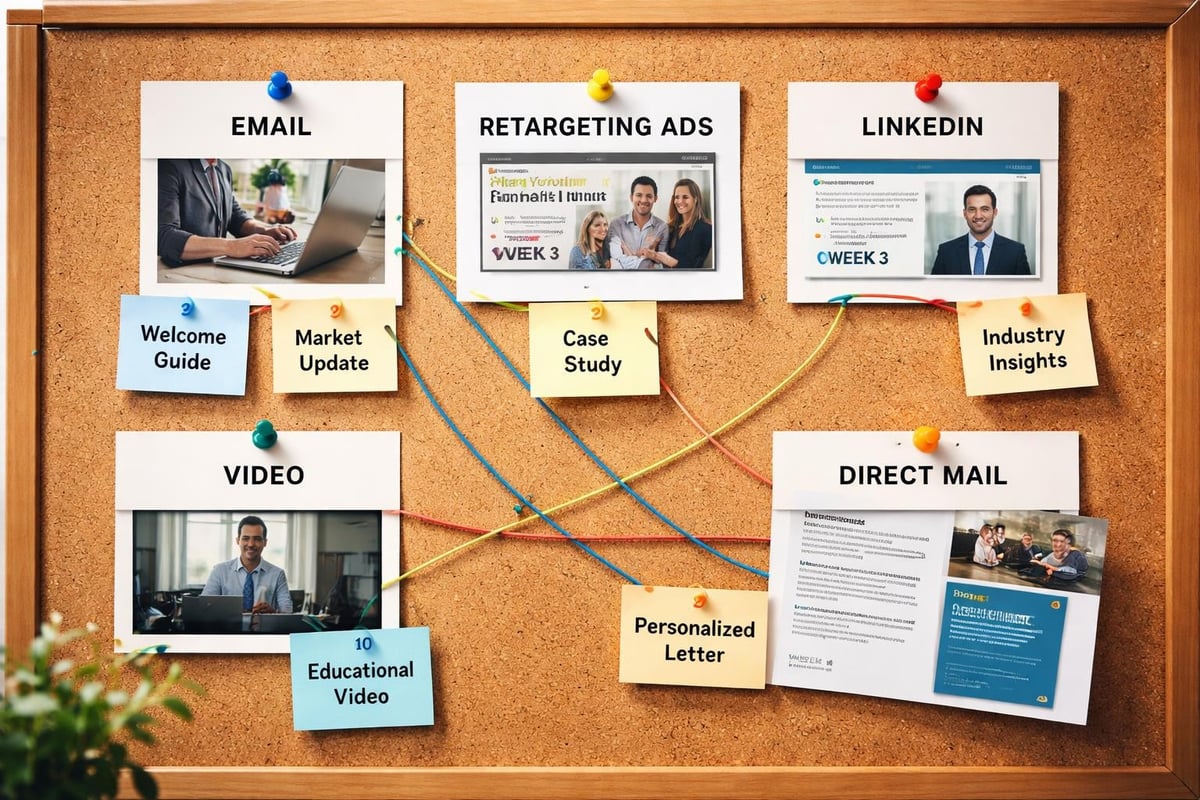
Relying exclusively on email limits lead marketing effectiveness in 2026. Prospects interact with brands across multiple channels, and maintaining presence throughout their preferred platforms strengthens relationship development.
Consider incorporating:
- Retargeting ads that remind website visitors about your services
- LinkedIn outreach connecting with professional prospects
- Video messages providing personalized introductions
- Direct mail standing out in increasingly digital communications
- SMS updates for time-sensitive market insights
The use of retargeting and social selling creates multiple impressions that build familiarity and trust over time. Coordinating messages across channels reinforces key themes while respecting prospect communication preferences.
Lead Scoring and Qualification
Not all leads possess equal potential for conversion. Lead marketing efficiency improves dramatically when you prioritize prospects demonstrating stronger purchase signals and greater alignment with your ideal client profile.
Implementing Lead Scoring Systems
Lead scoring assigns numerical values to prospect behaviors and characteristics, enabling objective prioritization of follow-up efforts. Actions indicating stronger intent receive higher scores, while demographic mismatches reduce overall ratings.
High-value scoring criteria:
- Downloaded retirement planning guide: +15 points
- Attended live webinar: +25 points
- Visited pricing page: +20 points
- Opened five consecutive emails: +10 points
- Assets above minimum threshold: +30 points
Disqualifying criteria:
- Outside target geographic area: -50 points
- Below asset minimum: -30 points
- Job title indicating no decision authority: -20 points
Leads surpassing predetermined score thresholds trigger direct sales outreach, while lower-scoring prospects remain in automated nurture sequences. This systematic approach ensures advisors invest personal time where conversion probability justifies the effort.
The Importance of Speed-to-Lead
Response time dramatically impacts conversion rates in lead marketing. Research consistently shows that contacting leads within five minutes of inquiry increases conversion likelihood by over 400% compared to 30-minute response times.
Financial advisors should implement systems ensuring immediate acknowledgment of lead submissions, even if detailed consultation scheduling occurs later. Automated text confirmations, instant email responses, and calendar booking links provide immediate engagement that meets modern expectations.
Optimizing Lead Marketing Through Analytics
Data-driven decision-making separates high-performing lead marketing from guesswork. Tracking key metrics throughout the lead lifecycle reveals optimization opportunities and justifies marketing investments.
Essential Lead Marketing Metrics
| Metric | Definition | Target Range | Why It Matters |
|---|---|---|---|
| Cost Per Lead | Total spend ÷ leads generated | $100-$300 | Determines channel efficiency |
| Lead-to-Client Rate | Clients ÷ total leads | 5-15% | Measures qualification accuracy |
| Average Deal Value | Total revenue ÷ new clients | Varies by niche | Calculates allowable acquisition cost |
| Marketing ROI | Revenue ÷ marketing spend | 3:1 minimum | Validates program profitability |
| Time-to-Conversion | Days from lead to client | 45-120 days | Informs cash flow planning |
Regular analysis of these metrics identifies underperforming channels deserving reallocation or optimization. A comprehensive RIA tech stack integrates analytics across platforms, providing holistic performance visibility.
A/B Testing for Continuous Improvement
Systematic testing removes guesswork from lead marketing optimization. Variables worth testing include landing page headlines, form field requirements, email subject lines, ad creative variations, and call-to-action phrasing.
Implementing one test at a time with statistically significant sample sizes produces reliable insights. Even small improvements compound over time-a 10% increase in conversion rate at each funnel stage doubles overall lead-to-client efficiency.
Advanced Lead Marketing Tactics
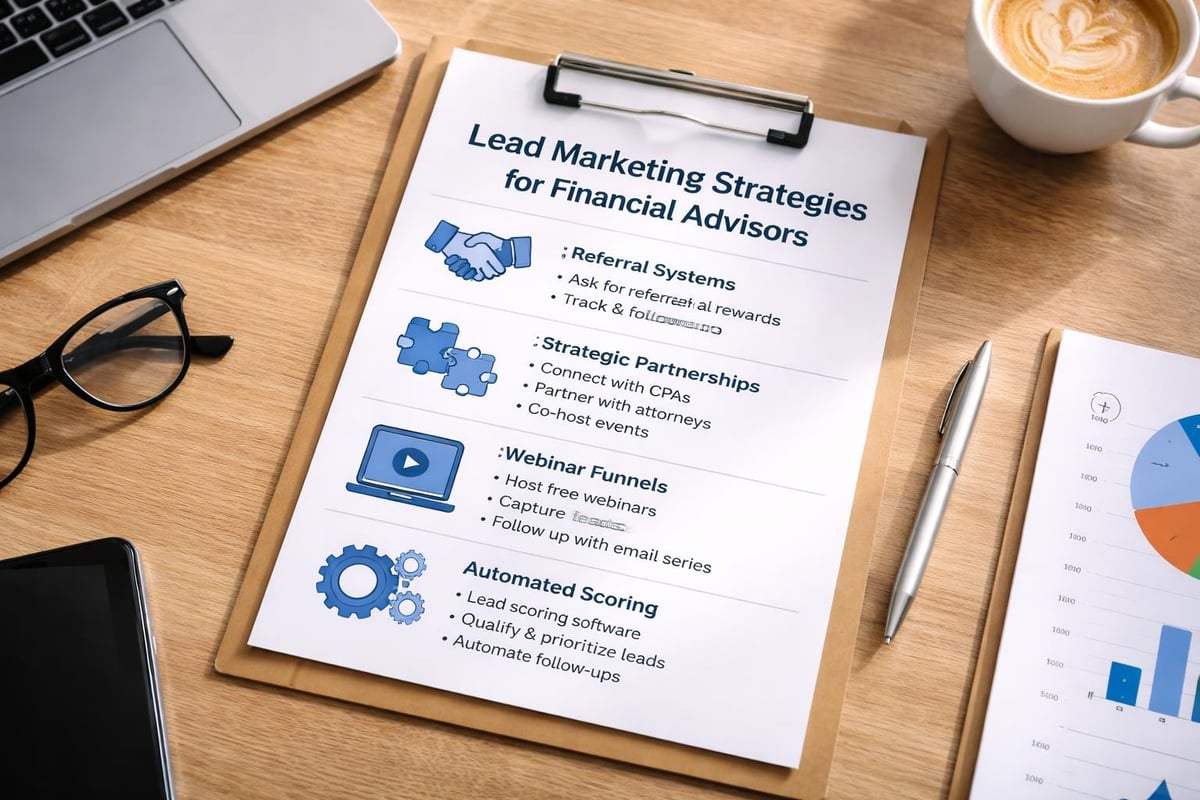
Beyond foundational tactics, sophisticated lead marketing incorporates strategies that amplify results while building competitive advantages.
Referral Partnership Networks
Strategic partnerships with complementary professionals create consistent lead sources without ongoing advertising costs. CPAs, estate attorneys, business brokers, and insurance agents regularly encounter individuals needing comprehensive financial advice.
Building effective referral networks requires:
- Identifying professionals serving your target client profile
- Developing mutually beneficial referral agreements
- Creating simple referral processes with tracking
- Providing excellent service that reflects positively on referral sources
- Reciprocating referrals when appropriate opportunities arise
Asking for referrals from satisfied clients remains one of the highest-converting lead sources, though many advisors neglect systematic approaches to referral generation.
Webinar-Based Lead Funnels
Educational webinars combine content marketing with interactive engagement, creating high-quality leads while demonstrating expertise. Topics addressing immediate concerns or timely opportunities generate stronger registration rates.
Promoting webinars through paid advertising, email lists, and social media creates multiple touchpoints with prospects before they attend. Post-webinar follow-up sequences nurture attendees toward consultation scheduling, while recorded versions extend content value indefinitely.
Account-Based Marketing for High-Value Prospects
When targeting business owners, executives, or ultra-high-net-worth individuals, account-based lead marketing concentrates resources on specific high-value prospects rather than broad audiences. Personalized outreach, customized content, and multi-stakeholder engagement strategies suit complex, high-stakes decisions.
This approach requires deep research into prospect situations, pain points, and decision processes. While more resource-intensive per lead, conversion rates and deal values typically justify the investment for advisors serving sophisticated clientele.
Technology Integration for Lead Marketing Efficiency
Modern lead marketing demands technological infrastructure that automates repetitive tasks while maintaining personalization at scale. AI tools for financial advisors now handle everything from content creation to lead scoring with minimal human intervention.
Essential Technology Components
Marketing automation platforms orchestrate multi-channel campaigns, trigger behavioral responses, and track prospect engagement across touchpoints. Integration with your CRM for financial advisors ensures seamless handoffs between marketing and sales activities.
Landing page builders enable rapid testing of different value propositions, designs, and conversion elements without technical expertise. Creating enticing lead magnets matched to specific audience segments improves capture rates while providing genuine value.
Analytics dashboards consolidate data from advertising platforms, website behavior, email engagement, and CRM activity into unified reporting. This visibility enables quick identification of performance trends and emerging opportunities.
Mobile Optimization Imperatives
Over 60% of financial research now occurs on mobile devices, making mobile-responsive design non-negotiable for lead marketing success. Prioritizing mobile communication extends beyond website design to include text-friendly contact options and mobile-optimized forms.
Testing lead capture processes on various devices and screen sizes prevents technical friction that causes prospect abandonment. Simplified forms, click-to-call buttons, and mobile-friendly scheduling tools reduce conversion barriers.
Compliance Considerations in Lead Marketing
Financial advisors must navigate regulatory requirements that govern marketing communications and client acquisition. Lead marketing tactics should incorporate compliance reviews ensuring all materials meet SEC, FINRA, or state regulatory standards.
Key compliance areas include:
- Testimonial usage requiring specific disclosures
- Performance claims demanding substantiation
- Privacy policies protecting prospect data
- Record retention for all marketing communications
- Supervision procedures for digital marketing activities
Working with compliance professionals during campaign development prevents costly violations and protects your practice reputation. Documentation of approval processes demonstrates good-faith compliance efforts during regulatory examinations.
Building Sustainable Lead Marketing Systems
The most successful financial advisors treat lead marketing as systematic business operations rather than sporadic promotional efforts. Consistent lead generation, methodical nurturing, and continuous optimization create predictable growth trajectories.
Allocating dedicated budgets, establishing clear processes, and assigning accountability for lead marketing activities ensures sustained focus amid daily operational demands. Marketing tools for financial advisors provide the infrastructure supporting these systematic approaches.
Regular review of lead sources, conversion rates, and program economics identifies opportunities for reallocation and expansion. What works today may decline tomorrow as platforms evolve and competition intensifies, demanding ongoing adaptation.
Lead marketing represents the bridge between your expertise and the clients who need it. By implementing structured approaches that attract qualified prospects, nurture relationships over extended timelines, and optimize based on performance data, financial advisors build sustainable practices resistant to market volatility and referral fluctuations.
Mastering lead marketing transforms practice growth from unpredictable to systematic, creating consistent pipelines of qualified prospects ready for your advisory services. Building these capabilities requires both strategic expertise and tactical execution across multiple channels. Ryan Cook specializes in creating high-performing ad campaigns and marketing services designed specifically for financial advisors, combining compliance-aware creative development with data-driven optimization that delivers measurable results. Whether you're launching your first lead generation campaign or refining existing efforts, professional guidance accelerates your path to predictable client acquisition.