Email marketing is evolving faster than ever, and Salesforce stands at the heart of this transformation for digital campaigns worldwide. In 2026, marketers are navigating new challenges, from achieving true personalization and seamless automation to driving measurable ROI in a landscape shaped by changing consumer expectations.
Mastering salesforce email marketing is the key to unlocking higher engagement, better conversion rates, and lasting customer loyalty. This article delivers actionable, up-to-date strategies to help you maximize your email marketing success with Salesforce in 2026.
We will explore seven essential strategies—including advanced personalization, automation, AI, analytics, compliance, integration, and deliverability—to ensure your campaigns stay ahead in a rapidly changing digital world.
The Evolution of Salesforce Email Marketing in 2026
The landscape of salesforce email marketing has transformed dramatically as we approach 2026. Marketers are navigating a fast-paced world shaped by new technology, changing consumer expectations, and a growing focus on data-driven strategies. Understanding this evolution is essential for building campaigns that truly resonate and deliver measurable results.
The Changing Email Marketing Landscape
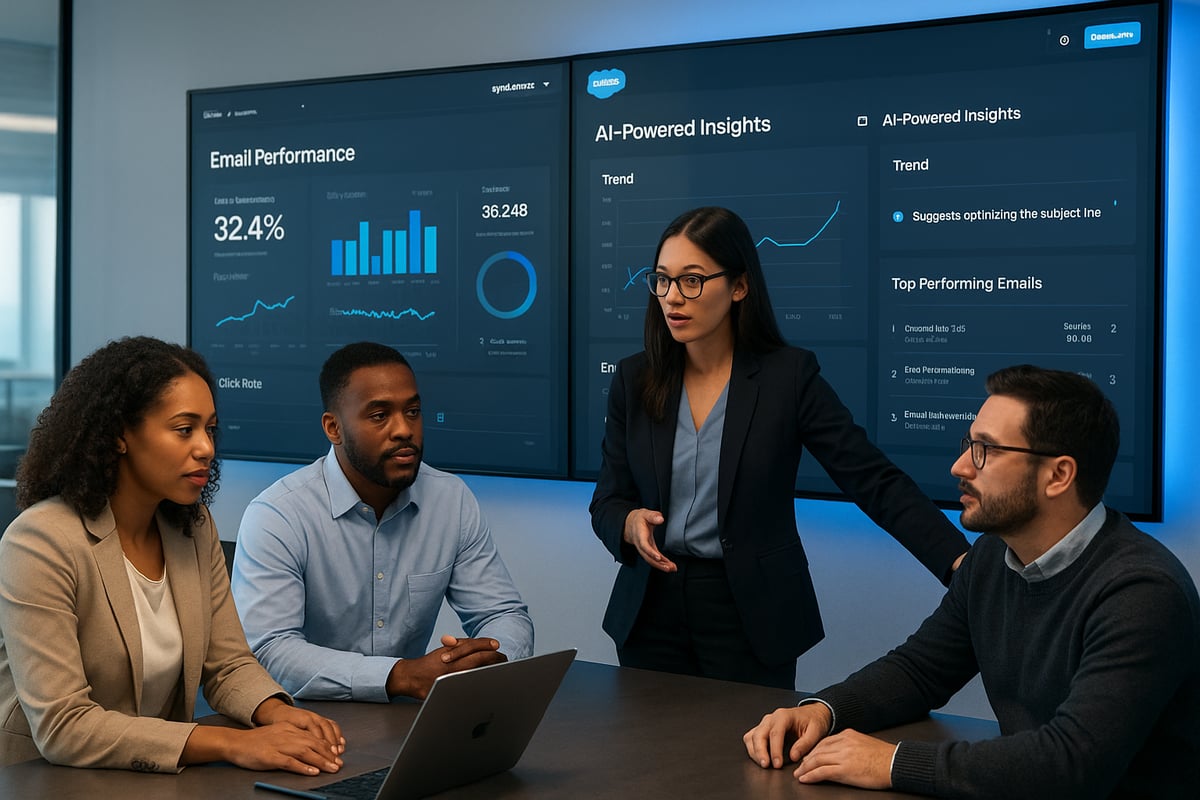
Recent years have seen a revolution in salesforce email marketing. Artificial intelligence now powers dynamic personalization and automation, allowing marketers to deliver hyper-relevant messages to every customer segment. Consumers expect timely, tailored content, and brands are responding by using behavioral data to adapt messaging in real time.
From 2024 to 2026, industry reports show open rates holding steady while click-through rates are climbing, a sign that smarter targeting is working. At the same time, privacy regulations continue to expand, requiring marketers to be even more strategic with data usage. The shift toward omnichannel experiences means email must work seamlessly alongside SMS, social, and web, making integrated campaigns the new standard.
Salesforce’s Position as a Market Leader
Salesforce has solidified its status as a global leader in salesforce email marketing, thanks to ongoing innovation and a robust suite of features. The Salesforce Marketing Cloud and Pardot now offer advanced AI-driven tools, improved segmentation, and seamless integration with third-party applications. This empowers marketers to build smarter, more cohesive campaigns.
With a dominant share in both CRM and marketing automation, Salesforce continues to set industry benchmarks. Its ability to connect with other platforms and unify customer data remains unmatched. For a deeper look at recent advancements, see the Salesforce Marketing Cloud Updates 2024-2025, which highlight AI integration and next-generation marketing strategies.
Key Challenges for Marketers in 2026
Despite these advances, marketers face significant challenges in salesforce email marketing. Data silos can hinder a unified customer view, while strict compliance requirements add layers of complexity. Content fatigue is growing, making it harder to capture attention in crowded inboxes.
Deliverability remains a top concern, especially as spam filters become more sophisticated. Managing large-scale, segmented campaigns requires specialized skills and tools. Industry surveys consistently show that outdated email strategies are a leading cause of stagnant engagement and missed opportunities, prompting brands to rethink their approach.
Opportunities for High-Impact Email Campaigns
The future of salesforce email marketing is bright for those willing to embrace innovation. AI and automation offer unprecedented opportunities to personalize every touchpoint and optimize send times. Data integration enables advanced segmentation, making messaging more relevant than ever.
Brands leveraging Salesforce’s analytics tools report significant improvements in ROI and customer retention. Case studies highlight how data-driven strategies can transform campaign outcomes. The strategies in this guide will help marketers harness these tools, address key challenges, and unlock the full potential of their email programs.
7 Must-Know Salesforce Email Marketing Strategies for 2026
Staying ahead in salesforce email marketing requires mastering the latest strategies. In 2026, the landscape is defined by AI, automation, hyper-personalization, and seamless integration. The following seven strategies are essential for elevating your campaigns, driving engagement, and maximizing ROI.
1. Advanced AI-Powered Personalization
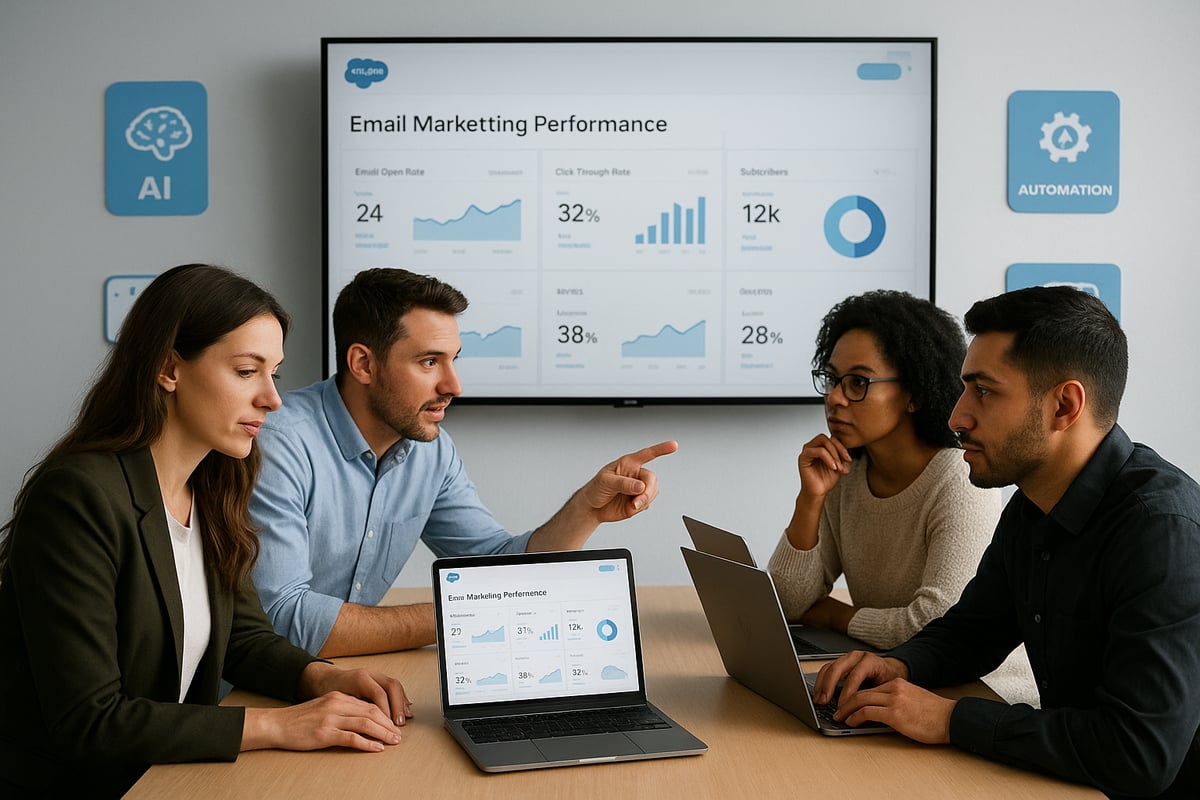
In 2026, advanced AI transforms salesforce email marketing into a dynamic, data-driven discipline. Salesforce Einstein leverages machine learning to analyze customer behavior, purchase history, and engagement patterns. This enables hyper-personalized content, such as predictive product recommendations and dynamic subject lines, tailored to each recipient.
Automated send times are a game-changer. By utilizing AI to analyze optimal engagement windows, marketers can ensure messages land in inboxes at the right moment. According to recent Salesforce data, brands using Einstein-powered personalization experienced a 27% increase in open rates and a 34% boost in click-through rates.
A leading retailer, for example, employed Einstein to segment audiences based on browsing habits. The result was a 40% lift in conversions due to relevant, timely offers. However, personalization must be balanced with respect for privacy. Marketers should maintain transparent data practices and honor preferences to build trust.
Best practices include:
- Regularly updating consent and privacy settings.
- Testing dynamic content blocks for effectiveness.
- Monitoring AI recommendations for alignment with brand values.
For a deeper dive into Salesforce's latest AI-driven marketing solutions, including autonomous AI agents and advanced personalization, explore the Salesforce Marketing Cloud Next Announcement.
2. Hyper-Segmentation and Audience Targeting
Hyper-segmentation is a cornerstone of effective salesforce email marketing in 2026. Salesforce Data Cloud enables real-time audience segmentation, allowing marketers to create micro-segments based on demographics, behaviors, and customer lifecycle stages.
This strategy ensures that each message resonates with its intended audience. For example, segmenting by purchase frequency or engagement level delivers more relevant offers and content. Data shows that segmented campaigns generate 58% higher conversion rates compared to non-segmented blasts.
Salesforce’s segmentation tools have evolved to support complex, multi-dimensional segments. Marketers can now sync these segments across all channels, ensuring consistent messaging in email, SMS, and social campaigns.
Tips for ongoing refinement:
- Regularly review and update audience criteria.
- Test new segment combinations for performance lifts.
- Analyze behavioral triggers to refine targeting.
By leveraging advanced segmentation, salesforce email marketing teams can deliver the right message to the right audience, every time.
3. Omnichannel Automation and Journey Mapping
Modern salesforce email marketing relies on orchestrating unified customer journeys. Salesforce Journey Builder allows marketers to design seamless experiences that integrate email, SMS, push notifications, and social channels.
Automation triggers can be set based on customer actions or lifecycle events, such as a new signup, abandoned cart, or milestone anniversary. This ensures timely, relevant communication throughout the customer journey.
Consider this example workflow:
- A new subscriber receives a welcome email.
- If they engage, a personalized offer follows via SMS.
- If inactive, a re-engagement email is triggered after seven days.
Metrics for journey effectiveness include engagement rate, conversion rate, and retention. Brands using Journey Builder have reported a 36% increase in customer retention and a 25% reduction in churn.
To maximize results:
- Map journeys for each key customer segment.
- Continuously test and optimize triggers.
- Integrate feedback loops for real-time adjustments.
Omnichannel automation ensures salesforce email marketing campaigns feel personal and timely, improving customer loyalty.
4. Real-Time Analytics and Predictive Insights
Real-time analytics are essential for optimizing salesforce email marketing strategies. Salesforce’s built-in dashboards provide instant visibility into campaign performance, including open rates, click-throughs, and conversions.
AI-driven predictive insights take this a step further. By analyzing historical data, Salesforce can forecast the best send times, content types, and frequencies for each segment. This enables marketers to proactively adjust campaigns for maximum impact.
Automated A/B and multivariate testing allows for continuous improvement. Marketers can quickly identify high-performing subject lines, images, or calls to action, then scale those elements across campaigns.
Industry benchmarks show that organizations leveraging predictive analytics see a 32% improvement in overall email ROI. Actionable insights from Salesforce analytics can inform everything from creative strategy to audience targeting.
Key analytics best practices:
- Monitor dashboards daily for anomalies or trends.
- Use predictive models to inform campaign planning.
- Set up automated alerts for key KPIs.
Predictive analytics empowers salesforce email marketing teams to act on data in real time and stay ahead of the competition.
5. Enhanced Deliverability and Compliance Management
Deliverability and compliance are top priorities for salesforce email marketing professionals. Salesforce provides robust tools to monitor inbox placement, sender reputation, and spam risk, ensuring messages reach their intended recipients.
Compliance with evolving privacy regulations, such as GDPR and CCPA, is non-negotiable. Salesforce offers features like double opt-in, consent tracking, and customizable preference centers to help marketers stay compliant. Brands using these tools see fewer spam complaints and higher list quality.
Deliverability benchmarks indicate that campaigns adhering to best practices achieve inbox placement rates above 95%. To maintain high deliverability:
- Regularly clean and validate email lists.
- Use authenticated domains and proper sender protocols.
- Monitor feedback loops for spam or bounce issues.
Salesforce’s compliance automation and reporting features simplify regulatory management, reducing risk and building customer trust. By prioritizing deliverability and compliance, salesforce email marketing teams safeguard their reputation and results.
6. Deep Integration with CRM and Third-Party Tools
Integration is the backbone of effective salesforce email marketing in 2026. Connecting Marketing Cloud with Sales Cloud, Service Cloud, and third-party platforms enables a unified, 360-degree view of each customer.
Data synchronization ensures that marketing, sales, and service teams operate from a single source of truth. This facilitates automated lead scoring, nurturing, and seamless handoff between departments.
Real-world integrations include syncing Salesforce with platforms like HubSpot, Marketo, and ActiveCampaign. AppExchange add-ons extend functionality, offering advanced analytics, creative tools, or industry-specific solutions for both B2B and B2C organizations.
Benefits of deep integration:
- Enhanced personalization with unified data.
- Streamlined workflows and reduced manual effort.
- Improved attribution and reporting.
Salesforce email marketing is most powerful when it leverages the full ecosystem of connected tools, driving efficiency and effectiveness across the business.
7. Content Automation and Dynamic Creative Optimization
Content automation is revolutionizing salesforce email marketing. Salesforce’s AI-powered tools can generate, personalize, and optimize content at scale, reducing manual workload and enabling greater creativity.
Dynamic blocks and modular templates allow marketers to deliver personalized messages to thousands of recipients without sacrificing brand consistency. Data shows that campaigns using dynamic content see engagement rates increase by up to 41%.
Brands using content automation achieve faster campaign deployment and more consistent messaging. For example, a global e-commerce company used modular templates to personalize offers by region, resulting in a 33% boost in click-throughs.
Best practices for content automation:
- Balance automation with human oversight to maintain brand voice.
- Test creative assets regularly for performance.
- Use analytics to optimize content blocks and templates.
With dynamic creative optimization, salesforce email marketing teams can deliver high-impact campaigns that resonate with every audience segment.
Choosing the Right Salesforce Email Marketing Tools for Your Business
Selecting the ideal salesforce email marketing tools for your organization in 2026 is a pivotal decision. The right platform can empower teams to streamline campaigns, enhance personalization, and maximize ROI. With evolving technology and growing business needs, it is essential to evaluate your options with care.

Evaluating Native vs. Third-Party Solutions
When considering salesforce email marketing, you will encounter both native platforms like Marketing Cloud and Pardot, and a range of third-party add-ons from the AppExchange. Native solutions offer deep integration, robust automation, and unified data management within the Salesforce ecosystem. Third-party tools may provide specialized features, flexibility, or cost advantages for niche requirements.
Here is a quick comparison:
| Feature | Native (Marketing Cloud, Pardot) | Third-Party Add-ons |
|---|---|---|
| Integration Depth | Seamless | Varies |
| Feature Updates | Regular, Salesforce-driven | Depends on provider |
| Scalability | High | Depends on tool |
| Support | Centralized via Salesforce | Separate vendor support |
For a detailed look at Salesforce’s competitive strengths in CRM and marketing automation, see this Salesforce vs. Redtail CRM comparison.
Key Selection Criteria and Best Practices
To ensure your salesforce email marketing stack aligns with your objectives, begin by mapping out your business needs. Are you focused on B2B or B2C? Do you require advanced automation, granular analytics, or strict compliance features? Consider scalability, user experience, and integration with existing systems.
Use this checklist when evaluating tools:
- Identify marketing goals and KPIs
- Assess compliance requirements
- Review automation and personalization capabilities
- Test ease of integration with Salesforce CRM
- Compare pricing and total cost of ownership
Learn from organizations that have successfully implemented salesforce email marketing by documenting their selection process and lessons learned. Regularly review your stack to ensure it continues to meet evolving needs.
Future-Proofing Your Email Marketing Stack
As the digital landscape shifts, future-proofing your salesforce email marketing stack is crucial. Flexibility and scalability are vital for adapting to new trends and customer expectations. Prioritize platforms that support emerging technologies such as AI-driven analytics and dynamic content optimization.
Stay informed about the latest Salesforce features by exploring the Salesforce Marketing Cloud Spring ’25 Release Highlights. Invest in ongoing training and support to keep your team up to date and agile. By proactively monitoring industry developments, you can ensure your marketing stack remains a powerful engine for growth.
Action Plan: Implementing Salesforce Email Marketing Strategies in 2026
To unlock the full potential of salesforce email marketing, start with a focused action plan. Begin by defining your campaign objectives and setting measurable KPIs to track progress.
Break down your strategy into manageable steps:
- Map out timelines for rolling out each tactic.
- Regularly review analytics and adjust based on data-driven insights.
- Invest in ongoing learning with Salesforce resources, such as the Salesforce Marketing Cloud Features Spring Release ’23.
Encourage your team to test, optimize, and never stop innovating. Take action today to transform your salesforce email marketing results and build lasting customer engagement.

After exploring how Salesforce’s cutting edge email marketing strategies can boost personalization, automation, and ROI for financial advisors, you might be wondering how to put these insights to work for your business. If you’re ready to elevate your campaigns, streamline your ad creation, and truly engage your audience in 2026, let’s take the next step together. You don’t have to navigate these changes alone—I can show you how our tailored solutions make the most of Salesforce’s latest tools. Curious to see what’s possible for your firm? Schedule a Free Demo and discover how we can help you transform your email marketing results.