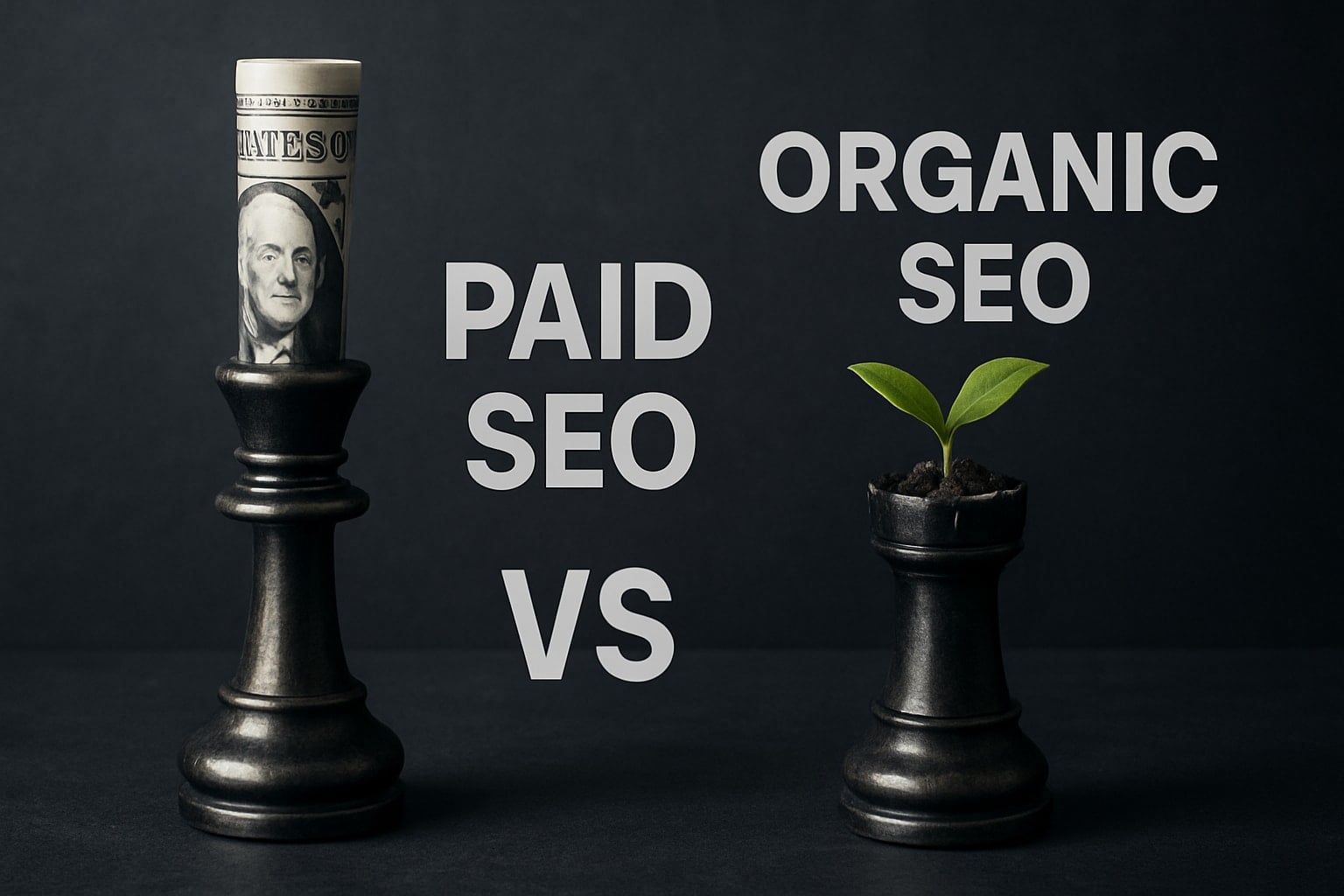
In 2026, the battle for online visibility is more intense than ever as companies fight for every click and customer. The question facing every business leader is clear: should you invest more in paid seo or focus on building organic growth?
This article will guide you through the strengths, weaknesses, and future outlook of both paid seo and organic strategies. You will discover how each approach impacts your costs, results, and long-term digital presence.
We will define both strategies, compare their returns, and explore when each method offers the greatest value. With new technologies and trends rapidly changing the field, you will gain clarity to make informed decisions that position your business for success in 2026.
Are you ready to make the strategic choice that could define your business’s digital future?
Understanding Paid SEO and Organic SEO in 2026
In 2026, businesses face a rapidly changing search environment. To stay competitive, understanding the nuances of paid seo and organic SEO is essential. Each approach offers unique strengths and requires distinct strategies, especially as artificial intelligence and automation reshape digital marketing.
Defining Paid SEO
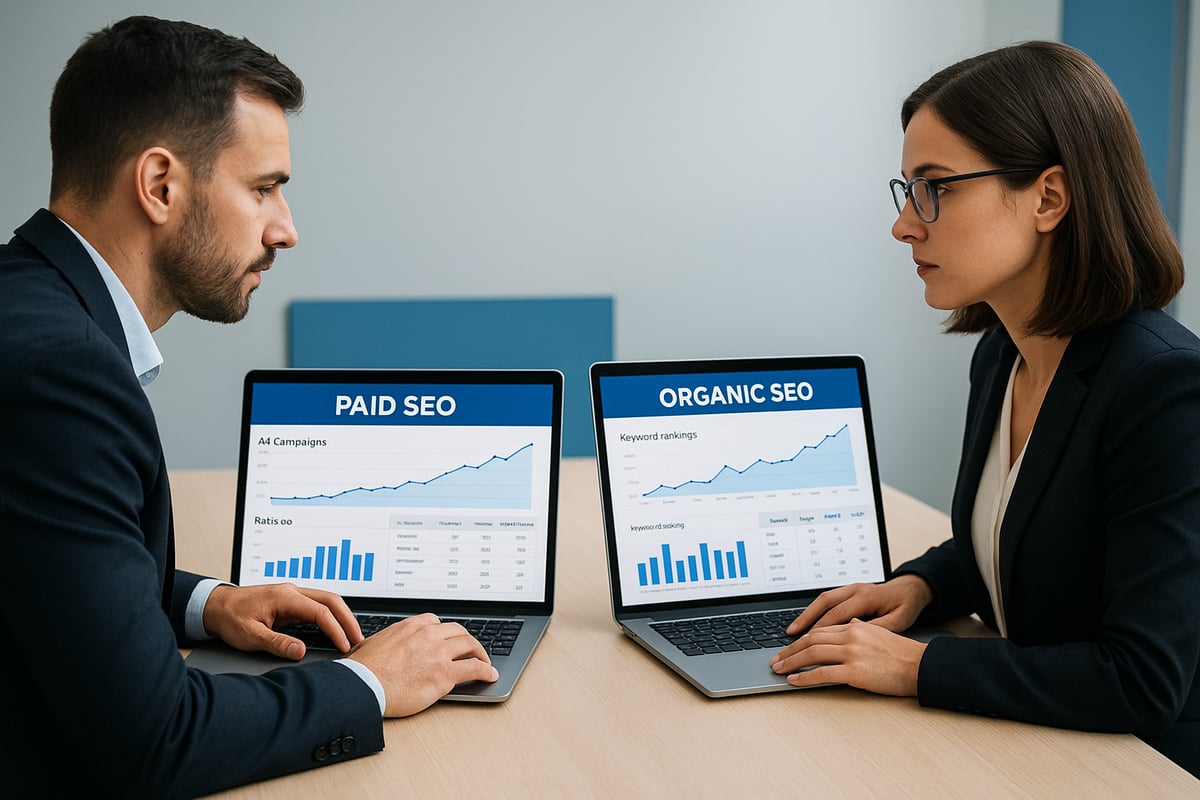
Paid seo refers to the practice of purchasing advertisements on search engines to gain prominent placement in search results. Platforms like Google Ads and Bing Ads remain dominant, but by 2026, emerging platforms are also gaining traction. Businesses engage in keyword bidding, where they compete to have their ads appear for specific search queries, with costs determined by pay-per-click (PPC) models.
The role of AI and automation has grown, allowing marketers to automate bidding, optimize campaigns, and analyze performance in real time. For example, Google commands over 83% of global search traffic, making its paid placements highly sought after. Paid seo ensures immediate visibility at the very top of the search engine results pages (SERPs), but this visibility only lasts as long as the budget supports the campaigns. The integration of AI tools in SEO workflows further enhances efficiency and competitiveness.
Defining Organic SEO
Organic SEO focuses on earning unpaid rankings in search results through relevance and authority. This approach involves on-page optimization (content and keywords), off-page strategies (backlinks), and technical SEO (site structure, speed, mobile-friendliness). Google uses more than 200 ranking signals to determine which pages appear in search results.
Recent updates, such as Google's “helpful content” policy, emphasize valuable, user-first material. While organic search results appear below paid seo ads, users often trust these listings more. The value of organic SEO compounds over time, with rankings that can persist and grow with consistent effort. Businesses investing in organic strategies benefit from long-term visibility and a steady stream of organic traffic, making it a sustainable option for many.
Key Similarities and Overlaps
Both paid seo and organic SEO aim to drive targeted traffic to websites. They rely on in-depth keyword research and optimization to match user search intent. Understanding customers, their needs, and how they search is fundamental to both strategies.
Data and analytics play a crucial role, enabling marketers to track performance and make informed decisions. Integrated approaches, where paid seo and organic SEO work together, often yield the best results. For instance, using paid data can inform organic content strategies, while organic insights can refine paid targeting. Ultimately, both methods strive to boost SERP visibility and increase brand awareness.
Key Differences: Paid SEO vs Organic SEO
While both strategies share common goals, their differences are significant. Paid seo ads occupy the top positions in SERPs, while organic listings appear below. The cost structures differ: paid seo relies on ongoing PPC budgets, whereas organic SEO requires investment in content and site optimization.
Audience targeting is more granular in paid seo, with options for demographic and behavioral segmentation. Organic SEO targets audiences through persona-driven content. Results from paid seo are immediate but end when the budget is depleted; organic SEO builds gradually but can last for years. Trust is another key factor—users often perceive organic results as more credible, though paid seo delivers higher conversions for ready-to-buy users.
| Aspect | Paid SEO | Organic SEO |
|---|---|---|
| SERP Position | Top (ads) | Below ads (organic) |
| Cost Structure | Ongoing PPC | Content/optimization |
| Speed | Immediate | Gradual |
| Longevity | Ends with budget | Can persist for years |
| Trust | Lower | Higher |
Each approach offers distinct advantages and challenges, making it crucial to choose the right mix for your business goals.
Cost, ROI, and Resource Comparison
Understanding the differences in cost, return on investment, and resource needs is essential for businesses evaluating paid seo and organic approaches. Here, we break down the financial and operational aspects that can impact your digital marketing decisions.

Cost Structures Explained
Paid seo operates on a pay-per-click (PPC) or cost-per-impression model, where you pay each time someone clicks your ad. Costs can escalate quickly, especially for competitive keywords. For instance, sectors like insurance or mortgages often see CPCs reach $40 to $55 per click, making budgeting crucial.
In contrast, organic SEO involves investing in content creation, technical optimization, and ongoing management. While there is no direct cost for each click, expenses accumulate through hiring content strategists, writers, and technical experts. Over time, organic efforts may offer lower average costs per acquisition, but require upfront and ongoing resource allocation.
A quick comparison:
| Expense Type | Paid SEO | Organic SEO |
|---|---|---|
| Immediate Payment | Yes (per click) | No |
| Ongoing Investment | Budget-dependent | Content/tech-driven |
| Cost Volatility | High | Moderate |
Both methods have unique cost implications, shaping your overall strategy.
Return on Investment (ROI) Analysis
Paid seo delivers rapid results, making it ideal for businesses seeking quick wins or immediate visibility. The trade-off is higher initial costs, but you gain instant data to optimize campaigns in real-time. ROI can be measured quickly, but attribution is often complex due to multi-touch customer journeys.
Organic SEO, in contrast, is a slow build. It may take months to see significant results, but the returns can compound year over year. According to industry reports, 61% of marketers say organic SEO provides the best inbound results. The ROI for organic is typically higher in the long term, but requires patience and consistent effort.
For both strategies, tracking and attribution require robust analytics, and blending both approaches can help maximize return on marketing spend.
Resource Requirements and Scalability
Paid seo requires skilled campaign managers, real-time monitoring, and optimization tools. Automation and AI have made campaign management more efficient, yet human oversight remains vital. Scaling paid efforts is straightforward, as increasing budget directly boosts reach and impressions.
Organic SEO demands a team of content strategists, writers, and technical SEO specialists. Scaling here depends on available resources, such as time and expertise. Automation tools can streamline tasks, but quality content and technical integrity remain essential. For a detailed look at essential tools, see this Marketing tools for financial advisors guide, which covers options supporting both paid seo and organic strategies.
Ultimately, resource allocation should align with business goals and growth plans.
Hidden Costs and Risks
With paid seo, risks include click fraud, ad fatigue, and ever-increasing CPCs. If campaigns are poorly optimized, budgets can be depleted quickly without meaningful results. Additionally, platform policy changes may impact performance or targeting.
Organic SEO faces its own risks, notably algorithm updates that can alter rankings overnight and content decay that reduces traffic over time. The competitive landscape also intensifies, requiring ongoing vigilance and adaptation. A single algorithm shift can undo months of progress, making proactive monitoring essential.
Both paid seo and organic efforts carry hidden costs and risks, emphasizing the importance of a balanced, well-informed approach.
Performance, Speed, and Longevity of Results
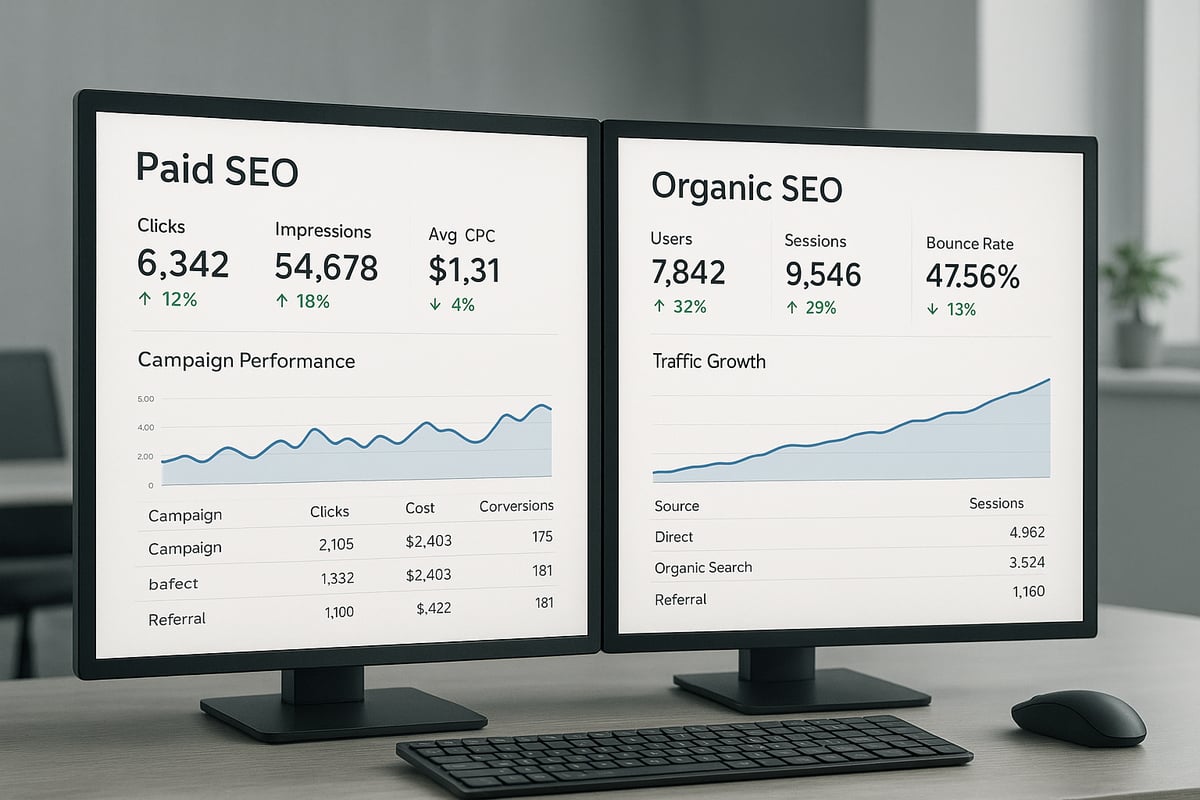
The real test for any search marketing strategy is how it performs over time. Businesses want to know which approach delivers faster results, sustains growth, and adapts best to change. In this section, we break down the core performance factors of paid SEO and organic SEO, so you can make the best decision for your business in 2026.
Time to Results: Fast vs. Slow Burn
When businesses launch a new campaign, time to impact is critical. Paid SEO delivers immediate visibility as soon as your ads go live. This makes it the go-to choice for urgent campaigns, like product launches or flash sales. In contrast, organic SEO is a slow burn. It can take two to twelve months to see significant ranking improvements.
For companies with short-term objectives, paid SEO ensures instant traffic. However, for those willing to invest in the long haul, organic SEO steadily builds momentum and authority. Setting realistic expectations about timelines is essential, so you choose the right strategy for your goals.
Conversion Rates and User Behavior
Understanding how audiences interact with each approach is key. Paid SEO tends to have higher conversion rates for transactional searches. For example, average conversion rates hover around 3.75 percent, with click-through rates between 4 and 6 percent. This is because users clicking paid ads are often ready to buy.
Organic SEO captures users earlier in the buyer journey. These users are researching, comparing, and building trust. While organic results get more clicks overall, paid SEO wins when immediate conversions matter. The psychology behind clicks is clear—ads attract action-driven users, while organic listings foster credibility.
Longevity and Sustainability
The biggest difference between paid SEO and organic SEO is how long the results last. With paid SEO, traffic stops when your ad spend ends. There is no residual benefit once your budget is depleted. Organic SEO, by contrast, delivers compounding value. Rankings and traffic can persist for years if you maintain your content and technical site health.
According to Organic search drives 53.1% of web traffic, organic strategies remain the backbone of long-term digital growth. Evergreen blog content, for example, can generate leads and sales long after its initial publication—an advantage paid SEO cannot match.
Flexibility, Testing, and Optimization
Both paid SEO and organic SEO offer ways to refine your strategy, but their flexibility differs. Paid SEO is highly agile: you can A/B test ads, landing pages, and offers in real time. This rapid feedback loop lets you optimize for performance quickly.
Organic SEO adapts more slowly. Changes to content or site structure take time to reflect in rankings. However, paid SEO can be used to test new keywords before investing in organic content. For businesses willing to iterate, combining both methods allows for continuous improvement and adaptability to evolving trends.
Impact of Algorithm and Policy Changes
The digital landscape is never static. Paid SEO is subject to changes in platform rules, such as ad approval processes or targeting restrictions. Organic SEO faces frequent algorithm updates, like Google’s helpful content and E-E-A-T guidelines.
Both strategies require ongoing vigilance. Sudden changes can impact visibility or cost efficiency overnight. To future-proof your marketing, monitor trends, diversify your tactics, and stay informed about industry updates. In 2026, resilience comes from being ready to pivot, whether you rely on paid SEO, organic SEO, or both.
Strategic Use Cases: When Paid SEO or Organic SEO Wins
Choosing between paid seo and organic methods can feel overwhelming, especially with the digital landscape constantly evolving. The right approach depends on your business goals, resources, and the competitive environment you face. Let’s break down when each strategy shines, how they can work together, and what real businesses are doing to succeed.

When to Choose Paid SEO
Paid seo delivers immediate results, making it ideal for businesses launching new products or entering highly competitive markets. If you need instant visibility, such as during seasonal promotions or flash sales, paid seo ensures your brand appears at the top of search results without delay.
Key scenarios where paid seo excels:
- New product or service launches needing rapid awareness
- Highly saturated industries where organic rankings are tough to secure quickly
- Testing new offers, landing pages, or keywords before a larger rollout
- Time-sensitive campaigns with clear start and end dates
However, relying solely on paid seo can quickly exhaust budgets, particularly in industries with high cost per click. It’s best leveraged for short-term goals or as a complement to broader digital marketing efforts.
When to Choose Organic SEO
Organic SEO is the foundation for long-term digital growth. If your aim is to establish trust, authority, and consistent traffic without ongoing ad spend, organic strategies are essential. Organic SEO works best for brands looking to build a reputation, target informational queries, or compete with limited resources.
When organic SEO wins:
- Building lasting brand authority and earning user trust
- Targeting audiences in research or discovery phases
- Outranking competitors without escalating ad costs
- Achieving sustainable growth over months or years
For example, local businesses can use content and Google Business Profile optimization to dominate regional searches. While organic results require patience, their compounding effect often makes them more cost-effective over time compared to continual paid seo investment.
Combining Paid and Organic for Maximum Impact
The most resilient strategies blend paid seo with organic efforts, maximizing both immediate and enduring results. By appearing in both ad and organic slots, brands increase their credibility and capture users at multiple points in the buyer journey.
Integrated approaches include:
- Using paid seo to fill gaps during algorithm updates or organic ranking drops
- Sharing data between paid and organic teams to refine keyword targeting
- Mapping customer journeys to attribute leads to both channels
Research on the complementarity between paid and organic installs highlights how these channels amplify each other’s effectiveness when coordinated strategically. Blending both ensures you adapt quickly while building long-term value.
Industry-Specific Considerations
Different industries face unique challenges when weighing paid seo against organic. In high-cost sectors like finance or insurance, paid seo can become prohibitive, making organic strategies more attractive for sustainable growth. E-commerce businesses often blend paid product ads with organic category optimization to dominate search results.
| Industry | Paid SEO Viability | Organic SEO Potential |
|---|---|---|
| Finance | High CPC, risky | High authority wins |
| E-commerce | Blended approach | Category SEO crucial |
| Local Service | Local ads useful | GBP optimization key |
With over 9.5 million eCommerce sites in the US, competition is fierce, and a combined approach is often necessary to stand out.
Case Studies and Real-World Examples
Many businesses shift between paid seo and organic focus as their needs and budgets evolve. For instance, a startup might use paid seo for rapid initial growth, then gradually invest more in organic to lower costs and build authority.
Brands launching new products often combine both tactics: paid seo generates immediate attention, while organic content supports long-term discovery and retention. Marketers consistently recommend integrated, strategically aligned approaches, as they provide flexibility and resilience in the face of changing algorithms and market dynamics.
The Future of SEO: Trends and Predictions for 2026
The digital marketing landscape is shifting rapidly, and the future of paid seo and organic strategies hinges on emerging technologies, changing user expectations, and evolving search engine algorithms. As we look ahead to 2026, understanding these trends will be essential for businesses aiming to stay visible and competitive.
AI, Automation, and Search Engine Evolution
Artificial intelligence is fundamentally reshaping paid seo and organic optimization. Automated bidding, AI-driven ad copy, and smart targeting are now standard features in leading ad platforms. In organic SEO, AI tools generate content outlines, suggest keywords, and optimize technical elements in real time.
Voice and visual search are gaining traction, pushing brands to adapt their paid seo campaigns for conversational and image-based queries. New SERP features, like interactive panels and AI-generated summaries, are altering how users interact with search results. For a deeper dive into how AI is transforming strategies, see this Rise of AI-first SEO analysis.
Algorithm Updates and User Experience
Search engines are prioritizing user experience more than ever. Google’s E-E-A-T framework—Experience, Expertise, Authoritativeness, Trustworthiness—guides both paid seo and organic ranking factors. Zero-click searches are becoming common, with knowledge panels and instant answers often replacing traditional clicks.
User engagement metrics like dwell time and bounce rate are now critical signals. Frequent algorithm updates, sometimes daily, require businesses to constantly refine both paid seo and organic tactics. Staying agile and prioritizing helpful, user-first content is crucial for sustained visibility.
Shifts in Consumer Behavior and Search Intent
Consumer trust is evolving, with skepticism toward ads increasing, yet paid seo remains vital for reaching transactional audiences. Users are favoring organic results for research and discovery, but expect immediate, relevant responses from both paid and organic listings.
Mobile-first and local-first searches are surging, driven by on-the-go consumers. Privacy concerns are influencing ad targeting and data collection, impacting how paid seo campaigns are structured. Marketers must adapt to these shifts, blending personalization with transparency to meet rising expectations.
Preparing Your Strategy for 2026 and Beyond
To succeed in 2026, businesses need a flexible strategy that balances paid seo and organic investment. Diversifying traffic sources helps reduce risk from sudden algorithm or platform changes. Continuous learning, regular audits, and embracing automation are essential.
Actionable steps include:
- Auditing current paid seo and organic performance
- Setting clear KPIs for each channel
- Allocating budget and resources based on shifting priorities
- Staying informed on search trends and new technologies
By adapting proactively, brands can thrive in a future shaped by innovation, data, and evolving user needs.
Pros and Cons: A Balanced Comparison
In 2026, businesses must weigh the benefits and drawbacks of paid seo against organic strategies. Understanding the nuances can help you choose the right mix for your goals and resources. Let’s break down the pros and cons of each approach for a clear, side-by-side comparison.
Pros of Paid SEO
Paid seo offers instant visibility for your business, giving you an edge in competitive markets. With precise targeting options, you can reach specific demographics, locations, and user intents. Campaigns are highly scalable, allowing you to adjust budgets quickly based on performance.
- Instant search results and traffic
- Flexible scaling for seasonal or urgent needs
- Clear, measurable data for ROI analysis
The ability to launch time-sensitive promotions makes paid seo ideal for product launches or flash sales. For those using lead generation tools guide, paid campaigns can be seamlessly integrated, providing fast and trackable results.
Cons of Paid SEO
Despite its advantages, paid seo comes with significant ongoing costs. Once the budget is paused or depleted, traffic stops immediately. Highly competitive keywords can drive costs up, making it challenging for smaller businesses to keep up.
- High cost per click in tough industries
- Potential for click fraud and ad fatigue
- Requires expert management and constant optimization
For example, in finance or insurance, a single click can cost $40 to $55. Without proper oversight, poor campaign setup can result in wasted spend and minimal returns from paid seo efforts.
Pros of Organic SEO
Organic SEO builds long-term value for your brand. By focusing on content and technical optimization, you can earn sustained rankings and compounding traffic. This approach is cost-effective over time, as you are not paying for each click or impression.
- Establishes brand trust and authority
- Drives sustainable, compounding growth
- Less impacted by budget fluctuations
Many marketers report that organic strategies generate the best inbound results. With ongoing updates and optimization, organic efforts can deliver leads and sales for years, unlike the immediate but fleeting impact of paid seo.
Cons of Organic SEO
Organic SEO demands patience and continuous effort. It can take months to achieve strong rankings, and ongoing content updates are necessary to maintain your position. Algorithm changes and increased competition can disrupt your progress overnight.
- Slow to see measurable results
- Requires regular content and technical audits
- No guaranteed top positions, even with best practices
For businesses in fast-moving industries, waiting for organic results may not align with short-term objectives. However, combining organic with paid seo, and leveraging marketing automation for advisors, can help balance speed and sustainability.
Decision Framework: Choosing the Right Mix for Your Business
Selecting between paid seo and organic strategies requires a structured, objective approach. By examining your business goals, resources, audience behaviors, and adaptability, you can tailor your digital marketing mix for maximum impact in 2026.
Assessing Your Business Goals and Resources
Begin by clarifying your short-term and long-term objectives. Are you seeking quick wins, sustained growth, or a blend of both? Your available budget and internal resources will heavily influence your approach. For instance, startups with limited funds may favor organic tactics, while established brands often allocate larger budgets for paid seo.
Competitive industries with high average CPCs require a careful review of spend efficiency. Digital tools can streamline campaign management and improve returns. For financial advisors, for example, digital tools for advisors support both paid seo and broader digital marketing strategies, helping maximize resource allocation.
Outline your business type, market scope, and growth targets to determine the right balance of investment.
Evaluating Your Audience and Buyer Journey
Understanding where your audience is in the buyer journey is crucial. Are prospects in the awareness, consideration, or decision stage? Paid seo is particularly effective for driving immediate conversions in the lower funnel, targeting users with high purchase intent.
Conversely, organic strategies excel at nurturing leads in the early stages, building trust and authority. Map search intent—informational versus transactional—to your content and ad campaigns. Multi-touch attribution reveals how different channels contribute at each step, helping refine your mix.
Paid seo reaches users ready to act, while organic strengthens brand presence throughout the journey.
Building an Adaptive, Resilient Strategy
An effective digital strategy blends both paid seo and organic efforts to mitigate risks and adapt to market changes. Continuous measurement is essential—track KPIs, analyze data, and iterate based on results. Share insights across channels to enhance optimization.
Leverage automation and AI tools to streamline processes and reduce manual workload. Paid seo provides rapid feedback for testing offers, while organic data informs long-term content planning. Together, they create a resilient system that can pivot in response to evolving trends.
Flexibility and ongoing optimization are the keys to sustained success.
Actionable Steps for 2026 and Beyond
To future-proof your approach, start with a comprehensive audit of current paid seo and organic performance. Set clear, measurable KPIs for each strategy. Allocate budgets and resources in line with your business priorities, and adjust as results come in.
Stay current on search trends and emerging technologies. Embrace flexibility by regularly reviewing your mix and pivoting as needed. Invest time in continuous learning and upskilling to maintain a competitive edge.
By committing to ongoing testing and adaptation, you ensure your paid seo and organic efforts remain aligned with both market shifts and user expectations.
As you’ve seen, finding the right balance between paid and organic SEO can make or break your online strategy—especially in the competitive financial services space. If you’re ready to take the guesswork out of your approach and see how tailored ad services and smart campaign creation can elevate your results, I invite you to see these strategies in action. Let’s explore how you can achieve both immediate visibility and sustainable growth for your advisory business.
Schedule a Free Demo
and discover the difference a data-driven, future-ready SEO plan can make for your success in 2026 and beyond.