Imagine seeing ads that feel as if they were created just for you, arriving at the perfect moment, and speaking your language. This is not science fiction. It is the reality of ai and advertising in 2026, where technology brings brands and audiences closer than ever.
This guide unpacks how artificial intelligence is reshaping the advertising world. You will find expert insights, actionable strategies, and forecasts to help you navigate the next wave of digital marketing.
Explore the evolution of AI in advertising, discover the latest tools, and learn how to future-proof your campaigns for success in a rapidly changing landscape.
The Evolution of AI in Advertising: From Automation to Intelligence
The journey of ai and advertising has been marked by rapid innovation, bold experimentation, and a relentless drive toward greater intelligence. Over the past three decades, advertising has evolved from simple automated tasks to complex, AI-powered strategies that are reshaping the entire industry.
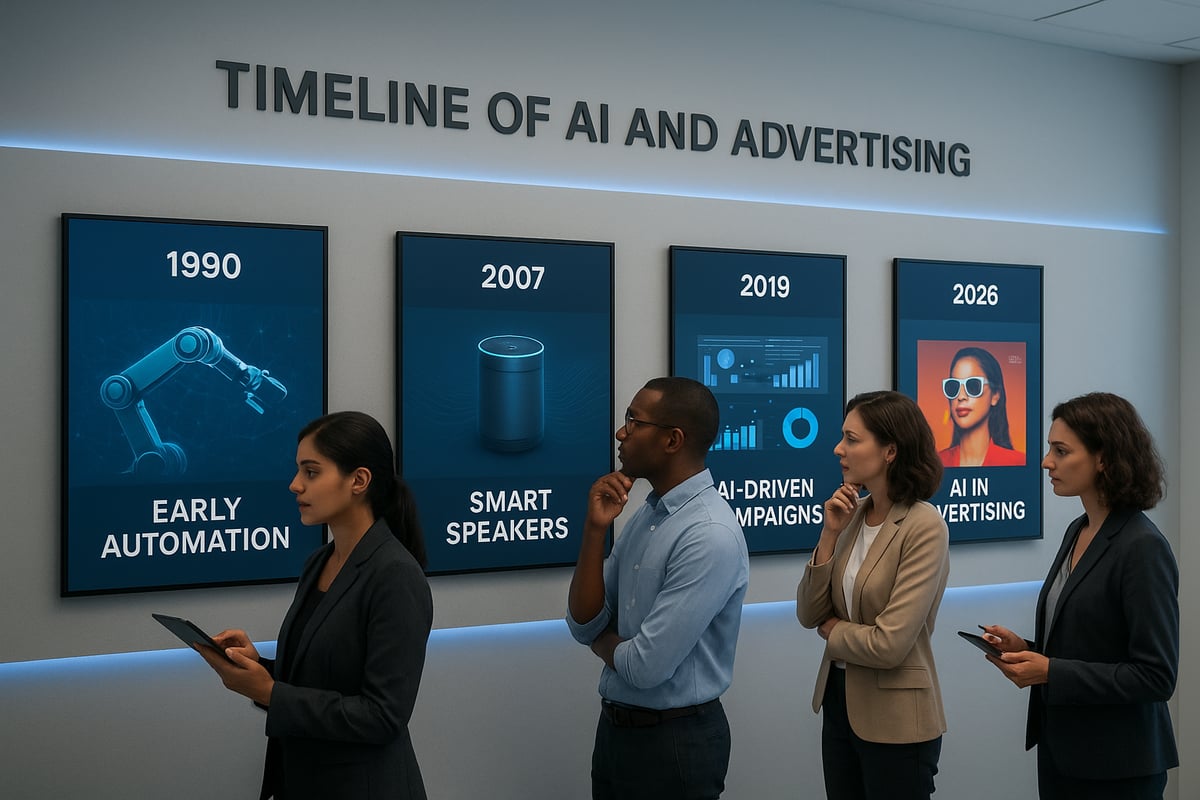
Milestones in AI Advertising (1990–2026)
The evolution of ai and advertising can be traced through pivotal milestones that have redefined what’s possible. In the 1990s, basic automation and data analytics began to shape digital marketing. Early tools focused on automating repetitive tasks, but lacked intelligence.
By the early 2000s, machine learning models emerged, allowing marketers to analyze larger datasets and target audiences more effectively. Breakthroughs in natural language processing (NLP) and image recognition soon followed, making ads more relevant and engaging. The rise of generative AI, such as GANs and natural language generation (NLG), enabled the creation of personalized content at scale.
Research and industry investment surged after 2020, fueling the global programmatic ad market. According to the IAB State of Data 2025 Report, AI adoption rates in advertising reached historic highs, with businesses seeking smarter, data-driven solutions. A standout example is Harley Davidson, which achieved a 2390 percent lead increase using AI-enabled computational advertising, demonstrating the transformative power of advanced technologies.
Integration with smart speakers like Alexa, Siri, and Google Assistant brought interactive ad experiences into consumers’ homes. AI chatbots further personalized user engagement, blurring the line between human and machine interaction. The shift from manual media buying to real-time programmatic campaigns marked a turning point, allowing for automated, precise ad placements.
Academic research from psychology, sociology, and technology fields provided fresh perspectives, helping to refine algorithms and strategies. Today, ai and advertising are inseparable, with AI optimizing both ROI and campaign effectiveness.
| Milestone | Year | Impact on AI and Advertising |
|---|---|---|
| Automation & Analytics | 1990s | Streamlined tasks, basic targeting |
| Machine Learning | 2000s | Improved segmentation, smarter campaigns |
| NLP & Image Recognition | 2010s | Enhanced personalization, creative ads |
| Generative AI | 2020s | Scalable, dynamic content generation |
| Smart Speakers/Chatbots | 2020s | Interactive, conversational experiences |
| Programmatic Buying | 2020s | Automated, real-time ad delivery |
| Interdisciplinary Research | 2020s | Advanced targeting, ethical frameworks |
Key Drivers Accelerating AI Adoption in Advertising
Several forces are accelerating the integration of ai and advertising in today’s marketplace. The explosion of digital media channels and the sheer volume of consumer data have created fertile ground for AI innovation. Marketers now demand deeper personalization and real-time engagement, which only AI can deliver at scale.
Advancements in machine learning and deep learning have unlocked new levels of efficiency and insight. With big data analytics, advertisers can segment audiences and predict behaviors with unprecedented accuracy. The pressure to demonstrate measurable results and maximize ROI has made AI-driven optimization essential.
Regulatory changes, such as GDPR and CCPA, are also driving innovation. AI helps navigate compliance challenges by automating consent management and anonymizing data. These requirements encourage the development of transparent, ethical practices in ai and advertising.
Key drivers include:
- Proliferation of digital channels
- Ever-growing consumer data streams
- Demand for hyper-personalized experiences
- Need for measurable, ROI-focused outcomes
- Evolving regulatory and compliance landscapes
Together, these drivers ensure that ai and advertising will remain at the forefront of digital marketing, pushing the boundaries of what brands can achieve.
Core AI Technologies Powering Advertising in 2026
Artificial intelligence is rapidly redefining the landscape of digital marketing. In 2026, a suite of advanced technologies is powering the next generation of ai and advertising, enabling brands to reach audiences with unprecedented precision and creativity. Let’s explore the core innovations shaping this transformation.
Natural Language Processing (NLP) and Generation (NLG)
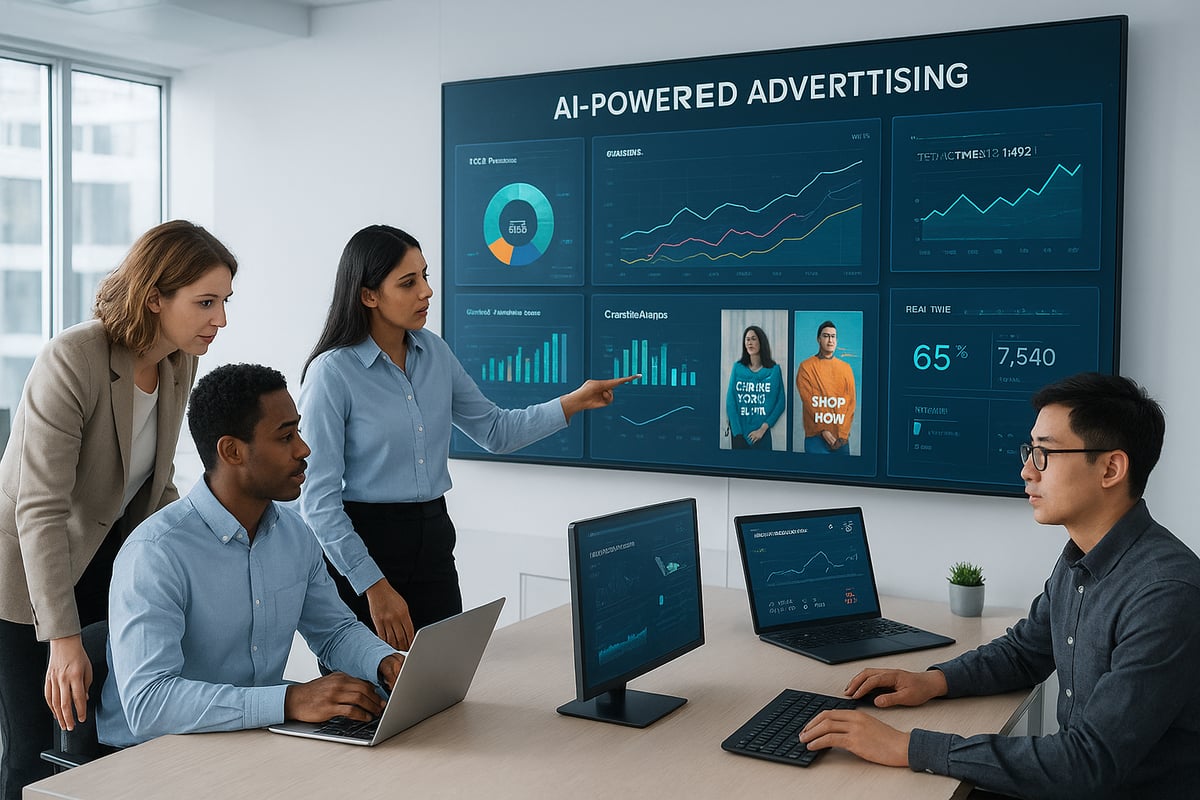
NLP and NLG are at the heart of ai and advertising, empowering marketers to automate content creation across ads, landing pages, and social channels. These technologies enable systems to understand, interpret, and generate human-like text, making ad copy more relevant and engaging.
For example, sentiment analysis tools help brands fine-tune messages for specific audiences, while AI chatbots deliver real-time, conversational marketing. Recent studies, such as the LLM-Generated Ads Study, show that large language models can craft personalized, persuasive advertisements that rival human creativity.
Machine Learning and Predictive Analytics
Machine learning algorithms drive smarter audience segmentation and lookalike modeling, which are essential for ai and advertising in 2026. Predictive analytics allows brands to anticipate user behavior and optimize bidding strategies, ensuring ads reach the right people at the right moment.
Dynamic creative optimization, powered by ongoing data analysis, adapts ad content in real time to match user preferences. This approach boosts campaign effectiveness and maximizes return on investment.
Computer Vision and Image Recognition
Computer vision is revolutionizing ai and advertising by enabling systems to analyze and interpret visual content. Image recognition tools scan digital assets for brand safety, verify logo placement, and monitor competitor activity.
Personalized image and video ads are now created using AI-driven creative platforms. These innovations ensure that visual messaging is both targeted and compliant, reducing risks and increasing engagement across channels.
Generative AI (GANs, Deepfakes)
Generative AI, including GANs and deepfakes, is transforming the creative process in ai and advertising. These systems can produce highly realistic, customized ad creatives at scale, opening up new possibilities for brand storytelling.
However, the use of synthetic media also raises ethical and trust concerns. For example, Cadbury’s ‘NotJustACadburyAd’ campaign used AI to dynamically generate spokespersons, illustrating both the potential and the responsibility that comes with these technologies.
AI-Enabled Voice and Audio Advertising
Voice and audio are becoming integral to ai and advertising strategies. Smart speakers, such as Alexa and Google Assistant, deliver personalized, interactive audio ads that engage users in their daily routines.
Voice search optimization ensures that branded content is discoverable through spoken queries. AI-driven targeting adapts audio messaging based on listener profiles, making campaigns more effective and memorable.
AI-Driven Automation Tools
End-to-end automation platforms are central to ai and advertising, providing real-time performance monitoring and automated adjustments. These tools manage everything from media buying to creative delivery, reducing manual effort and human error.
Leading AI ad tech solutions offer seamless campaign management, integrating data from multiple sources to optimize results. As a result, brands can scale campaigns efficiently while maintaining control and transparency.
Programmatic and Computational Advertising: The New Standard
The landscape of ai and advertising is shifting rapidly as programmatic and computational advertising set a new industry benchmark. These approaches combine data-driven insights and automation, enabling brands to reach audiences at the right moment with unprecedented precision.

How Programmatic Advertising Works in 2026
In 2026, programmatic advertising has evolved into the backbone of ai and advertising strategies. Automated media buying now spans digital, audio, connected TV, and even emerging channels like augmented reality.
Real-time bidding (RTB) ensures ad inventory is purchased in milliseconds, maximizing reach and relevance. Private marketplaces offer premium placements, while AI-driven algorithms handle audience targeting and frequency capping with pinpoint accuracy.
Key features include:
- Cross-device, omnichannel campaign orchestration
- Automated fraud detection and brand safety protocols
- Dynamic budget allocation based on live performance data
The result is a streamlined, cost-efficient process that makes ai and advertising more powerful and adaptive than ever before.
Computational Advertising Explained
Computational advertising builds on the programmatic foundation by using advanced algorithms to generate, place, and optimize creative content. It leverages big data to match ad messages with individual consumer journeys, integrating directly with CRM platforms for seamless personalization.
Major components include:
- Data-driven creative generation
- Predictive analytics for campaign optimization
- Automated content testing and iteration
By mapping customer intent and behavior, computational advertising ensures every touchpoint is optimized. This approach redefines how brands think about ai and advertising, making campaigns smarter and more responsive.
Case Studies and Industry Benchmarks
Real-world results showcase the impact of ai and advertising. Take Harley Davidson, for example, which achieved a 2390% increase in leads using AI-powered computational advertising. Brands deploying AI solutions report higher ROI, improved audience engagement, and greater creative diversity.
A comparison of manual vs AI-powered campaigns:
| Metric | Manual Campaigns | AI-Powered Campaigns |
|---|---|---|
| Lead Generation | Moderate | Significantly higher |
| Creative Variations | Limited | Dynamic, scalable |
| Optimization Speed | Slow | Real-time |
| ROI | Variable | Consistently higher |
These benchmarks make it clear that integrating ai and advertising is key to staying competitive.
Challenges and Opportunities
Despite its promise, integrating ai and advertising brings complexity. Brands face challenges tying together multiple AI systems, data sources, and compliance requirements.
Key challenges:
- Data privacy and regulatory compliance (GDPR, CCPA)
- Ensuring transparency in automated ad delivery
- Balancing personalization with user trust
However, the opportunities outweigh the hurdles. AI enables more granular audience segmentation, real-time campaign optimization, and improved fraud detection. Staying proactive and educating teams about best practices ensures brands harness the full value of ai and advertising.
The Future of Programmatic: Trends to Watch
Looking ahead, several trends are shaping the future of ai and advertising. Contextual and cookieless targeting are gaining ground as privacy regulations evolve. AI-powered creative marketplaces allow for rapid testing of new ad formats, while advanced algorithms strengthen fraud detection and brand safety.
For a deeper dive into these trends and industry projections, see the 2025 Advertising Outlook Report. As autonomous media buying and dynamic creative continue to rise, brands adopting these innovations will lead the next wave of digital marketing success.
AI Advertising Effectiveness: Metrics, ROI, and Optimization Strategies
As ai and advertising continue to reshape the digital marketing landscape, measuring effectiveness is critical. In 2026, success is defined by more than just impressions or clicks. Marketers rely on advanced metrics, precision targeting, and continuous optimization to achieve maximum ROI. Let us explore how ai and advertising are driving this transformation and what strategies will keep campaigns future-ready.
Measuring AI-Driven Ad Performance
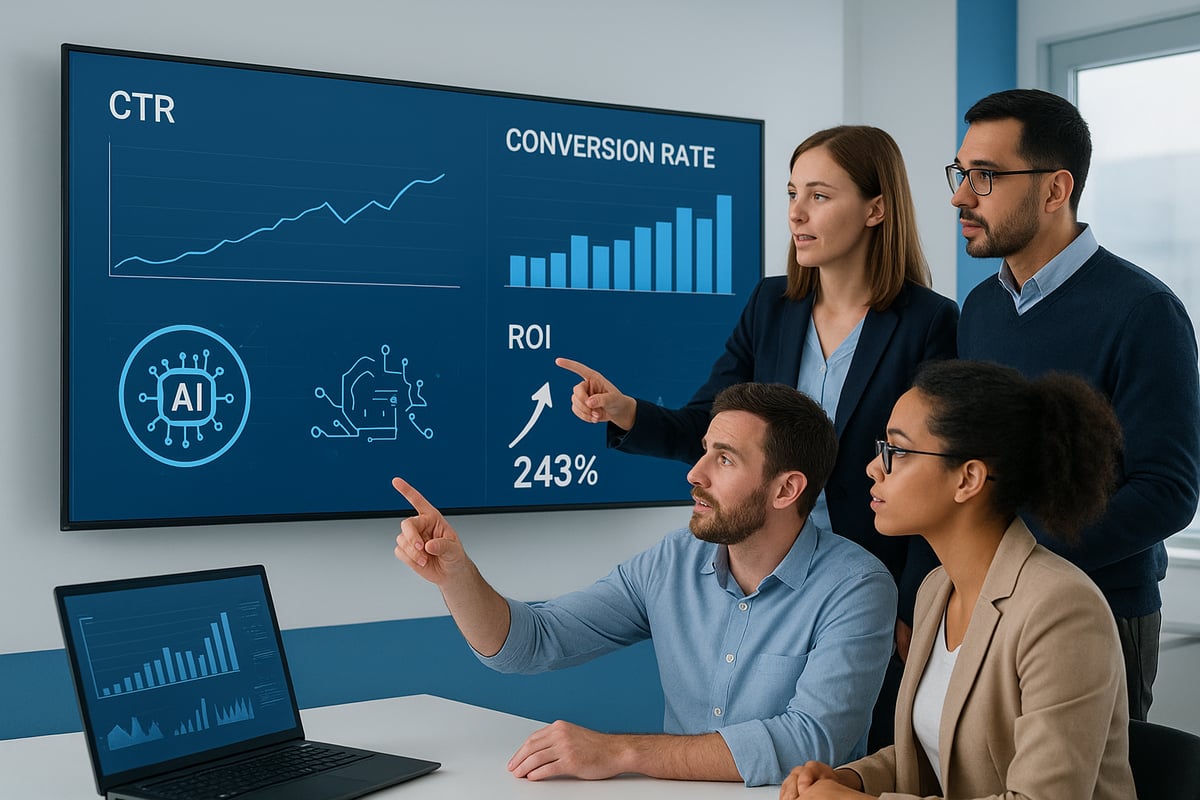
The foundation of ai and advertising effectiveness lies in accurate measurement. Today’s marketers track metrics such as click-through rate (CTR), conversion rate, customer lifetime value (CLV), and engagement scores. These indicators provide a holistic view of campaign performance, from initial contact to final sale.
AI enhances attribution modeling, helping marketers understand which channels truly drive conversions. Cross-channel analytics powered by ai and advertising enable seamless tracking of user journeys across web, mobile, and offline touchpoints. Automated A/B and multivariate testing allow rapid experimentation, optimizing creative and messaging in real time.
| Metric | Description | AI Enhancement |
|---|---|---|
| CTR | Clicks per ad impression | Predictive targeting |
| Conversion Rate | % of users completing a goal | Automated A/B testing |
| CLV | Value of a customer over time | Churn prediction |
| Engagement Score | Depth and quality of user interaction | Sentiment analysis |
With ai and advertising, every metric becomes actionable, supporting data-driven decisions.
Personalization and Engagement
Personalization is at the heart of ai and advertising in 2026. AI systems process real-time user data to create hyper-personalized ad experiences, ensuring each message resonates with the right audience. Predictive content recommendations adapt to user behavior, increasing relevance and engagement.
Segmenting audiences into micro-groups allows marketers to tailor creative and offers. AI-driven retargeting strategies ensure that users receive timely reminders and incentives, boosting conversion rates. The result is higher engagement and a stronger connection between brands and consumers.
List of key personalization tactics:
- Dynamic creative optimization based on user profiles
- Real-time content recommendations
- Automated segmentation for micro-audiences
Through ai and advertising, personalization becomes both scalable and impactful.
Enhancing ROI with AI
Maximizing return on investment is a top priority for every marketer using ai and advertising. AI automates budget allocation, ensuring ad spend is directed toward the highest-performing channels and audiences. Predictive analytics identify opportunities for spend optimization and reduce wasted impressions.
Industry benchmarks show that ai and advertising campaigns consistently outperform manual efforts, delivering improved ROI and efficiency. For a deeper look at how AI is transforming campaign outcomes, explore AI’s Impact on Marketing and Advertising.
AI also streamlines reporting, making it easier to track progress and adjust strategies. Automated insights highlight areas for improvement, while advanced algorithms predict future performance trends. This level of optimization is only possible when ai and advertising work hand in hand.
Overcoming Common Pitfalls
Despite the advantages, ai and advertising present challenges that marketers must address. Avoiding data bias is essential, as biased models can lead to skewed targeting and missed opportunities. Ethical AI practices, such as transparent algorithms and regular audits, help ensure fairness.
Ad fatigue is another concern. Overexposing audiences to similar creatives can decrease effectiveness. AI combats this by diversifying messaging and rotating creatives based on user response. Continuous learning and model improvement are crucial for keeping campaigns fresh and effective.
Best practices for overcoming pitfalls:
- Regularly audit AI models for bias
- Rotate creatives to prevent fatigue
- Update segmentation strategies based on new data
By proactively addressing these issues, ai and advertising can deliver sustainable results.
Future-Proofing Ad Measurement
The future of ai and advertising measurement is privacy-first and adaptable. As third-party cookies disappear, integrating AI with first-party data and customer data platforms (CDPs) becomes vital. AI-driven systems can analyze this data while maintaining compliance with evolving privacy laws.
Emerging metrics like attention, quality of engagement, and brand lift will gain importance. AI’s ability to process and interpret these signals ensures that marketers can adapt to new standards and consumer expectations. Preparing for a cookieless future requires investment in robust measurement frameworks powered by ai and advertising.
In summary, businesses that embrace advanced metrics, personalization, and ethical AI practices will lead the way in ai and advertising effectiveness for 2026 and beyond.
Ethical, Regulatory, and Trust Considerations in AI Advertising
As ai and advertising become increasingly intertwined, ethical, regulatory, and trust considerations take center stage. Navigating the complex landscape of privacy, compliance, transparency, and fairness is critical for brands that want to innovate responsibly and maintain audience trust.
Data Privacy and Compliance
Data privacy is foundational in ai and advertising, especially with regulations like GDPR and CCPA reshaping how brands collect and use personal data. Marketers must secure explicit consent, anonymize user information, and adapt to evolving legal frameworks.
For industries such as finance, regulatory compliance is even stricter. Leveraging digital tools for financial advisors can help ensure campaigns meet rigorous data protection standards while enabling effective client engagement.
Advertisers must prioritize privacy-first strategies, focusing on first-party data and robust consent management systems to maintain compliance and consumer confidence.
Transparency and Explainability
Transparency is key to building trust in ai and advertising. Brands need to clearly communicate how AI algorithms influence ad targeting and creative decisions. Explainable AI (XAI) tools make it possible for marketers to justify campaign outcomes, providing clarity to both clients and end users.
Industry guidelines are emerging to standardize ethical practices and ensure that AI-driven decisions are understandable and auditable. By openly sharing how data is used, brands foster greater trust and accountability.
Bias, Discrimination, and Fairness
AI systems in advertising can inadvertently amplify bias if not carefully managed. Ensuring fairness means continuously evaluating algorithms for discriminatory patterns and promoting inclusivity in AI-generated content.
Legal and reputational risks are significant if ads unintentionally exclude or stereotype certain groups. Regular audits, diverse training datasets, and transparent review processes are essential to uphold fairness and minimize bias in ai and advertising.
Deepfakes and Synthetic Media Risks
The rise of deepfakes and synthetic media poses new risks for ai and advertising. While generative AI enables highly personalized campaigns, it also increases the potential for misinformation and authenticity concerns.
Brands must adopt robust verification processes and prioritize brand safety to protect their reputation. Clear labeling of AI-generated content and proactive monitoring are vital to maintain audience trust and credibility.
Building Consumer Trust in AI-Driven Ads
Establishing trust in ai and advertising requires a balance between automation and human oversight. Consistently communicating the value of AI-driven personalization, while ensuring ethical standards are met, strengthens consumer relationships.
Best practices include transparent data use policies, ongoing staff training, and regular evaluation of AI systems. By embracing responsible AI practices, brands can unlock innovation while safeguarding consumer trust in a rapidly evolving digital landscape.
Industry-Specific Applications and Future Trends in AI Advertising
The impact of ai and advertising is most visible when examining how different industries are adopting and adapting to these powerful technologies. Each sector faces unique challenges and opportunities, shaping how AI-driven tools are integrated into campaigns, compliance, and customer engagement. Let’s explore how ai and advertising are transforming financial services, retail, healthcare, automotive, B2B, and what the future holds.
Financial Services and AI Advertising
Financial services require precision and strict compliance, making ai and advertising a natural fit for this sector. AI-powered solutions automate regulatory checks, personalize messaging, and optimize lead generation for financial advisors. For example, dynamic audience segmentation allows firms to target prospects based on life stages, investment preferences, or risk profiles.
AI tools can also help financial advisors nurture leads with timely, relevant content while ensuring all communications meet industry regulations. To explore practical solutions tailored for financial professionals, see AI tools for financial advisors.
- Automated risk assessment for ad targeting
- Personalized retirement planning campaigns
- AI-driven compliance monitoring
With ai and advertising, financial institutions can deliver relevant, compliant campaigns that build trust and drive results.
Retail and E-Commerce
In retail, ai and advertising have redefined personalization and shopping experiences. Dynamic product recommendations use real-time data to suggest the right items at the right moment, increasing conversion rates. Inventory-aware advertising ensures promotions reflect actual stock, reducing customer frustration.
AI analyzes browsing and purchase history to retarget customers with personalized offers. Retailers also use AI for loyalty programs, predicting which incentives will boost retention.
- Shoppable ads with real-time inventory updates
- AI-powered upselling and cross-selling
- Automated A/B testing for creative optimization
By leveraging ai and advertising, e-commerce brands create seamless, engaging journeys that turn browsers into loyal customers.
Healthcare and Pharmaceuticals
Healthcare presents unique challenges for ai and advertising, especially regarding privacy and compliance with regulations like HIPAA. AI enables patient education campaigns that respect data sensitivity, delivering valuable information without compromising confidentiality.
Pharmaceutical brands use AI to target healthcare professionals with tailored research updates and product launches. AI chatbots engage patients, answering questions and guiding them to appropriate resources.
- HIPAA-compliant audience segmentation
- AI-powered patient journey mapping
- Automated content for physician outreach
With ai and advertising, healthcare marketers can deliver timely, relevant messages while maintaining the highest ethical standards.
Automotive, Travel, and Hospitality
The automotive, travel, and hospitality sectors use ai and advertising to anticipate consumer needs and create immersive experiences. Predictive analytics identify when a customer is ready to purchase or book, enabling perfectly timed offers.
AI-generated creative assets showcase vehicles or destinations in ways that resonate with individual preferences. Interactive ads let users explore features, view virtual tours, or customize options in real time.
- Predictive targeting for test drives and bookings
- AI-driven dynamic pricing and promotions
- Immersive, interactive ad experiences
Ai and advertising help these industries inspire action and build memorable brand relationships.
B2B and Professional Services
B2B marketers harness ai and advertising to streamline account-based marketing and automate lead qualification. AI analyzes firmographic and behavioral data to identify high-value prospects, ensuring sales teams focus on the most promising leads.
Automated content personalization tailors messaging to decision-makers at every stage of the funnel. AI-powered tools also automate prospecting, nurturing leads with relevant insights and case studies.
- Account-based marketing with AI-driven insights
- Automated prospecting and lead scoring
- Personalized content for every buyer journey stage
By integrating ai and advertising, professional service firms boost efficiency and drive measurable growth.
Future Trends and Predictions for 2026
Looking ahead, ai and advertising will continue to evolve at a rapid pace. The rise of AI-powered video and interactive ad formats will make campaigns more engaging and personalized. Out-of-home and experiential advertising will benefit from real-time data and contextual targeting powered by AI.
Autonomous media buying and creative generation are on the horizon, allowing brands to launch and optimize campaigns with minimal manual intervention. Expect tighter integration of AI with first-party data and privacy-centric solutions.
| Trend | Impact on AI and Advertising |
|---|---|
| AI-powered video ads | Higher engagement, personalization |
| Out-of-home AI advertising | Real-time targeting, measurement |
| Autonomous media buying | Greater efficiency, lower costs |
| Privacy-first AI solutions | Compliance, customer trust |
Staying ahead means embracing these innovations and preparing for an era where ai and advertising are inseparable.
Expert Insights: What’s Next for AI and Advertising?
Industry leaders agree that the next frontier for ai and advertising is marked by deeper personalization, ethical innovation, and tighter regulation. According to recent expert panels, marketers should prioritize transparency, invest in explainable AI, and foster cross-functional collaboration.
Actionable steps for future-proofing your ad strategy include:
- Upskilling teams in AI literacy
- Building robust first-party data strategies
- Partnering with trusted AI technology providers
As ai and advertising become more advanced, brands that adapt quickly will be best positioned for success. The key is to balance automation with human creativity and ethical oversight.
As we look ahead to 2026, the landscape of AI and advertising is evolving faster than ever, especially for financial advisors aiming to stay ahead of the curve. You’ve just explored expert perspectives, strategies, and real-world applications that can help you harness AI for smarter, more effective ad campaigns. If you’re ready to see how these innovations can work for your business, I encourage you to take the next step. Let’s turn insights into action together—Schedule a Free Demo and discover firsthand how AI-driven advertising can transform your results.