In 2026, audiences are scattered across countless platforms, making it harder than ever for brands to stand out. The challenge is clear: how can your message reach the right people when attention is so divided?
This guide will help you unlock the power of cross media marketing, offering proven strategies to connect with customers wherever they are. You’ll discover actionable tips, real-world examples, and expert insights designed to help you build campaigns that drive measurable results.
We’ll break down the essentials of cross media marketing, guide you through step-by-step planning, channel integration, personalization, analytics, and future trends, equipping you for success in an evolving digital world.
Understanding Cross Media Marketing in 2026
In 2026, cross media marketing stands as a cornerstone for brands aiming to break through audience fragmentation and digital clutter. At its core, cross media marketing is the strategic integration of multiple media channels—digital, print, social, and broadcast—into unified campaigns that deliver a consistent brand message.

Definition and Core Concepts
Cross media marketing involves orchestrating campaigns across various platforms so that each channel reinforces the others. This approach differs from multichannel marketing, where brands use several platforms but often operate them in silos, and from omnichannel marketing, which focuses on seamless customer experiences across all touchpoints.
| Approach | Channel Integration | Customer Experience |
|---|---|---|
| Multichannel | Low | Fragmented |
| Cross Media Marketing | Moderate (Unified Message) | Cohesive, Amplified |
| Omnichannel | High (Seamless Journey) | Consistent, Personalized |
The evolution of cross media marketing has been significant. Early campaigns, such as music and film tie-ins with The Beatles or Saturday Night Fever, combined radio, TV, and print. Today, digital-first strategies dominate, harnessing social influencers, interactive content, and real-time data to engage audiences wherever they are. Brands now routinely launch products with synchronized efforts across TV, social, influencer partnerships, and email, amplifying their reach and impact.
In 2026, cross media marketing is essential due to increasing device proliferation and rising ad fatigue. Consumers interact with brands in more places than ever—over 72% engage with multiple channels before buying, according to industry reports. This fragmentation means brands must ensure their messaging is not only present but also unified and compelling across all platforms. As highlighted in Innovid’s 2026 Advertising Outlook Report, the convergence of media, technology, and consumer behavior is reshaping how campaigns are planned and measured, driving the need for agile cross media marketing strategies.
Key benefits of cross media marketing include broader audience reach, stronger brand consistency, higher engagement rates, and measurable improvements in ROI. For example, global brands amplify their product launches by combining TV ads, social media buzz, influencer endorsements, and targeted email campaigns, creating a cohesive presence that drives results.
The 8 Commandments of Cross Media Marketing
To excel in cross media marketing in 2026, brands should follow these eight guiding principles:
- Exclusive content: Provide platform-specific value, such as behind-the-scenes web features or live Q&A sessions on social media.
- User interaction: Enable audience participation through voting, polls, or interactive elements.
- Amplification: Use each platform to boost overall campaign awareness and drive cross-channel traffic.
- Loyalty: Foster retention with clubs, games, or rewards that keep fans engaged.
- Atmosphere: Recreate your campaign’s theme consistently across all media for a unified feel.
- Continuity: Extend stories and offers across web, email, and offline channels to maintain engagement.
- Enhanced experience: Encourage audiences to engage using multiple devices at once for deeper involvement.
- Multi-device systems: Maximize revenue streams by leveraging the strengths of each channel.
Applying these commandments ensures that cross media marketing efforts are not only integrated but also dynamic and interactive, capturing attention and building lasting customer relationships.
Step-by-Step: Building a Cross Media Marketing Campaign
Launching a successful cross media marketing campaign in 2026 requires a systematic approach. Each step builds on the last, ensuring your message reaches the right audience, on the right channels, at the right time. Let’s break down the process into actionable phases for maximum impact.

Step 1: Audience and Goal Definition
Every effective cross media marketing campaign starts with a clear understanding of your audience. Identify specific segments based on demographics, behaviors, and media usage patterns. Consider which platforms your ideal customers frequent and how they interact with content.
Once you have your audience defined, set measurable goals. Are you aiming for increased brand awareness, higher lead generation, direct sales, or customer loyalty? Clear objectives will guide your campaign decisions and help you measure success.
Use tools like customer personas and audience mapping to visualize your targets. This foundational work ensures your cross media marketing strategy is built on data, not guesswork.
Step 2: Channel Selection and Integration
Next, select the channels that best align with your audience’s habits. This might include email, social media, print, TV, web, or even events. The right mix depends on where your segments are most engaged.
Integration is key. Ensure your messaging and creative assets are consistent across platforms. Schedule your outreach to optimize frequency without causing fatigue. For example, a teaser email can drive traffic to a web landing page, while a coordinated social post reinforces the campaign’s main message.
Effective cross media marketing relies on seamless channel integration, turning every touchpoint into a unified brand experience.
Step 3: Content Customization and Personalization
Tailor your content to each platform and audience segment. Data-driven insights allow you to adapt your messaging, ensuring relevance and resonance. For digital channels, real-time personalization can boost engagement by reacting to user behaviors and preferences.
Print campaigns benefit from variable data printing, allowing offers and visuals to be customized at scale. For example, direct mail pieces can include personalized URLs or QR codes that track response and drive recipients online.
Personalization is at the heart of cross media marketing, transforming generic messaging into meaningful interactions.
Step 4: Campaign Launch and Cross-Promotion
With your assets in place, coordinate your campaign launch across all selected channels. Decide whether a simultaneous rollout or a staggered approach fits your strategy best. Use each channel to promote the others—such as including a social hashtag in a TV ad or a call-to-action in a print piece to visit an online landing page.
Monitor response rates in real time. Adjust pacing and messaging as you gather data. Encourage cross-channel engagement by rewarding users who interact on multiple platforms.
Cross media marketing thrives on synergy. The more channels reinforce each other, the greater your campaign’s reach and impact.
Step 5: Measurement and Optimization
Set up unified analytics to track performance across every channel. Key metrics include reach, engagement, conversions, and ROI per platform. Use dashboards to gain a holistic view and identify which touchpoints drive the best results.
Iterative optimization is essential. Test creative variations, adjust timing, and refine offers based on real-world feedback. For financial services, integrating email, print, and webinars for lead generation can be especially effective. Explore marketing tools for financial advisors to streamline your cross media marketing and improve campaign measurement.
Companies using integrated cross media marketing have reported up to 35% higher engagement rates, demonstrating the power of a well-executed, data-driven approach.
Channel Integration: Strategies and Best Practices
In 2026, channel integration is the backbone of effective cross media marketing. Brands that master the art of seamless communication across digital and traditional touchpoints can create campaigns that resonate, engage, and convert. Let’s explore how to bring these channels together for maximum impact.

Digital Channels (Web, Email, Social Media)
Digital platforms form the core of cross media marketing strategies. Your website acts as the campaign hub, hosting landing pages, exclusive product reveals, and lead capture tools. Email bridges the gap between channels, nurturing prospects with personalized offers and timely updates.
Social media is essential for amplifying campaigns in real time. Use Instagram, LinkedIn, or TikTok to launch teasers, run interactive polls, and spark user-generated content. For example, a retailer might release a new collection using coordinated Instagram stories, email sneak peeks, and web-only discounts.
Leverage each channel’s strengths to maximize reach. Website analytics reveal user preferences, while email segmentation delivers targeted content. Social platforms foster community and immediate feedback. For insights on how AI and cross-channel intelligence are reshaping engagement, review Smartly’s 2026 Digital Trends Report.
Successful cross media marketing in digital spaces requires message consistency, creative cohesion, and optimized scheduling. Integrate data sources to personalize each touchpoint, driving higher engagement and conversion rates.
Traditional Media (Print, TV, Radio, Direct Mail)
Despite digital’s dominance, traditional media remains a vital part of cross media marketing. Print and direct mail can be highly personalized using variable data printing, allowing brands to deliver tailored offers at scale. TV and radio provide broad exposure, driving audiences to digital assets through QR codes, unique URLs, or branded hashtags.
For instance, an automotive brand may promote a new model using TV ads, print features, and personalized landing pages to track leads. This coordinated approach makes every touchpoint measurable and actionable.
Key strategies include:
- Personalizing print with recipient names and offers.
- Using TV spots to encourage social media participation.
- Integrating radio with web contests or SMS opt-ins.
Cross media marketing thrives when offline and online campaigns are linked. Track responses with unique codes, analyze conversion paths, and adjust tactics for maximum ROI.
Synchronization and Cohesion
The power of cross media marketing lies in its ability to deliver a unified message across all platforms. Consistency in creative elements, tone, and calls to action is crucial. Schedule content releases strategically, sequencing touchpoints based on audience behavior and channel strengths.
Modern tools help manage complexity. Cross channel platforms offer centralized campaign planning, scheduling, and analytics. This ensures every team member works from the same playbook, minimizing errors and maximizing impact.
Here’s a quick comparison of integration essentials:
| Integration Element | Digital Channels | Traditional Channels |
|---|---|---|
| Personalization | Advanced | Variable Data Print |
| Real-time Feedback | Instant | Delayed |
| Tracking | Analytics | Unique Codes |
| Engagement | Interactive | One-way, Call-to-Action |
Mastering synchronization ensures that cross media marketing campaigns deliver a cohesive experience, driving measurable results and lasting brand loyalty.
Personalization and Real-Time Engagement
Personalization has become the cornerstone of successful cross media marketing in 2026. Today’s consumers expect tailored experiences at every touchpoint, and brands that deliver on this expectation are rewarded with stronger engagement and loyalty.
Data-Driven Personalization
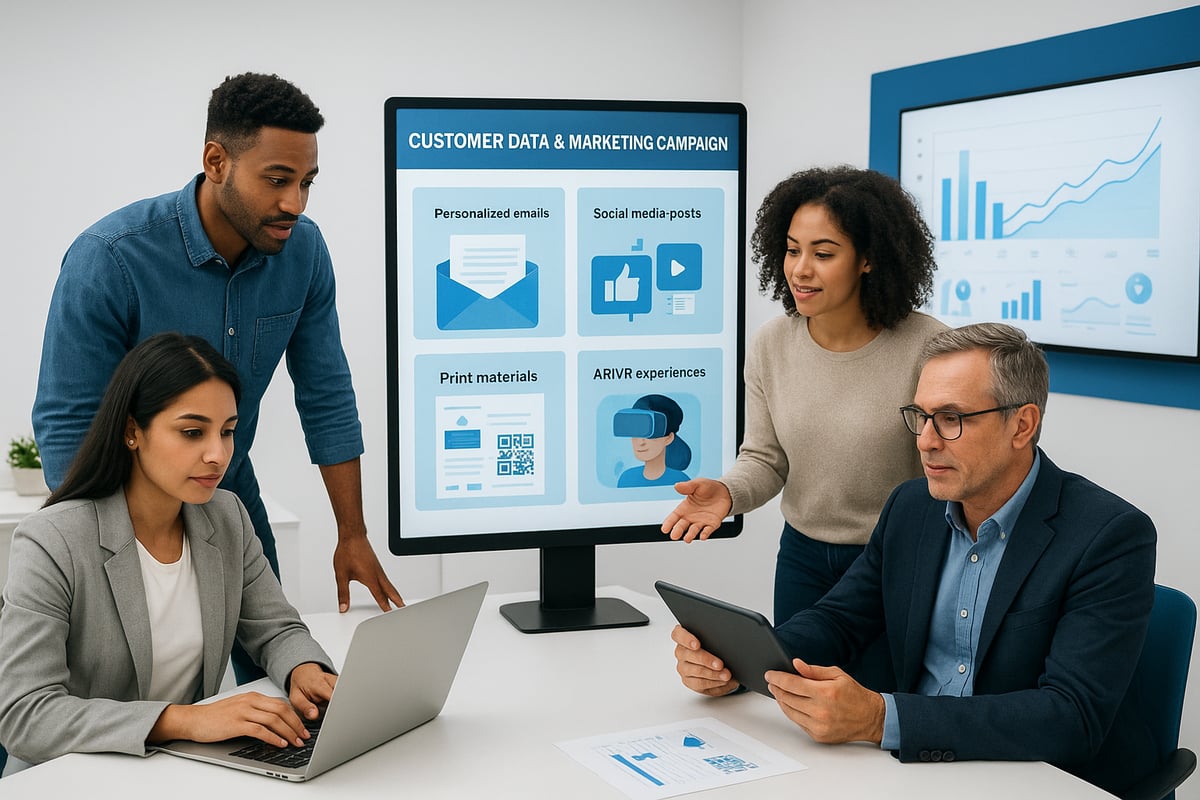
At the heart of cross media marketing is the ability to leverage data for meaningful personalization. Brands collect insights from demographics, browsing behavior, purchase history, and channel preferences. By analyzing this information, marketers can serve dynamic content that resonates with each individual.
For example, an e-commerce brand may send a personalized email with product recommendations based on a customer’s recent browsing. Simultaneously, targeted SMS messages can highlight similar offers, creating a seamless cross media marketing journey. Real-time personalization extends to web and mobile, where on-site content adapts instantly to user actions.
Emerging technologies like AI further elevate these strategies. According to AdRoll’s Marketing & Advertising Trends 2026, brands that integrate AI-driven personalization into cross media marketing see higher engagement and conversion rates.
Variable Data Printing and Direct Mail
Direct mail remains a powerful component of cross media marketing, especially when combined with digital tactics. Variable data printing enables brands to customize each piece of mail, from the recipient’s name to tailored offers and unique QR codes. This approach transforms traditional print into a personalized, trackable touchpoint.
A subscription service, for instance, can boost renewal rates by sending individualized reminders and exclusive discounts through direct mail. When recipients scan a QR code, they are directed to personalized landing pages, seamlessly bridging offline and online experiences.
By integrating print campaigns with digital analytics, marketers measure response rates and optimize future efforts. The result is a cohesive cross media marketing strategy that delivers measurable returns and deepens customer relationships.
Interactive and Immersive Experiences
Interactivity is reshaping cross media marketing, making campaigns more engaging and memorable. Brands now use AR and VR to create immersive product demos, virtual showrooms, or branded games that captivate audiences across devices.
Interactive video content allows viewers to make choices, participate in polls, or unlock exclusive offers. Live events are amplified through social media streams, real-time voting, and post-event email follow-ups. For example, a major event might blend social media live streams with interactive polls, driving engagement and extending reach.
By encouraging participation and feedback across channels, cross media marketing not only captures attention but also builds lasting brand affinity. As technology evolves, expect even more innovative ways to personalize and engage in real time.
Measuring Success: Analytics and Attribution in Cross Media Campaigns
In today's fragmented landscape, measuring the effectiveness of cross media marketing is both a challenge and a necessity. Brands need a holistic view to track their campaigns, understand what is working, and optimize for better results. Robust analytics and accurate attribution are essential for maximizing the impact of every channel.
Setting Up Cross-Channel Analytics
Effective cross media marketing begins with unified dashboards that aggregate data from all platforms. These dashboards give marketers a single source of truth, making it easier to compare performance and spot trends across email, social, web, print, and beyond.
Key performance indicators (KPIs) for cross media marketing include reach, engagement, conversions, and return on investment (ROI) for each channel. By tracking these metrics in real time, brands can make data-driven decisions and quickly respond to changes in audience behavior. Leveraging digital tools for financial advisors is one way to streamline data collection and improve campaign measurement across channels.
Attribution Models and Tracking
Attribution is the process of identifying which channels and touchpoints contribute most to conversions. In cross media marketing, multi-touch attribution models provide a clearer picture by assigning value to every interaction along the customer journey, not just the last click.
Modern tools and platforms enable marketers to track these journeys, but challenges remain. Data silos, privacy regulations, and cross-device tracking can complicate attribution. Brands must choose attribution models that align with their goals and ensure consistent data collection across all media.
A comparison of common attribution models:
| Model | Description | Best For |
|---|---|---|
| Last-click | Credits final touchpoint | Simple journeys |
| First-click | Credits first interaction | Awareness-focused campaigns |
| Multi-touch | Distributes value across all touchpoints | Complex, multi-channel journeys |
Optimization and Continuous Improvement
Analytics are only valuable when used for continuous improvement. Brands that excel in cross media marketing regularly analyze their data to identify which channels and creative assets drive the best results. A/B testing and dynamic content adjustments allow marketers to refine messaging, timing, and offers based on real audience feedback.
For example, a brand may discover higher ROI from integrated email and social campaigns compared to print alone. By reallocating budget and adjusting creative, they can maximize their impact and efficiency across platforms.
Industry Statistics and Benchmarks
Understanding industry benchmarks helps brands set realistic goals for cross media marketing. Companies using advanced attribution models report 20 to 30 percent higher marketing ROI, underscoring the value of accurate measurement. However, over 60 percent of marketers say cross-channel measurement is their top challenge.
The IAB 2026 Outlook Study highlights the increasing importance of AI and integrated analytics in the evolving marketing landscape. Staying informed about these trends enables brands to stay ahead and drive measurable results from their cross media marketing efforts.
Future Trends and Innovations in Cross Media Marketing
The landscape of cross media marketing is evolving rapidly as new technologies and consumer behaviors emerge. Staying ahead requires brands to embrace innovation, adapt quickly, and prioritize both the customer experience and ethical standards.
AI and Automation
AI is transforming cross media marketing by automating campaign planning, personalization, and optimization. Smart algorithms analyze massive datasets to predict audience behavior and recommend content across channels. Automation tools now generate creative assets and deliver messages with precision timing. For example, lead generation tools for advisors leverage AI to coordinate multi-channel outreach, nurturing leads at scale.
Emerging Channels and Technologies
New platforms are expanding the scope of cross media marketing. AR and VR experiences allow brands to create immersive storytelling, while connected TVs and voice assistants engage consumers in their homes. The rise of phygital strategies blends online and offline touchpoints, offering seamless customer journeys that drive engagement and loyalty.
Privacy, Compliance, and Ethical Considerations
As cross media marketing becomes more data-driven, privacy and compliance are top priorities. Brands must navigate evolving regulations, from GDPR to region-specific laws, while maintaining transparency about data collection and usage. Ethical marketing practices build trust, ensuring campaigns respect consumer preferences and safeguard sensitive information.
The Evolving Role of Influencers and User-Generated Content
Influencer partnerships are now integral to cross media marketing, spanning social, video, and even in-person events. User-generated content boosts authenticity and reach, encouraging audiences to participate in brand storytelling. For practical strategies on integrating influencers and UGC, see how to get more clients as a financial advisor, which highlights approaches that apply across industries.
Preparing for 2027 and Beyond
Looking ahead, agility is the cornerstone of successful cross media marketing. Brands should invest in adaptive technology, upskill teams, and embrace continuous learning. Key future-proof strategies include:
- Implementing AI-driven orchestration for real-time campaign adjustments
- Building modular creative assets for rapid content deployment
- Fostering cross-functional collaboration between marketing, data, and IT teams
- Monitoring emerging channels to identify early opportunities
An example is a major retailer using AI to monitor campaign performance and adjust messaging on the fly, ensuring relevance across every platform. As 2027 approaches, brands that prioritize innovation, ethical practices, and customer-centricity will lead the way in cross media marketing.
After exploring the latest strategies and tools for cross media marketing success in 2026, you might be wondering how to put these insights into action for your own financial advisory firm. Building integrated campaigns across digital and traditional channels can feel complex, but you don’t have to navigate it alone. If you’re ready to see how seamless ad creation and campaign management can drive measurable results for your business, I invite you to Schedule a Free Demo. Let’s work together to turn your cross media marketing vision into reality—starting today.