Local search engine marketing has seen explosive growth in 2026, rapidly changing how businesses connect with local customers. The landscape is more complex, with competition and innovation at an all-time high.
New technologies, evolving consumer habits, and major Google updates have transformed what it takes to succeed. Businesses can no longer rely on outdated tactics or hope to be found by chance.
Mastering local search engine marketing is now essential for service providers and local brands that want to grow and remain visible. Without a solid strategy, even established businesses risk falling behind.
This expert guide offers a step-by-step approach to dominating local search in 2026. You will discover advanced strategies, practical tools, and proven examples to help your business thrive.
Understanding Local Search Engine Marketing in 2026
Navigating the world of local search engine marketing in 2026 demands agility and insight. Businesses today face a landscape shaped by fast-paced algorithm changes, rapidly shifting consumer behaviors, and the continuous integration of artificial intelligence. Adapting to these changes is essential for maintaining visibility and driving local growth.
The Evolution of Local SEO: 2020–2026
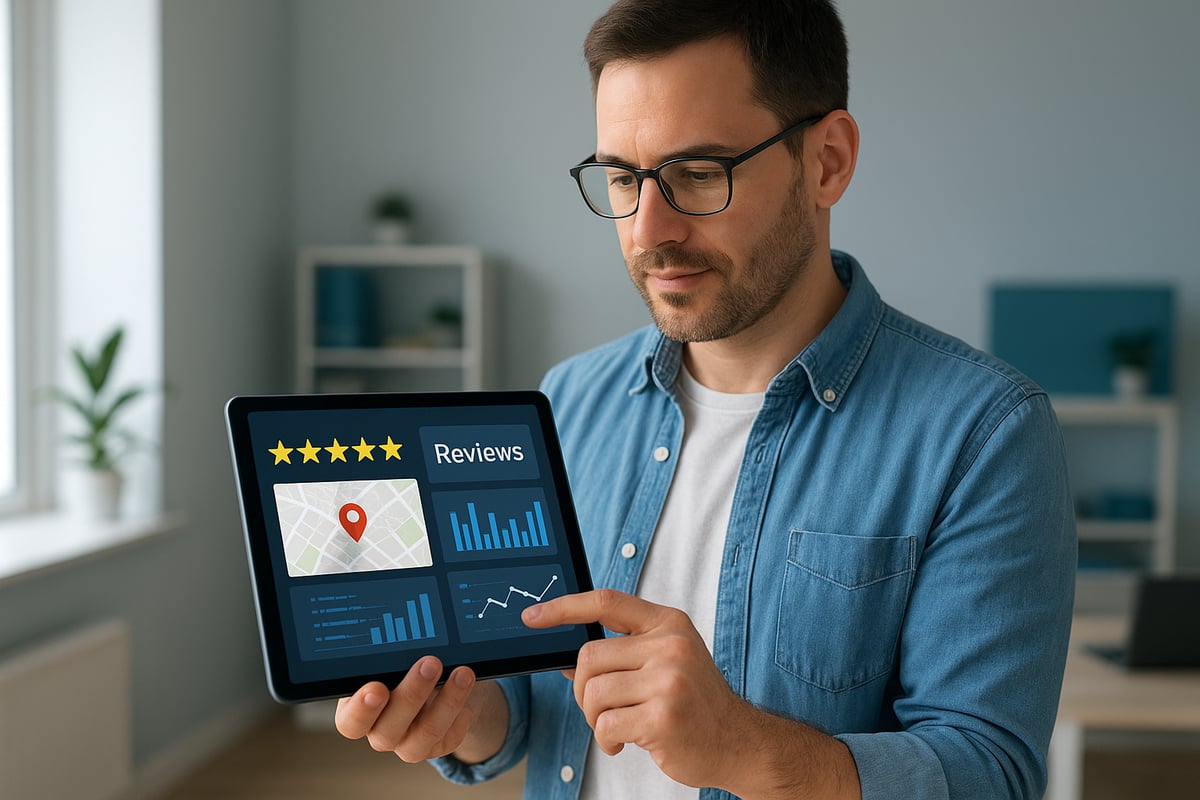
The landscape of local search engine marketing has undergone a dramatic transformation between 2020 and 2026. Google’s Local Search Update in 2024 introduced AI-driven map results, fundamentally changing how businesses appear in local searches. Machine learning now powers not only rankings, but also personalized content delivery and dynamic map listings.
Voice search has surged in popularity. Consumers are increasingly using conversational queries to find local services, products, and events. As a result, businesses have adapted their local search engine marketing strategies to optimize for natural language and voice-activated assistants.
Another major trend is the rise of zero-click searches. Google often answers local queries directly in the results, reducing the need for users to click through to websites. This shift has made map pack visibility and Google Business Profile optimization more critical than ever.
Mobile-first indexing and hyper-local targeting now dominate the field. With more than 80% of mobile users performing local “near me” searches, companies who prioritize mobile optimization and precise location data are winning new customers. According to BrightLocal, 93% of consumers used online search to find a local business in the past year, underscoring the importance of local search engine marketing for growth.
For deeper insights, recent Local SEO Statistics 2025 provide a comprehensive look at user behavior, conversion rates, and the impact of AI on local rankings.
Table: Local SEO Signals Then vs. Now
| Local SEO Signal | 2020 Focus | 2026 Focus |
|---|---|---|
| Backlinks | Quantity and diversity | Local relevance, partnerships |
| Content | General location mentions | Conversational, AI-personalized, hyperlocal |
| Reviews | Star ratings | Sentiment, authenticity, response speed |
| Mobile Optimization | Responsiveness | Mobile-first, instant loading, local UX |
Key Components of Modern Local Search Marketing
Mastering local search engine marketing in 2026 requires a strategic focus on several critical components. The foundation starts with Google Business Profile (GBP) optimization. Businesses must ensure their profiles are complete, accurate, and regularly updated with photos, services, and AI-powered FAQs.
Local citations and Name-Address-Phone (NAP) consistency remain vital for credibility and rankings. Using automation tools for citation management helps maintain accuracy across Google, Apple Maps, Bing Places, Yelp, and niche directories.
Reputation management is now more sophisticated. Gathering authentic reviews and promptly responding to feedback builds trust and improves local search engine marketing outcomes. Leveraging sentiment analysis tools allows businesses to monitor and enhance their public perception.
Localized content creation, paired with robust schema markup, boosts visibility for city-specific searches. Integrating social signals and earning local backlinks from community organizations, influencers, and media further strengthens search relevance.
A practical example comes from a multi-location restaurant that increased foot traffic by 40% after optimizing its GBP, ensuring NAP consistency, and launching localized content campaigns. Their success highlights how a holistic approach to local search engine marketing delivers measurable results.
Building Your Local Search Engine Marketing Strategy
Mastering local search engine marketing requires a strategic, step-by-step approach. In 2026, success hinges on integrating advanced tactics with tried-and-true fundamentals. This section guides you through building a robust local search engine marketing strategy, from goal setting to review management.
Setting Clear Goals and KPIs
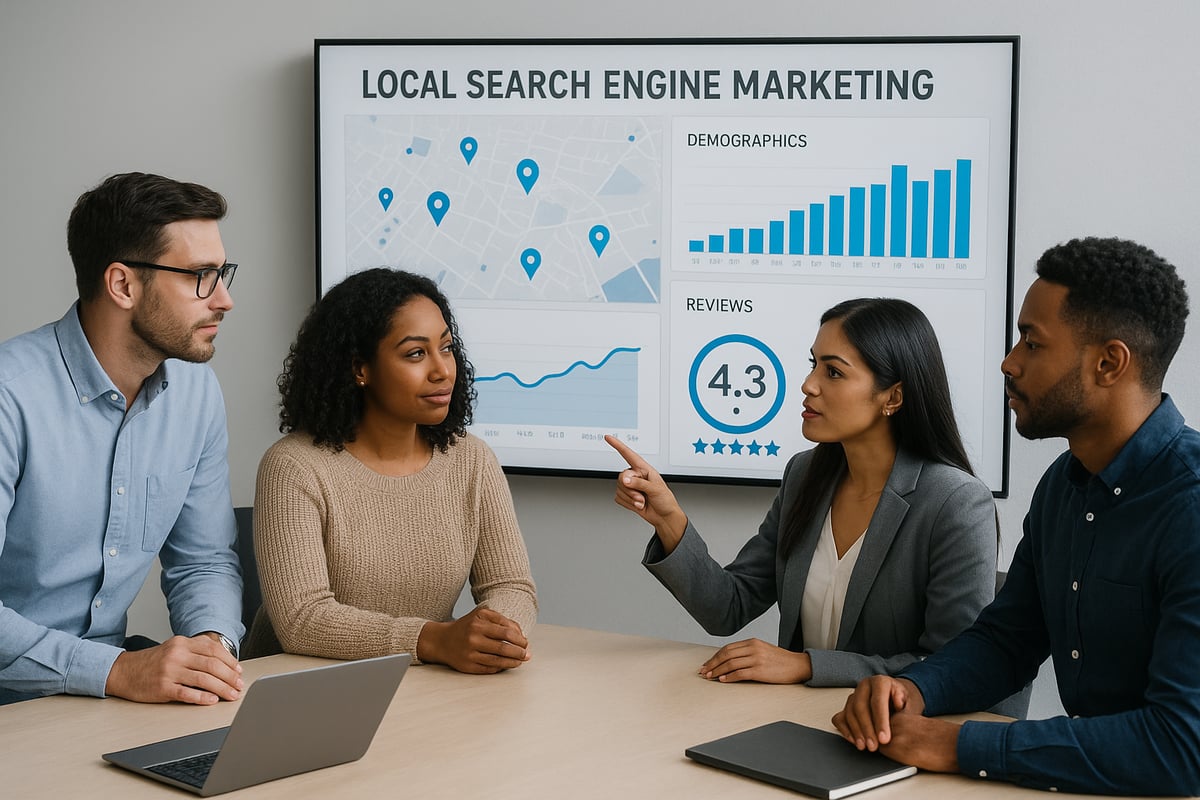
Defining the right objectives is foundational for local search engine marketing. Start by identifying what matters most: Do you want more calls, in-person visits, or completed lead forms? Each business is unique, so tailor your goals accordingly.
Track progress using tools such as Google Analytics 4, Google Search Console, and specialized local rank trackers. These platforms help monitor map pack visibility, call volume, and review ratings. For example, a local clinic may set targets for increasing appointments and positive reviews over the next quarter.
Key KPIs might include:
- Growth in Google map pack appearances
- Increase in tracked calls or bookings
- Improved average review ratings
By establishing clear KPIs, you can measure the effectiveness of your local search engine marketing efforts and make informed adjustments.
Claiming and Optimizing Google Business Profile
Your Google Business Profile (GBP) is the cornerstone of local search engine marketing. Begin by claiming your GBP if you have not already. The 2026 claim process is streamlined, requiring business verification via phone, email, or video call.
Take advantage of new GBP features, such as AI-powered FAQs, booking integrations, and video posts. Ensure your business categories, services, and attributes are accurate and detailed. For instance, a law firm that fully completed its GBP saw a 30 percent rise in client inquiries.
Best practices for GBP optimization:
- Regularly update hours, photos, and service details
- Use video posts to engage potential clients
- Enable booking integrations for seamless conversions
A fully optimized GBP significantly increases your visibility in local search engine marketing.
Local Listings and Citation Management
Consistent local listings are critical for local search engine marketing. Focus on major citations, including Google, Apple Maps, Bing Places, Yelp, and industry-specific directories. Inconsistent NAP (name, address, phone number) information can undermine your search rankings.
Consider automation tools like Whitespark or Moz Local to manage citations at scale. These platforms help identify errors, prevent duplicates, and ensure uniform data across the web. For example, a retailer who resolved inconsistent listings saw a 20 percent improvement in local ranking.
Citation management checklist:
- Audit all existing local listings
- Correct NAP inconsistencies promptly
- Monitor new citation opportunities in niche directories
Accurate citations build trust with search engines and reinforce your local search engine marketing presence.
On-Page Local SEO Best Practices
On-page optimization is a core pillar of local search engine marketing. Begin with localized keyword research, leveraging AI-powered tools to identify phrases that match local intent. Incorporate these keywords naturally into title tags, meta descriptions, and headers.
Embed interactive maps and use local business schema markup to help search engines understand your location and services. For instance, a service company that launched city-specific landing pages quickly claimed the top spot in search results.
On-page essentials:
- Create unique landing pages for each service area
- Optimize images with geo-tagged metadata
- Use structured data for enhanced local snippets
Consistent on-page efforts boost your visibility and authority in local search engine marketing.
Reputation and Review Management
Online reputation is more important than ever in local search engine marketing. Encourage satisfied customers to leave authentic reviews on Google, Yelp, and relevant industry platforms. Respond promptly to both positive and negative feedback to demonstrate engagement and build trust.
AI-powered sentiment analysis tools in 2026 provide valuable insights into customer perceptions. According to BrightLocal, 87 percent of consumers read online reviews before choosing a local business. Explore advanced review and reputation management features to streamline your workflow and monitor your brand image.
Tips for reputation management:
- Request reviews after each customer interaction
- Monitor reviews across all major platforms
- Use AI tools to flag and address negative trends
A proactive reputation strategy is the final component for dominating local search engine marketing.
Advanced Local Search Tactics for 2026
Staying ahead in local search engine marketing in 2026 demands more than basic optimization. As competition intensifies and consumer behaviors shift, advanced tactics are essential for businesses to claim prime visibility in their local markets. From AI-powered automation to hyperlocal targeting, the right strategies can make the difference between getting lost in the digital crowd and dominating your niche. In this section, we explore the most impactful methods for elevating your local search engine marketing efforts, drawing on the latest technologies, tools, and real-world examples.
Leveraging AI and Automation in Local Marketing
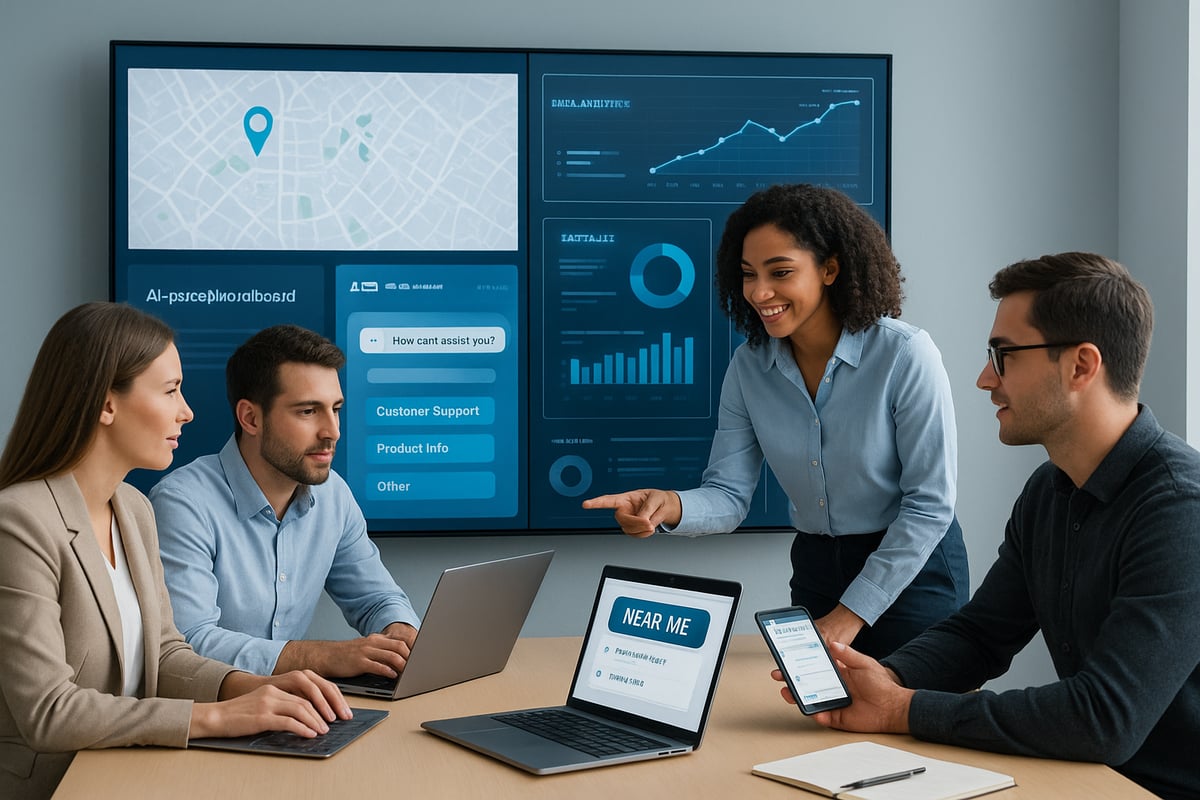
AI has become a cornerstone of local search engine marketing, transforming how businesses create content, manage reviews, and engage with customers. In 2026, AI-driven tools generate hyperlocal landing pages tailored to user intent, automate review requests and responses, and power chatbots for instant lead capture and appointment booking.
Consider a dental practice that implemented AI chatbots on its website. This automation handled common questions and booked appointments after hours, resulting in a 25% increase in bookings. Businesses leveraging AI also benefit from predictive analytics, which refine campaign targeting and messaging for improved ROI.
The rise of AI and machine learning is covered in depth in New SEO Opportunities for Local Small Businesses in 2026, offering expert insights into the latest algorithm updates and practical applications.
Voice Search and Conversational SEO
Voice search continues to reshape local search engine marketing. With smart speakers and mobile assistants now ubiquitous, optimizing for voice-activated and conversational queries is critical. Businesses should create FAQ-rich content, use natural language, and implement FAQ schema to align with how people ask questions verbally.
A home services company, for example, revamped its site with Q&A content targeting “near me” and voice queries. As a result, they saw a measurable uptick in leads originating from voice search platforms. Prioritizing long-tail keywords and conversational phrases ensures your business is discoverable in this growing segment.
Hyperlocal Targeting and Geo-Fencing
Hyperlocal strategies are redefining local search engine marketing by focusing on precise audience segments within specific neighborhoods or event locations. Geo-fencing technology allows businesses to deliver ads and personalized offers to users based on real-time location data.
For instance, a retailer used geo-fencing ads during a community event, sending exclusive promotions to nearby mobile users. This campaign led to a significant spike in in-store visits during the event window. Hyperlocal targeting maximizes relevance and conversion by connecting with consumers at the exact moment they are ready to engage.
Local Link Building and Partnerships
Building a robust local backlink profile is a powerful driver of local search engine marketing success. Relationships with local influencers, charities, and media outlets can yield high-authority links that boost map pack rankings. Sponsorships, event participation, and partnerships with complementary businesses also generate valuable mentions and citations.
According to Moz, businesses with strong local backlink profiles rank 25% higher in map packs. Focusing on authentic, community-driven partnerships not only enhances SEO, but also strengthens brand reputation and trust within the local market.
Video and Visual Content for Local Engagement
Visual content has become a vital element of local search engine marketing, especially as consumers increasingly rely on images and videos to make decisions. Short-form, location-based videos for Google Business Profile and social channels capture attention and drive engagement.
A restaurant, for example, produced TikTok-style video tours of its space and menu, resulting in a surge in reservations from local diners. Leveraging Google’s visual search features further enhances discoverability, making it easier for potential customers to find and connect with your business through compelling visuals.
Measuring, Analyzing, and Optimizing Local Campaigns
Success in local search engine marketing depends on more than just launching campaigns. Ongoing measurement, analysis, and optimization are essential for achieving consistent growth and outperforming the competition. By focusing on the right metrics, leveraging advanced tools, and committing to a cycle of continuous improvement, businesses can maximize their local visibility and conversions.
Essential Metrics and Reporting Tools
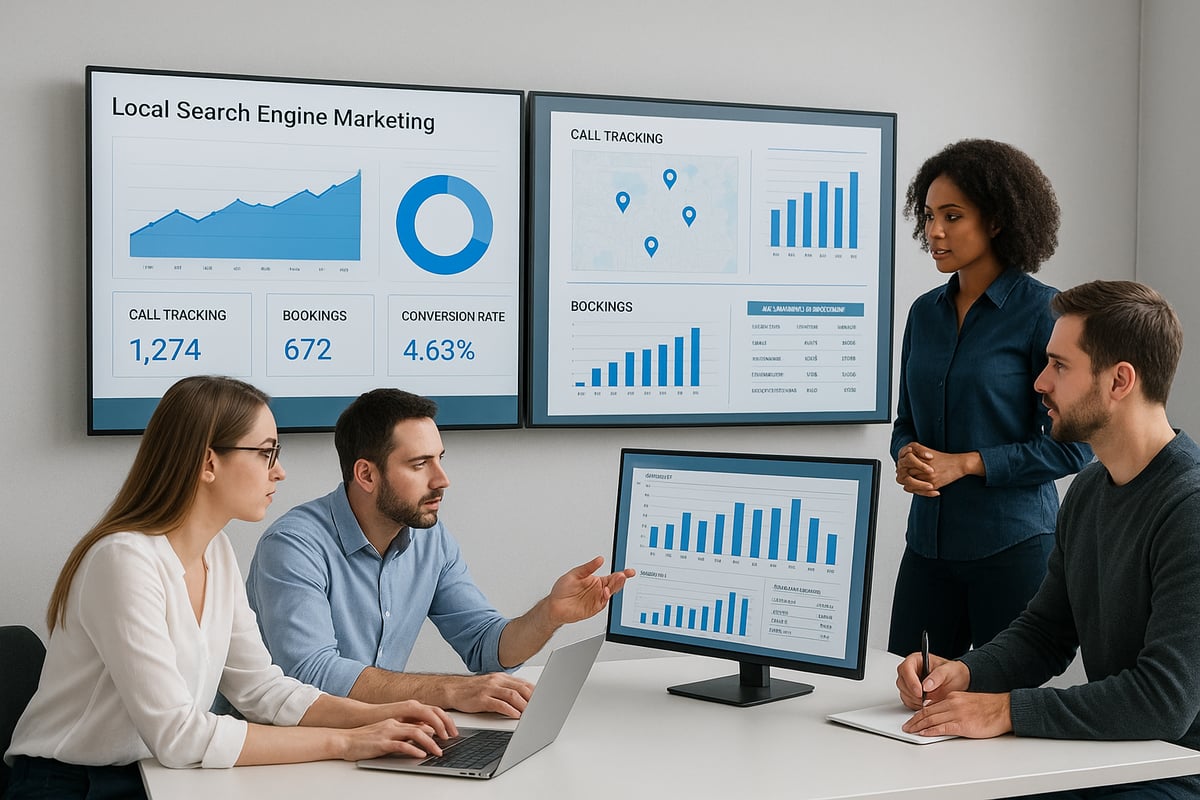
Tracking the right data is the backbone of effective local search engine marketing. Metrics provide clear insights into what’s working and where to improve. Focus on KPIs such as local rankings, impressions, clicks, calls, direction requests, and booking completions.
| Metric | Description | Tool Example |
|---|---|---|
| Local Rankings | Position in map pack and SERPs | Local rank trackers |
| Impressions | Number of times listed in results | Google Search Console |
| Actions (Calls, Clicks) | User interactions from listings | Google Business Profile |
| Bookings | Completed appointments | Call tracking software |
| Reviews | Volume and sentiment | Review platforms |
Google Analytics 4 offers robust local reporting features, allowing you to segment traffic by location, track conversions, and monitor user behavior on local landing pages. Integrating call tracking and booking software provides a complete view of customer actions. For example, a day spa that monitors call tracking and booking completions can quickly identify peak periods and high-performing pages, allowing for smarter budget allocation.
A disciplined approach to measurement ensures your local search engine marketing delivers tangible business results.
Conversion Rate Optimization for Local Pages
Driving traffic is only half the battle in local search engine marketing. The real value comes from converting visitors into leads and customers. Start by A/B testing local landing pages and CTAs, focusing on clear messaging, fast load times, and intuitive layouts.
- Test different headlines and value propositions.
- Experiment with CTA button colors and placement.
- Simplify forms for mobile users to reduce friction.
Optimizing for mobile is critical, as most local searches happen on smartphones. For instance, a service provider increased quote requests by 18 percent after streamlining its mobile forms. Embedding a chat widget for local engagement can further boost conversion rates by providing instant support and capturing leads in real time.
By making iterative improvements, you ensure your local search engine marketing efforts consistently drive higher conversions.
Continuous Improvement: Iterative Testing and Updates
Local search engine marketing is not a set-it-and-forget-it discipline. Regular audits of your Google Business Profile, citations, and on-page elements are vital. Use competitor monitoring tools to spot new opportunities and adapt your strategy as the landscape evolves.
Schedule quarterly reviews of your entire local presence, including content, NAP consistency, and reputation signals. According to Search Engine Journal, businesses updating local strategies every quarter see double the growth in local traffic compared to those who do not.
For a deeper dive into evolving local strategies, review this Local SEO Strategy: A Guide to Ranking Locally in 2026.
Continuous testing, learning, and adapting is the hallmark of successful local search engine marketing. Stay proactive, and your business will remain visible and competitive in 2026 and beyond.
Local Search Trends and Predictions for 2026
The landscape of local search engine marketing is on the brink of dramatic transformation in 2026. As digital platforms evolve, businesses must anticipate the next wave of innovations to maintain visibility and connect with their communities. From augmented reality to artificial intelligence, the future promises both new opportunities and challenges.
The Future of Google Business Profile and Local SERPs
Google Business Profile will continue to redefine local search engine marketing. Expect advanced features such as AR navigation, enabling users to explore businesses via immersive, real-world overlays on their devices. AI-powered recommendations will personalize results based on user preferences and past behaviors.
Visual and video search will play a larger role. Businesses using short-form videos or AR tours to showcase their locations will stand out visually in search results. For example, a local retailer adopting AR tours could see increased engagement as users interact with their store before visiting in person.
To stay ahead, monitor new SERP features and experiment with visual content. For deeper insights, explore The Future of SEO: What Marketers Must Prepare for in 2026.
The Impact of Privacy and Data Regulations
In 2026, privacy regulations like GDPR and CCPA will continue to influence local search engine marketing. Stricter rules will affect how businesses collect, store, and use local user data. Marketers must prioritize compliance, ensuring that all data-driven strategies respect consumer privacy.
Transparent consent mechanisms and clear privacy policies will be essential. Personalization will still matter, but it will rely more on zero-party data and opt-in preferences. Adapting to these regulations will be critical for building trust and maintaining effective local campaigns.
Businesses that proactively update their practices will minimize risk while optimizing their local search engine marketing efforts.
Integration with Social and Messaging Platforms
Social platforms will become even more crucial for local search engine marketing. Consumers increasingly discover local businesses through TikTok, Instagram, and WhatsApp Business. These channels offer direct, conversational engagement and facilitate real-time discovery.
Shoppable posts and messaging integrations will allow users to purchase or book services without leaving the app. For instance, local boutiques leveraging Instagram Shops can convert social followers into customers quickly.
To maximize impact, businesses should synchronize their Google Business Profile updates with social media campaigns, creating unified local messaging across platforms.
Emerging Technologies: AR, VR, and IoT in Local Marketing
Augmented reality, virtual reality, and IoT will reshape how consumers interact with local businesses. AR-powered in-store experiences can let customers preview products virtually, while VR tours offer immersive previews of spaces like gyms or event venues.
IoT devices, such as smart beacons, will enable hyperlocal promotions by sending personalized offers as customers approach a storefront. These technologies will help businesses differentiate and captivate local audiences.
Investing in these emerging tools positions brands at the forefront of local search engine marketing innovation.
Predictions: What’s Next for Local Search Engine Marketing?
The dominance of AI and automation will accelerate in local search engine marketing. Expect smarter algorithms, more precise local targeting, and automated content creation tools. Competition for map pack visibility will intensify as more businesses optimize their profiles and content.
Adapting quickly to new platforms and changing consumer behaviors will be essential. Businesses that embrace ongoing learning, rapid experimentation, and continuous optimization will lead their markets.
In summary, staying proactive and innovative is the key to thriving in the evolving world of local search engine marketing.
As you’ve seen, mastering local search engine marketing in 2026 is essential if you want to stand out and grow your client base—especially as a financial advisor navigating new technologies and ever-changing consumer behaviors. Building visibility, trust, and local authority doesn’t have to be overwhelming. If you’re ready to streamline your marketing efforts and see real results with strategies tailored to your industry, why not take the next step together? You can see firsthand how automated ad services and powerful campaign tools make a difference. Schedule a Free Demo and let’s put these insights into action for your business.