Artificial intelligence is reshaping the advertising world at an unprecedented pace. As global investments in AI soar and brands achieve remarkable results, the landscape of ai advertising is evolving faster than ever before.
In this article, you will discover seven groundbreaking trends that are set to define the future of digital marketing. From hyper-personalization and generative creative to predictive analytics and ethical AI, these innovations will help you stay ahead of the curve.
Explore each trend to future-proof your strategy and unlock new opportunities for growth in 2026 and beyond.
The State of AI in Advertising: Setting the Stage for 2026
Artificial intelligence is rapidly reshaping the foundation of digital marketing. As more brands turn to ai advertising, the industry is experiencing unprecedented expansion. Let us examine the key forces propelling this transformation and what they mean for the future.
Rapid Growth of AI Adoption in Marketing
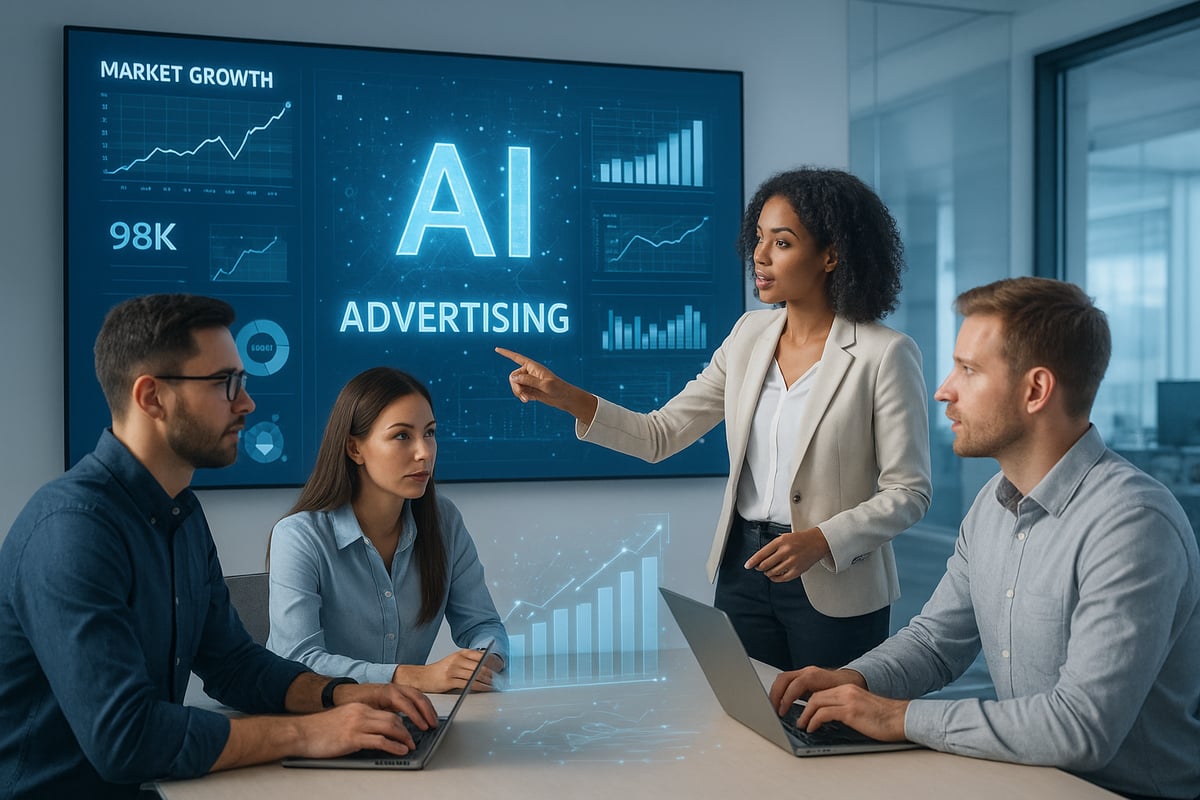
The ai advertising market is scaling at an extraordinary pace. Industry forecasts predict the global AI market will exceed $184 billion in 2025 and may reach $826 billion by 2030. Massive investment is flowing into AI startups and marketing technology platforms, driving innovation across campaign management, creative development, and analytics. According to the AI in Marketing Statistics 2025: The Complete Performance Report, adoption rates are surging as brands seek smarter, data-driven solutions. From small businesses to global enterprises, AI tools are now a staple for those pursuing competitive advantage.
Key Shifts in Consumer Behavior and Expectations
Consumers now expect more from brands, and ai advertising is rising to meet their demands. Hyper-personalized experiences have become the norm, with users seeking ads that are relevant, timely, and interactive. Shoppers want instant engagement and seamless journeys across channels. At the same time, there is heightened awareness of data privacy. People are more selective about sharing information, and they expect transparency in how AI is used to target and engage them.
Technological Advancements Fueling AI Advertising
Recent breakthroughs in machine learning, deep learning, and natural language processing are accelerating the evolution of ai advertising. Generative AI is transforming content creation, making it possible to produce ad copy, visuals, and video at scale. Integration with AR, VR, IoT, and voice assistants enables brands to deliver richer, more immersive ad experiences. These advancements empower marketers to reach audiences in innovative ways and optimize campaigns in real time.
Competitive Advantages for Early Adopters
Brands that have embraced ai advertising are already seeing major returns. Meta, Nike, and Starbucks are leveraging AI to improve targeting and creative, resulting in higher ROI. Notable case studies include ClickUp, which achieved 85 percent traffic growth using AI-powered SEO, and JPMorgan Chase, which saw a 450 percent increase in click-through rates with AI-generated ad copy. Early adopters set themselves apart by responding quickly to trends and innovating ahead of competitors.
Challenges and Considerations
Despite the promise of ai advertising, challenges persist. Data quality and integration remain hurdles for many organizations. Balancing automation with authentic brand voice is critical, especially as reliance on AI grows. Regulatory and ethical considerations are also top of mind, with evolving laws around privacy and algorithmic fairness. Marketers must navigate these complexities to harness AI’s full potential while maintaining trust and compliance.
7 Cutting-Edge AI Advertising Trends to Watch in 2026
Artificial intelligence is not just a buzzword in digital marketing anymore. As we move toward 2026, ai advertising is leading a wave of transformation, unlocking new strategies and creative possibilities. Businesses that track and adopt these trends will not only keep pace with the competition but also set new industry benchmarks.
Below, we delve into the seven most influential ai advertising trends shaping the future of digital marketing. Each trend offers actionable insights and real-world examples to help you future-proof your advertising strategy.
1. AI-Driven Hyper-Personalization at Scale
Hyper-personalization is rapidly becoming the standard in ai advertising. AI systems now analyze vast volumes of behavioral, demographic, and contextual data to deliver individualized ad experiences in real-time.
For example, the Calm App used Amazon Personalize to increase daily app usage by 3.4%. This was achieved by serving relevant content based on user preferences and habits, a hallmark of advanced ai advertising.
Dynamic creative optimization allows brands to tailor ad content, timing, and placement for each user. AI-powered algorithms predict customer intent, enabling proactive targeting with offers or messages before a need is explicitly expressed.
Benefits include:
- Higher engagement rates and customer satisfaction
- Improved conversion rates
- Deeper customer relationships
However, ai advertising faces challenges with data privacy, user consent, and maintaining consistent brand messaging across hyper-personalized touchpoints. As privacy regulations evolve, brands must balance personalization with ethical data practices.
Looking ahead, hyper-personalization will become the baseline for effective ai advertising, raising the bar for customer expectations and competitive differentiation.
2. Generative AI for Creative Production and Content Automation
Generative AI is redefining how ad creatives are produced. Tools like DALL-E, ChatGPT, and Meta’s AI Sandbox can generate images, copy, and even video content on demand, making ai advertising more agile and diverse.
A standout example is Coca-Cola’s “Create Real Magic” contest, which invited users to produce ads with generative AI tools. This campaign demonstrated how ai advertising can harness community creativity while scaling content production.
Automated content generation delivers several advantages:
- Faster campaign launches
- Reduced creative costs
- Greater variety and testing opportunities
Yet, there are risks. Over-reliance on automation may dilute brand voice, and purely machine-generated content can sometimes lack emotional resonance. The best results in ai advertising come from blending human creativity with AI output.
Research on LLM-Generated Ads: From Personalization Parity to Persuasion Superiority shows that large language models can produce persuasive, highly personalized ads, but human oversight remains crucial for quality and brand alignment.
In the future, creative teams will evolve into AI-augmented collaborators, guiding and refining machine-generated ideas to maximize impact.
3. Predictive Analytics and AI-Powered Audience Targeting
Predictive analytics is a cornerstone of ai advertising, enabling marketers to forecast campaign performance and target audiences with precision. AI models process both historical and real-time data to identify high-value prospects.
Nike’s use of predictive analytics in its Nike Fit app is a prime example. By analyzing user data, the app recommends products that fit individual preferences, driving higher conversion rates and customer loyalty.
Key applications in ai advertising include:
- Audience segmentation and lookalike modeling
- Budget optimization based on predicted ROI
- Integration with CRM systems for full-funnel targeting
The benefits are clear: smarter ad spend, improved campaign efficiency, and better alignment with customer journeys. However, ai advertising must guard against data bias and misinterpretation of signals, which can lead to missed opportunities or wasted budget.
Emerging platforms offer increasingly advanced predictive marketing tools, allowing brands to refine their strategies continuously based on real-world outcomes.
4. Conversational AI and Voice-Activated Advertising
Conversational AI is transforming customer interactions within ai advertising. Chatbots, voice assistants, and interactive ads create two-way conversations that engage users more deeply than traditional formats.
Starbucks’ Deep Brew platform exemplifies this trend. It delivers personalized recommendations in-app and in-store, powered by conversational AI that understands preferences and context.
Innovative ad formats include:
- Voice-activated ads through smart speakers and devices
- Chatbot-based lead qualification and support
- Two-way messaging for product discovery
Ai advertising benefits from higher engagement and immediate feedback, creating seamless journeys from awareness to conversion. These technologies are also effective for customer support and product education.
Challenges remain, such as ensuring natural language flow and addressing privacy concerns. Looking forward, expect multimodal conversational AI and deeper integration with AR/VR environments to further elevate the ai advertising experience.
5. Autonomous Media Buying and AI-Optimized Ad Spend
Autonomous media buying uses ai advertising algorithms to automate bidding, budget allocation, and channel selection in real time. Solutions like Meta’s Advantage Suite are leading the charge, optimizing mobile ad campaigns for maximum efficiency.
AI-driven platforms conduct automated A/B testing, adjusting campaigns on the fly based on live performance data. This leads to:
- Increased operational efficiency
- Lower acquisition costs
- Enhanced ad relevance
Transparency and control are important, as over-automation in ai advertising can introduce risks like algorithmic bias or reduced human oversight. Brands should maintain a balance between automation and manual review to safeguard strategy and brand integrity.
The future points to self-learning media buying platforms, offering cross-channel optimization and continuous improvement across digital ecosystems.
6. Ethical AI and Responsible Advertising Practices
As ai advertising becomes more influential, ethical considerations are coming to the forefront. Transparency, fairness, and regulatory compliance are now essential components of any AI-driven campaign.
JPMorgan Chase offers a case study in responsible ai advertising, using AI-generated copy while ensuring compliance and brand safety. Marketers must also navigate regulations such as GDPR, CCPA, and emerging AI-specific frameworks.
Key actions include:
- Addressing algorithmic bias and discrimination
- Building consumer trust through explainable AI
- Implementing opt-in and consent mechanisms
Industry standards are evolving to support ethical ai advertising. Brands must prepare for audits and regulatory scrutiny by documenting processes and maintaining clear data policies.
Prioritizing ethics not only minimizes risk but also strengthens brand reputation in an increasingly AI-driven world.
7. Cross-Channel Orchestration and Unified Customer Journeys
Cross-channel orchestration is the new frontier for ai advertising. AI systems integrate data and messaging across web, social, email, voice, and even offline channels, ensuring consistency at every touchpoint.
Farfetch illustrates this trend by using AI to personalize email marketing, resulting in a 7% boost in open rates. Real-time journey mapping and trigger-based messaging allow brands to respond instantly to customer actions.
Advantages of unified ai advertising strategies:
- Seamless customer experiences across platforms
- Improved multi-touch attribution
- Optimized cross-channel ad spend
Overcoming data silos is critical. AI-powered dashboards and analytics provide a unified view, enabling marketers to measure and refine their efforts across the entire customer journey.
Looking ahead, omnichannel marketing powered by ai advertising will become the default, raising the bar for personalization and performance.
How to Prepare Your Brand for the AI Advertising Revolution
Adapting to the ai advertising revolution requires a proactive, structured approach. The future belongs to brands that learn, adapt, and lead the charge. Are you ready to transform your strategy and outpace your competition?
Assessing Readiness and Setting Strategic Priorities
Begin your ai advertising journey with a thorough audit of your technology, data, and talent. Evaluate your team's current AI literacy and your existing martech stack.
Prioritize projects that align with your business goals and customer needs. Not sure where to start? Review industry benchmarks, such as those in the AI in Marketing Market Size 2025: Complete Report, to gauge market adoption and set realistic targets.
Focus on both quick wins and long-term transformation. This approach ensures your brand remains agile as the ai advertising landscape evolves.
Building the Right AI Tech Stack
Selecting the right platforms is crucial for effective ai advertising. Evaluate solutions for campaign management, creative production, and analytics. Prioritize interoperability, ensuring new tools integrate seamlessly with your existing systems.
Scalability and security should be at the forefront of your selection criteria. Explore resources like AI tools for financial advisors to find proven platforms that drive results and streamline workflows.
A robust tech stack empowers your team to innovate and adapt as ai advertising advances.
Investing in Skills and Change Management
Upskilling your workforce is essential for successful ai advertising adoption. Provide ongoing training in AI literacy and data-driven marketing.
Encourage collaboration between human creatives and AI systems. This fosters innovation while preserving brand identity.
Implement change management strategies that address resistance, communicate benefits, and support team adaptation. A people-first approach maximizes the impact of ai advertising initiatives.
Prioritizing Ethics, Compliance, and Trust
Ethical practices underpin sustainable ai advertising. Develop clear policies for data privacy, algorithmic transparency, and user consent.
Stay informed about regulatory changes and industry standards. Communicate your AI use transparently to customers, building trust and loyalty.
Prioritizing ethics in ai advertising not only safeguards your brand but also enhances your reputation in a data-driven world.
Measuring Success and Iterating
Set clear KPIs for your ai advertising campaigns, such as engagement, conversions, and ROI. Use real-time analytics to monitor performance and identify areas for improvement.
Adopt a culture of experimentation. Test, learn, and iterate to stay ahead of changing trends.
Continuous measurement and agile adaptation ensure your ai advertising strategies deliver sustained value and growth.
Future Outlook: What’s Next for AI Advertising Beyond 2026?
As we look beyond 2026, the future of ai advertising promises profound change. Marketers and brands must be ready to navigate a landscape shaped by emerging technology, evolving consumer demands, and new opportunities. Let us explore what lies ahead for ai advertising and how you can stay ahead of the curve.
Anticipated Breakthroughs and Disruptions
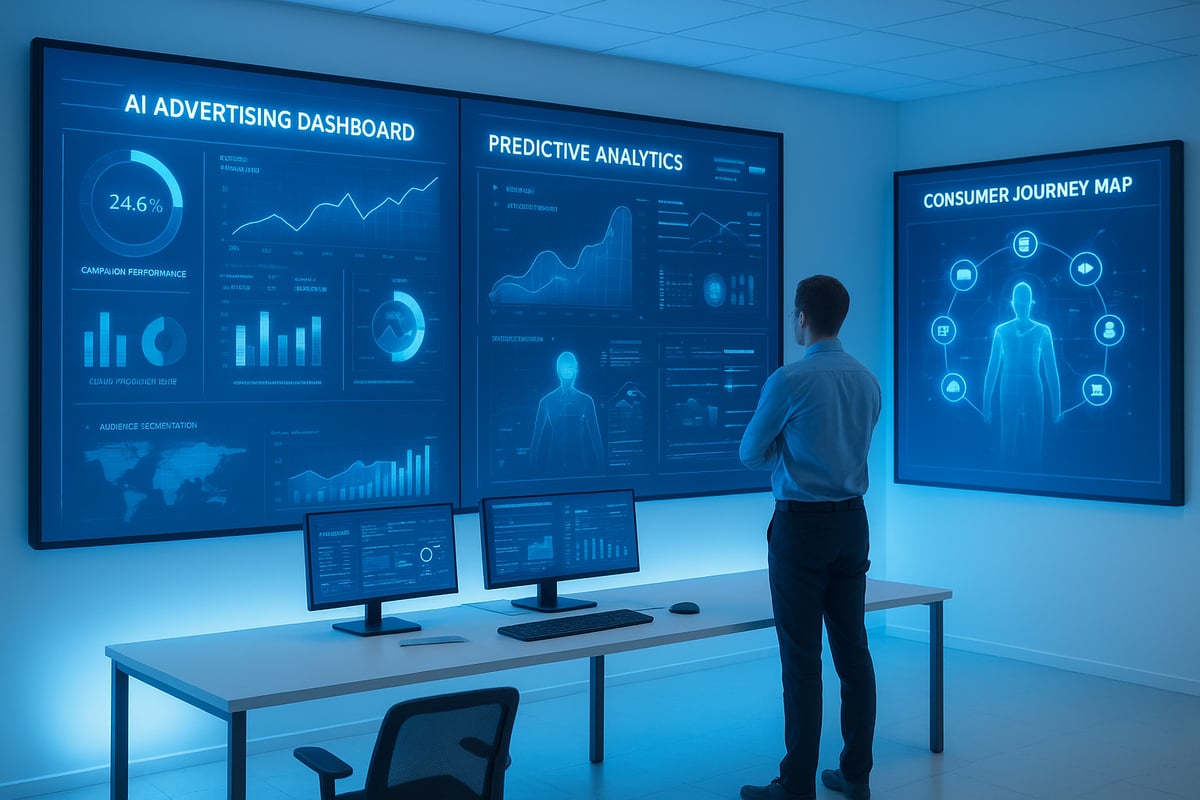
Next-generation ai advertising will be defined by emotional intelligence, multimodal learning, and creative co-pilots that blend human insight with machine precision. AI will not only analyze data but also interpret emotions, creating truly personalized ad experiences. Integration with AR, VR, IoT, and Web3 will unlock immersive and interactive ad formats.
Decentralized and privacy-first models will gain traction as consumers demand more control over their data. According to AI’s impact continues to rise, industry growth is accelerating, signaling even greater disruption ahead. Brands that embrace these breakthroughs will set new standards in ai advertising.
Evolving Consumer Expectations and Industry Standards
Consumers will expect more meaningful, context-aware ad experiences that respect their privacy and values. As awareness of AI’s role in advertising grows, demand for ethical, transparent, and sustainable practices will intensify. Brands will need to prioritize authenticity and purpose in every campaign.
Industry standards will evolve to address algorithmic bias, data protection, and explainability. Successful ai advertising will depend on building trust, offering genuine value, and engaging audiences with relevant content at the right moment. Meeting these expectations will be crucial for long-term success.
Competitive Landscape and Opportunities for Innovators
The competitive landscape in ai advertising will reward early adopters and innovators. Brands that leverage new technologies and creative strategies will enjoy lasting advantages. Opportunities will arise for those who forge partnerships, experiment with new business models, and continuously adapt to change.
Consider this table summarizing key opportunities for forward-thinking brands:
| Opportunity | Benefit |
|---|---|
| Early AI Adoption | Sustainable competitive edge |
| Cross-industry Partnerships | Access to new audiences |
| Continuous Learning | Faster innovation cycles |
Staying agile and open to experimentation will separate leaders from followers in ai advertising.
Action Steps for Marketers and Brands
To capitalize on the future of ai advertising, marketers must stay informed about the latest advancements and best practices. Launching pilot projects and scaling successful initiatives will help you adapt quickly. Building resilient, future-ready strategies ensures your brand remains relevant.
Explore practical tools and resources, such as those featured in Digital tools for financial advisors, to enhance your advertising efforts. Embrace a culture of learning, transparency, and ethical responsibility. By doing so, your brand can thrive in the dynamic world of ai advertising beyond 2026.
As you explore these seven cutting edge AI advertising trends, it becomes clear just how rapidly the landscape is evolving for financial advisors. Staying ahead means not only understanding where AI is headed but also knowing how to apply these innovations to boost your own results. If you want to see how these strategies can work for your unique business goals—and get hands on with the latest tools—why not take the next step?
Schedule a Free Demo
and let us show you how AI driven ad solutions can elevate your advertising strategy for 2026 and beyond.