Paid social is evolving rapidly, and by 2026, the right strategy will decide whether your brand stands out or fades away. Marketers, business owners, and agencies face new challenges as competition intensifies and platforms change.
This guide delivers a proven paid social strategy designed for measurable growth in 2026. You will discover how to set clear goals, select the best platforms, create engaging ads, target high-intent audiences, optimize with automation, and track results.
Gain the insights needed to adapt, maximize ROI, and drive real impact as paid social transforms in the years ahead.
The State of Paid Social in 2026: Trends and Challenges
Paid social strategy is undergoing rapid transformation as we approach 2026. Marketers face a dynamic environment where both opportunities and obstacles are growing. Understanding the emerging trends and challenges is essential for building a paid social strategy that delivers real growth.

The Evolving Paid Social Landscape
The paid social landscape in 2026 is marked by significant growth and complexity. Global social media ad spend is projected to reach $275.98 billion by the end of 2025, with steady annual growth through 2030. This surge is driven by increased competition on platforms like Meta, LinkedIn, TikTok, X, and a wave of emerging channels.
Marketers must navigate new privacy regulations, such as iOS updates and cookie deprecation, which limit tracking and attribution capabilities. At the same time, AI-driven targeting and creative optimization are reshaping how campaigns are built and refined. According to global social media ad spend projections, investment in paid social strategy continues to climb as brands seek measurable ROI.
To stay ahead, businesses need to adapt quickly, leveraging automation and smarter data practices. The stage is set for innovation, but the competition for audience attention is fiercer than ever.
Key Challenges for Marketers
Despite the promise of paid social strategy, marketers face a series of complex challenges. Attribution is becoming more difficult due to evolving privacy standards and increasingly multi-touch customer journeys. This makes it harder to connect ad spend directly to conversions and sales.
Ad fatigue is another pressing concern. As more brands compete for the same audiences, creative saturation leads to declining engagement and higher costs. Budget efficiency becomes critical in this crowded market, requiring marketers to be more strategic with spend allocation.
Consumer expectations are also shifting. Audiences now demand greater personalization and authenticity in paid social strategy. Meeting these expectations while maintaining compliance and data security is a balancing act. Marketers must continuously test, optimize, and refine their approach to achieve sustainable results.
Opportunities for Impactful Growth
While the challenges are real, 2026 presents exciting opportunities for those with a forward-thinking paid social strategy. Leveraging server-side tracking, such as Meta’s Conversions API, enables more accurate attribution and better optimization. Audience layering and funnel segmentation allow for tailored messaging at each stage of the customer journey.
Integrating automation and AI helps marketers run smarter bidding and creative testing, increasing efficiency and scale. Brands that embrace these tools are seeing measurable improvements in ROI. For example, companies using layered targeting and server-side tracking report significant gains in campaign performance and optimization.
By focusing on data-driven tactics and embracing technological advancements, marketers can position their paid social strategy for sustained, impactful growth in a rapidly changing environment.
Step 1: Set Clear Objectives and Map the Customer Journey
Defining your paid social strategy starts with clarity. Without clear objectives and a mapped customer journey, even the most creative campaigns risk missing the mark. Every marketer needs a structured approach to ensure that every dollar spent delivers measurable business growth.
Aligning Paid Social with Business Goals
Every paid social strategy should begin by connecting campaign objectives to broader business outcomes. Start by setting measurable goals such as brand awareness, lead generation, sales, or customer retention.
Link social KPIs like impressions, click-through rate, cost per lead, and return on ad spend directly to your company’s growth targets. For example, a SaaS firm may align its paid social strategy with increasing product demo signups to drive pipeline growth.
This alignment ensures that your campaigns are not just generating activity, but also contributing to tangible business results.
Mapping the Modern Customer Journey
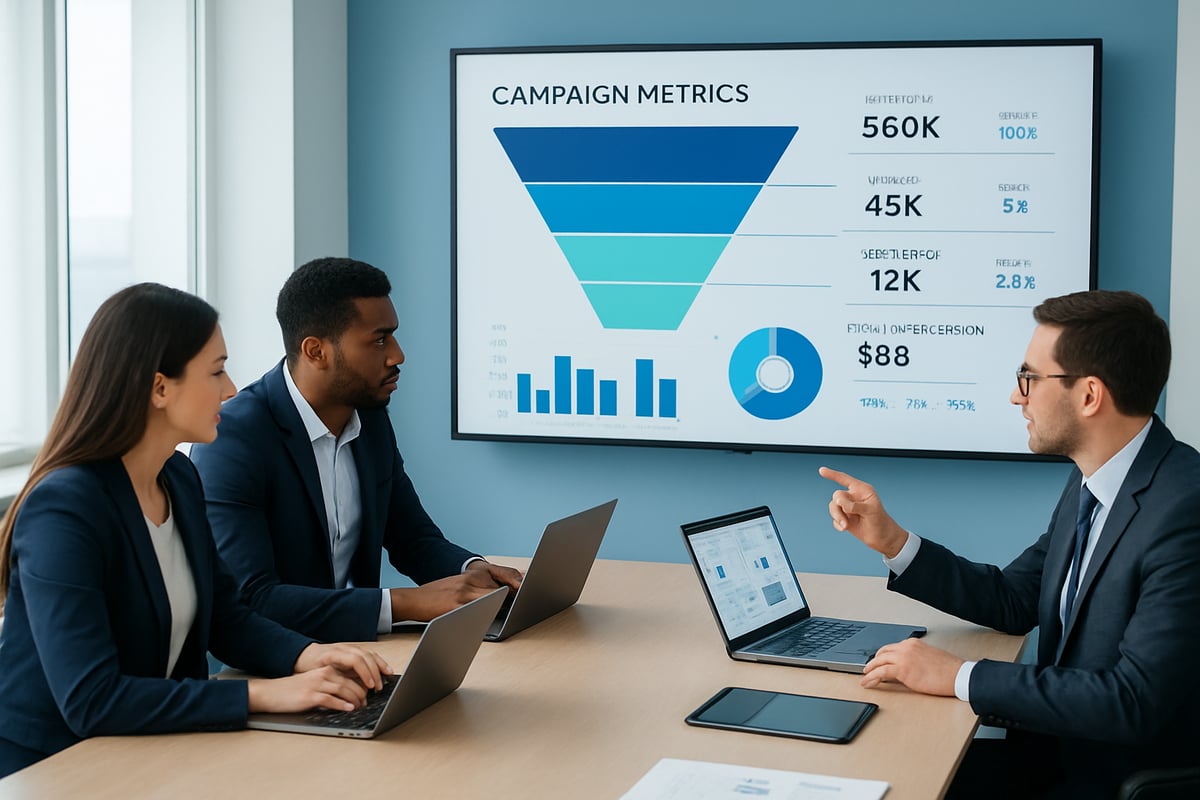
Understanding the customer journey is critical for an effective paid social strategy. Today’s path is rarely linear, moving from awareness to consideration, conversion, and finally loyalty.
Campaign sequencing and multi-touch attribution play vital roles in supporting this journey. Research shows that multi-stage touchpoints can increase trust and boost conversion rates significantly.
Use funnel mapping to visualize each stage a prospect travels, then design campaigns that guide them forward. This structured approach builds trust and keeps your brand top-of-mind at every step.
| Funnel Stage | Objective | Example Content |
|---|---|---|
| Awareness | Brand introduction | Storytelling videos |
| Consideration | Education | Case studies, demos |
| Conversion | Action | Direct CTAs, offers |
| Loyalty | Retention | Follow-up sequences |
Tailoring Strategy by Funnel Stage
A successful paid social strategy tailors creative and messaging to each funnel stage. For awareness, use storytelling and the pain/claim/gain framework to connect emotionally—video ads and lead magnets work well here.
Move prospects to consideration using testimonials, product demos, and comparison guides. For conversion, focus on direct calls to action and risk-reducing offers like free trials or guarantees.
Monitor video view metrics to identify engaged users and move them through the funnel. This approach ensures each audience segment receives messaging relevant to their intent and readiness.
Setting Up Measurement and Tracking
Accurate measurement is the backbone of any paid social strategy. Implement server-side tracking, such as Meta’s Conversions API, to overcome attribution challenges and privacy limitations. Integrate your CRM and analytics tools for closed-loop reporting, ensuring every lead and sale is tracked from ad click to final outcome.
For actionable insights on optimizing campaigns for conversion and growth, explore this Lead generation tools overview.
Companies leveraging CAPI and CRM integrations report more reliable performance data and improved campaign optimization. This data-driven approach empowers you to scale what works and quickly adapt to shifting market conditions.
Step 2: Choose the Right Platforms and Ad Formats for 2026
Selecting the right platforms and ad formats is foundational to building a paid social strategy that drives growth in 2026. As audiences fragment and platform features evolve, making informed choices can elevate your campaigns above the competition.

Platform Selection Based on Audience and Goals
To maximize your paid social strategy, begin by mapping business objectives to platform strengths. Meta (Facebook and Instagram) remains the leader in reach, offering advanced targeting for both B2C and broad B2B campaigns. LinkedIn excels for B2B marketers seeking professional targeting and account-based marketing opportunities.
TikTok is gaining rapid traction among younger demographics, making it ideal for brands prioritizing creative storytelling and viral reach. X (formerly Twitter) is best for real-time engagement and connecting with niche communities. Emerging platforms like BeReal and Threads may be suitable for brands aiming to experiment with new audience segments.
Below is a comparison of major platforms for paid social strategy in 2026:
| Platform | Audience Focus | Strengths | Best For |
|---|---|---|---|
| Meta | B2C, broad B2B | Reach, targeting, creative formats | Awareness, retargeting |
| B2B, professionals | Account targeting, lead gen | Consideration, conversion | |
| TikTok | Gen Z, Millennials | Creative, viral content | Top-of-funnel engagement |
| X | Niche, real-time | Conversations, trends | Community building |
| Emerging | Varies | Early adoption, authenticity | Brand experimentation |
Understanding where your audience spends time ensures your paid social strategy aligns with growth goals.
Matching Ad Formats to Funnel Stages
Choosing ad formats tailored to each stage of the funnel is critical for paid social strategy success. For awareness, leverage video, carousel, and story ads to capture attention and build retargeting pools. At the consideration stage, lead forms, case study ads, and product demos help nurture prospects. Conversion efforts benefit from dynamic product ads, retargeting, and strong offer-based creatives.
Short-form video and user-generated content have become dominant for top-of-funnel engagement in 2026. According to Short-form video and UGC dominance in 2026, brands embracing these formats see higher engagement and more robust retargeting audiences.
Key ad formats by funnel stage:
- Awareness: Video, carousel, story, interactive ads
- Consideration: Lead forms, testimonials, demos
- Conversion: Dynamic ads, retargeting, special offers
Matching formats to funnel stages ensures your paid social strategy meets users where they are in their journey.
Platform-Specific Best Practices
Each platform has unique best practices that can enhance your paid social strategy. On Meta, use the Conversions API for reliable tracking, combine broad targeting with lookalikes, and test multiple creatives to combat ad fatigue. LinkedIn campaigns perform best when leveraging job title and industry targeting, sponsored content, and personalized InMail.
On TikTok, prioritize native, entertaining content and use Spark Ads to amplify organic posts for authenticity. A recent case study shows a SaaS company tripled its lead volume by reallocating spend to LinkedIn and deploying case study ads tailored to its target audience.
Tips for platform success:
- Meta: Server-side tracking, creative testing, broad plus lookalike targeting
- LinkedIn: ABM, sponsored content, industry targeting
- TikTok: Native creative, Spark Ads, influencer partnerships
Adhering to platform-specific tactics strengthens your paid social strategy and boosts ROI.
Budget Allocation and Testing
Strategic budget allocation is essential for a scalable paid social strategy. Distribute spend by funnel stage and historical platform performance, ensuring sufficient investment in both proven channels and experimental formats. High-growth brands dedicate 20–30 percent of their paid social budget to testing new placements and creatives.
Implement a continual testing framework. Regularly trial new ad formats, creative variations, and audience segments. Use clear benchmarks to measure incremental gains and shift budget to high-performing areas.
A structured approach to budget and testing empowers your paid social strategy to adapt quickly to market shifts and audience behaviors.
Step 3: Build and Segment High-Intent Audiences
To unlock the full potential of your paid social strategy, audience segmentation is essential. Building high-intent audiences allows you to target users with the right message at the right time, boosting relevance and ROI. In 2026, mastering segmentation is the difference between wasted spend and scalable growth.
Audience Layering for Funnel Progression
A robust paid social strategy begins with audience layering. This method organizes users by their intent and engagement level, guiding them through the marketing funnel.
- Cold audiences: Target broad demographics, interests, or lookalikes.
- Warm audiences: Focus on website visitors, video viewers, or social engagers.
- Hot audiences: Retarget cart abandoners, high-value leads, or past customers.
Layered audiences drive higher relevance and lower cost per acquisition. By aligning your segmentation with each funnel stage, you ensure every ad dollar works harder for growth.
Leveraging First-Party and Zero-Party Data
First-party and zero-party data are the backbone of a future-proof paid social strategy. First-party data includes CRM contacts, website activity, or purchase history. Zero-party data is information users intentionally share, such as quiz results or preferences.
- Integrate CRM and email lists for custom audiences.
- Use lead magnets and quizzes to collect zero-party data.
- Segment based on declared interests or content downloads.
Financial services, for example, can segment leads by the type of resource downloaded, tailoring follow-up for greater impact. The more granular your data, the more effective your targeting becomes.
Retargeting Strategies by Funnel Stage
Effective paid social strategy employs retargeting tailored to each funnel stage. Move users from awareness to consideration, then to conversion, using specific engagement signals.
- Awareness to consideration: Retarget users who watched 50 percent or more of a video or engaged with your content.
- Consideration to conversion: Target landing page visitors, form starters, or resource downloaders.
- Conversion to loyalty: Re-engage past purchasers, subscribers, or repeat visitors.
Retargeting increases conversion rates by up to 70 percent. Sequencing your messaging keeps your brand top of mind and guides users smoothly toward action.
Audience Exclusions and Overlap Management
Managing exclusions and overlap ensures your paid social strategy is efficient and avoids wasted spend. Exclude converters from prospecting campaigns to prevent unnecessary impressions.
Key tactics include:
- Excluding recent converters from cold audience campaigns.
- Using frequency caps to prevent ad fatigue.
- Monitoring for audience overlap to avoid cannibalization.
Brands that refine exclusions and manage overlap typically see significant drops in CPA, making budgets stretch further.
Creative Personalization by Segment
Personalized creative is the linchpin of an advanced paid social strategy. Match messaging and offers to each segment's intent and funnel stage. Use dynamic creative and AI-driven optimization to deliver tailored experiences.
For example, AI-driven creative optimization in paid social enables brands to adapt messaging for each audience automatically, increasing engagement and ROI.
E-commerce brands see double the return on ad spend when creative is segmented by audience, proving the power of personalized content in driving results.
Step 4: Craft Compelling Creative and Messaging for 2026
Paid social strategy success in 2026 hinges on your ability to stand out in a saturated feed. Creative and messaging are more than visuals and copy—they are the engines that drive attention, engagement, and results. With evolving formats and smarter algorithms, your approach must blend art and science to capture your audience at every stage.
Storytelling and Value Communication
In 2026, storytelling is central to any paid social strategy. Audiences crave authenticity and want to see themselves reflected in your brand’s journey. Start with the pain/claim/gain framework—identify a real problem, show how your solution addresses it, and highlight the transformation.
Customer stories and testimonials build trust and credibility. Video ads that showcase real outcomes or user journeys are particularly effective. For example, a financial advisor might feature a short video illustrating how a client overcame uncertainty and achieved financial peace of mind with expert guidance.
Emotional resonance and clear value communication move prospects from passive scrolling to active engagement. Every element of your creative should reinforce your brand’s unique promise.
Creative Formats That Convert
A high-performing paid social strategy leverages a variety of creative formats tailored to each funnel stage. Short-form video continues to dominate, driving double the engagement of static images. User-generated content (UGC), carousels, and dynamic product ads also play a pivotal role.
Consider these top formats for 2026:
- Short-form video (15–30 seconds)
- Carousels for product or story sequencing
- Interactive polls and quizzes
- Augmented reality (AR) filters for immersive experiences
Interactive content not only entertains but also informs. For instance, a SaaS brand might use a quiz to guide users to the right solution, while a retailer could deploy AR to let shoppers visualize products in their space. Matching format to intent is essential for every paid social strategy.
Personalization and Relevance
Personalization is now expected. Audiences want content that speaks directly to their needs and context. Using audience signals, such as past interactions or funnel stage, you can tailor creative and messaging for maximum relevance in your paid social strategy.
AI and machine learning take this further, optimizing creative in real time. For example, Meta’s recent advancements in AI-driven dynamic creative optimization for Stories and Reels allow for automated, hyper-personalized ad experiences. Learn more about Meta’s AI-driven dynamic creative optimization.
Dynamic text and imagery adapt to each audience segment, such as showing industry-specific CTAs for B2B campaigns. This level of relevance lifts engagement and drives stronger results.
Testing and Iteration
Constant testing is the backbone of a data-driven paid social strategy. A/B test headlines, visuals, and calls to action to identify what resonates best. Run at least three creative variants per campaign to maximize learnings and boost click-through rates.
Leverage platform insights to spot top-performing assets quickly. Document findings and iterate regularly. Testing should not be a one-time activity but a continuous process that keeps your campaigns fresh and effective.
Consider this simple test structure:
- Variant A: Emotional headline, testimonial image
- Variant B: Direct offer, product demo video
- Variant C: Educational hook, infographic carousel
Iterative optimization leads to measurable improvements in performance.
Ad Fatigue Management
Ad fatigue is a real threat in a crowded social ecosystem. Even the strongest creative will lose its edge if seen too often. Monitoring frequency and audience feedback is crucial for a sustainable paid social strategy.
Refresh your creative assets regularly—rotate images, update copy, and introduce new formats to keep interest high. Segment your audiences so warm and hot leads see different messages than cold prospects.
Brands that proactively manage ad fatigue see reduced costs per impression and maintain higher engagement rates. Make creative rotation and monitoring a standard part of your workflow to ensure long-term campaign health.
Step 5: Optimize, Automate, and Measure for Scalable Growth
Building a robust paid social strategy does not end with launching campaigns. To achieve scalable growth in 2026, marketers must embrace optimization, automation, and continuous measurement. This final step ensures your paid social strategy adapts in real time, drives efficiency, and delivers measurable results.
Advanced Tracking and Attribution
Accurate tracking is the backbone of any paid social strategy. With privacy regulations and tracking limitations, server-side solutions like Meta Conversions API are essential for capturing post-click data.
Integrate Google Analytics 4 and your CRM to unify data across the funnel. This closed-loop attribution enables you to connect social KPIs directly to revenue outcomes. Brands using server-side tracking report more reliable performance data, allowing for faster optimization and less wasted ad spend.
A comparison of tracking tools:
| Tool | Key Benefit | Use Case |
|---|---|---|
| Meta Conversions API | Accurate attribution | Post-iOS privacy updates |
| Google Analytics 4 | Funnel reporting | Multi-channel journeys |
| CRM Integration | Lead quality tracking | Closed-loop sales attribution |
Automation and AI in Campaign Management
Automation is transforming how marketers manage paid social strategy. Platforms now offer automated rules for budget allocation, bid adjustments, and pausing underperformers. AI-driven tools test creative and expand audiences with minimal manual input.
By leveraging automation, teams reduce repetitive tasks and increase campaign efficiency. According to recent studies, automation can cut manual workload by 30 percent, freeing your team to focus on strategy and creative. For additional insights into automation, explore Digital tools for financial advisors and discover how technology streamlines campaign management.
Real-Time Optimization Techniques
Effective paid social strategy requires constant monitoring and adjustment. Key metrics to track include:
- CPA (cost per acquisition)
- ROAS (return on ad spend)
- Frequency
- Quality score
- Audience saturation
Use these insights to adjust bids, budgets, and creative assets frequently. Weekly optimization sprints allow agile teams to respond quickly to data. For example, a B2B company improved lead quality by 40 percent through regular, focused optimization.
Scaling Strategies for Growth
Scaling your paid social strategy involves more than increasing spend. Start by gradually raising budgets on high-performing campaigns to maintain efficiency. Expand to new platforms and audience segments as results stabilize.
Leverage lookalike audiences and predictive modeling to discover untapped, high-value users. An e-commerce brand, for instance, scaled ad spend by 50 percent while maintaining ROAS by branching into TikTok and applying these data-driven approaches.
Reporting and Continuous Improvement
Transparent reporting ensures every stakeholder understands the impact of your paid social strategy. Build real-time dashboards to track campaign performance, then set up regular reporting cycles for deeper analysis.
Post-campaign reviews reveal actionable insights for future creative, audience, and budget decisions. High-growth teams iterate weekly, using lessons learned to refine strategy and sustain momentum.
Mastering Retargeting and Nurture Flows
A successful paid social strategy moves prospects through the funnel with sequenced messaging and timely offers. Retarget based on meaningful engagement, such as 50 percent or higher video views or resource downloads.
Integrate email and SMS nurture sequences for post-engagement follow-up. Multi-channel nurture flows can increase conversion rates by up to 25 percent, making them essential for maximizing ROI in 2026.
Campaign Organization and Planning
Organized campaign management is crucial for scaling your paid social strategy. Use campaign planners and templates to maintain structure, streamline processes, and ensure consistency across teams.
Document best practices and key learnings to facilitate alignment and faster launches. Teams using specialized software, like those found in the Software for financial advisors guide, report reduced launch times and improved campaign coordination, which are critical in today’s fast-paced landscape.
Paid Social Strategy for Financial Advisors: Tailored Solutions for Regulated Industries
Financial advisors face a distinct set of obstacles when it comes to implementing an effective paid social strategy. The intersection of strict compliance regulations and the demand for high-quality leads creates a challenging environment. To succeed, advisors must tailor their paid social strategy to meet both industry standards and client expectations.
Unique Challenges in Financial Services Paid Social
The financial sector is one of the most regulated industries for digital marketing. Platforms like Meta and LinkedIn enforce strict ad policies, making it difficult to launch and scale a paid social strategy without careful planning. Advisors must ensure every campaign is compliant, from creative assets to targeting parameters.
Data privacy and security concerns also demand special attention. Audiences expect their information to be protected, and platforms require transparent data handling. As a result, a paid social strategy must combine compliance with precision targeting to ensure both safety and effectiveness.
Specialized Solutions for Financial Advisors
To address these challenges, advisors need a paid social strategy that prioritizes compliance, efficiency, and lead quality. Ready-to-run, compliant lead generation campaigns save time and reduce risk. Custom funnels and automated nurture sequences help qualify leads before they reach your inbox.
Integrating CRM and marketing automation ensures seamless follow-up and better data management. For a more comprehensive look at essential tools, explore marketing tools for financial advisors to further enhance your paid social strategy.
Bizware.AI: Automated Paid Social for Financial Advisors
Bizware.AI offers financial advisors a turnkey solution for implementing a robust paid social strategy. Their platform provides done-for-you campaigns, ad customization, and ongoing compliance monitoring. With SMS and email nurture, CRM integration, and transparent pricing, Bizware.AI simplifies every step of the process.
Advisors benefit from rapid deployment and a cost-effective alternative to traditional agencies. Real-time performance tracking allows you to optimize campaigns and scale as your client base grows. Case studies show improved lead flow and retention when automation is paired with industry-specific compliance.
Best Practices for Regulated Industries
Success in financial services marketing requires collaboration with partners who specialize in compliance and automation. Automating lead follow-up not only reduces manual workload but also ensures timely responses to prospects.
Continuous monitoring and optimization are essential. Regularly review campaign performance, update creative for compliance, and adjust targeting as regulations shift. By embedding these habits in your paid social strategy, you can achieve sustained growth while maintaining industry standards.
Data-Driven Results and Scalability
Integrated CRM systems provide clear visibility into lead quality, conversion rates, and ROI. Advisors using automation platforms report higher efficiency and reduced marketing complexity.
| Benefit | Impact |
|---|---|
| Lead Quality Tracking | Improved targeting and qualification |
| CRM Integration | Seamless follow-up and data management |
| Campaign Scalability | Grow lead volume as business needs rise |
As your paid social strategy matures, you can scale campaigns to match business growth. Benchmarks show advisors leveraging automation report stronger ROI, more qualified leads, and simpler campaign management.
As you look ahead to 2026, you know staying ahead in paid social means adapting quickly and making every campaign count—especially in regulated industries like financial services. If you’re ready to put the strategies from this guide into action and see tangible results, I invite you to experience how seamless and compliant paid social can be. Let’s explore how automation, tailored creative, and precise targeting can help you drive meaningful growth for your advisory business. Take the next step and Schedule a Free Demo to see what’s possible for your practice.