Imagine a world where every marketing message speaks directly to you, campaigns adapt instantly, and your preferences are anticipated before you even act. This is the reality of ai in marketing in 2026. Artificial intelligence is not just a tool; it is transforming how businesses connect, engage, and grow.
With the potential to add trillions to the global economy, AI is powering smarter automation, deeper personalization, and predictive analytics that drive measurable results. Marketers now enjoy higher ROI, data-driven strategies, and a clear competitive edge.
In this guide, you will discover the latest trends, essential tools, practical steps, and ethical considerations to help your business harness the full potential of AI in marketing for lasting success.
The State of AI in Marketing in 2026
The landscape of ai in marketing has rapidly matured by 2026, reshaping how businesses connect with customers. AI tools are no longer a novelty but a necessity, driving smarter campaigns, deeper insights, and more meaningful engagement. This section explores the widespread adoption, real-world applications, and evolving roles powered by ai in marketing.
AI Adoption and Market Impact
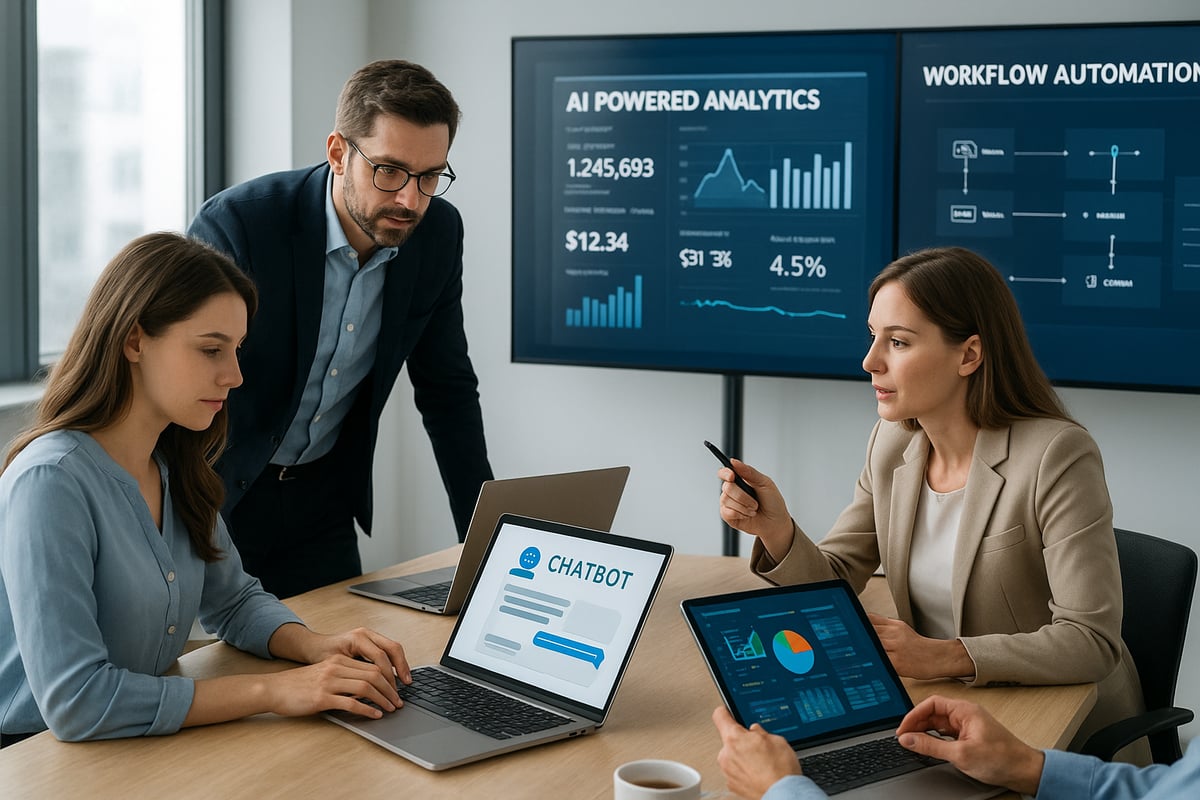
By 2026, ai in marketing has reached unprecedented heights, with over 72% of global businesses integrating AI-powered solutions into their daily operations. According to recent AI adoption in marketing statistics, the technology is fueling an economic impact projected at up to $4.4 trillion annually. Marketers across industries now rely on AI for campaign management, customer insights, and content creation, making ai in marketing an essential business driver.
Industry leaders like Netflix and Spotify harness ai in marketing to deliver hyper-personalized recommendations, while Amazon’s AI-driven product suggestions set the standard for tailored e-commerce experiences. These platforms demonstrate how ai in marketing transforms massive datasets into actionable strategies.
| Platform | Application | Impact |
|---|---|---|
| Netflix | Personalized viewing suggestions | Increased user retention |
| Spotify | Curated playlists and discovery | Enhanced engagement |
| Amazon | Product recommendations | Higher conversion rates |
| HubSpot | Automated campaign management | Streamlined workflows |
| Mailchimp | Data-driven email personalization | Improved open and click rates |
Top marketing platforms such as HubSpot, Mailchimp, Constant Contact, and ActiveCampaign have embedded AI features for automating repetitive tasks. These tools streamline copywriting, data analysis, and social media scheduling, freeing marketers to focus on creative and strategic priorities. Companies report not only improved efficiency but also better data-driven decision-making and faster revenue growth as a direct result of embracing ai in marketing.
However, challenges persist. Many organizations face hurdles in education, training, and strategy development. Talent acquisition remains a concern, as demand for professionals skilled in ai in marketing continues to grow. Businesses recognize that ongoing investment in upskilling and strategic planning is crucial to maximize AI’s potential and maintain a competitive edge.
How AI Is Transforming Marketing Roles
The integration of ai in marketing has fundamentally shifted the nature of marketing roles. Tasks that once required hours of manual effort—such as data mining, campaign optimization, and performance reporting—are now managed by AI, allowing marketers to focus on high-level strategy and innovation.
Demand for AI-literate marketers is surging. Those who understand how to leverage ai in marketing gain a significant advantage, as organizations seek talent capable of orchestrating complex, data-driven campaigns. For example, marketers increasingly use AI to sketch campaign ideas, enabling rapid feedback and iteration cycles with clients or stakeholders.
Entry-level positions are evolving as automation takes over routine tasks like email newsletter design and basic analytics. While this shift boosts productivity, it also raises concerns about nurturing future marketing talent and ensuring teams do not become overly reliant on automation. Industry leaders emphasize the importance of continuous skill development, encouraging marketers to adapt alongside AI’s rapid evolution.
Ultimately, the partnership between human creativity and ai in marketing is shaping a new era of collaboration. Marketers who embrace ongoing learning and AI adoption will be best positioned to thrive in the dynamic digital landscape of 2026.
Emerging AI Trends Shaping Marketing in 2026
The landscape of ai in marketing is rapidly evolving, introducing transformative trends that are redefining how brands engage, analyze, and respond to their audiences. As we move into 2026, these innovations are not only streamlining operations but also unlocking new levels of personalization and predictive capability. Let us explore the most significant trends shaping the future of marketing.

Advanced Data Analytics and Predictive Insights
One of the most significant advancements in ai in marketing is the ability to process and interpret vast amounts of structured and unstructured data. Today, AI systems analyze everything from images and videos to social media posts, extracting actionable insights that were previously out of reach.
Predictive analytics has become a core function, enabling marketers to anticipate trends, optimize campaigns in real time, and prioritize leads based on behavioral signals. For example, lead scoring models powered by AI help teams focus on prospects most likely to convert, improving efficiency and ROI.
Sentiment analysis tools monitor public opinion, allowing brands to quickly adjust their messaging in response to emerging trends. This data-driven approach empowers organizations to stay ahead of the curve, making ai in marketing an essential strategy for brands that want to compete at the highest level.
Hyper-Personalization at Scale
Hyper-personalization is no longer a distant goal but a practical reality, thanks to ai in marketing. AI enables brands to deliver truly individualized experiences through dynamic content, targeted ads, and personalized recommendations. For instance, streaming services like Netflix and e-commerce leaders such as Amazon use AI to analyze browsing and purchase histories, offering content and products tailored to each user.
AI-powered chatbots and virtual assistants provide real-time support and guidance, adapting their responses based on user interactions. Programmatic advertising platforms leverage AI to ensure that the right message reaches the right person at the optimal time.
Industries ranging from finance to healthcare are now benefiting from this level of personalization. For marketers seeking a systematic approach, resources like the AI Marketing Playbook offer valuable strategies to maximize the impact of ai in marketing initiatives.
Automation and Workflow Optimization
Automation is revolutionizing the way marketing teams operate, allowing them to shift focus from repetitive tasks to strategic initiatives. With ai in marketing, scheduling, content creation, and campaign management can be handled with minimal manual intervention.
Platforms such as Blaze and Adobe Sensei streamline social media planning, automate creative production, and ensure consistent messaging across channels. This not only reduces human error but also accelerates time-to-market and enhances campaign performance.
A key benefit of automation is its ability to provide marketers with more time to innovate and strategize. By integrating ai in marketing workflows, organizations are seeing measurable improvements in productivity, operational efficiency, and overall return on investment.
Challenges and Opportunities
Despite the substantial progress, ai in marketing presents both challenges and opportunities. The pace of AI advancement requires ongoing education and upskilling, as marketers must adapt to new tools and evolving best practices.
Opportunities include greater efficiency, enhanced customer relationships, and stronger brand loyalty. However, concerns remain about potential job displacement, data privacy, and regulatory compliance. Rapid evolution of AI technologies can also create gaps in strategy and talent acquisition.
To address these challenges, organizations should focus on developing ethical frameworks and investing in continuous learning. By doing so, they can harness the full potential of ai in marketing while mitigating risks and building long-term competitive advantage.
Essential AI Marketing Tools and Platforms for 2026
The landscape of ai in marketing is rapidly evolving, and 2026 brings a new generation of tools designed to deliver smarter, more efficient campaigns. Businesses of all sizes rely on these platforms to automate tasks, personalize experiences, and drive measurable results. Selecting the right tools is crucial for staying competitive and achieving consistent growth.
Leading AI Marketing Solutions
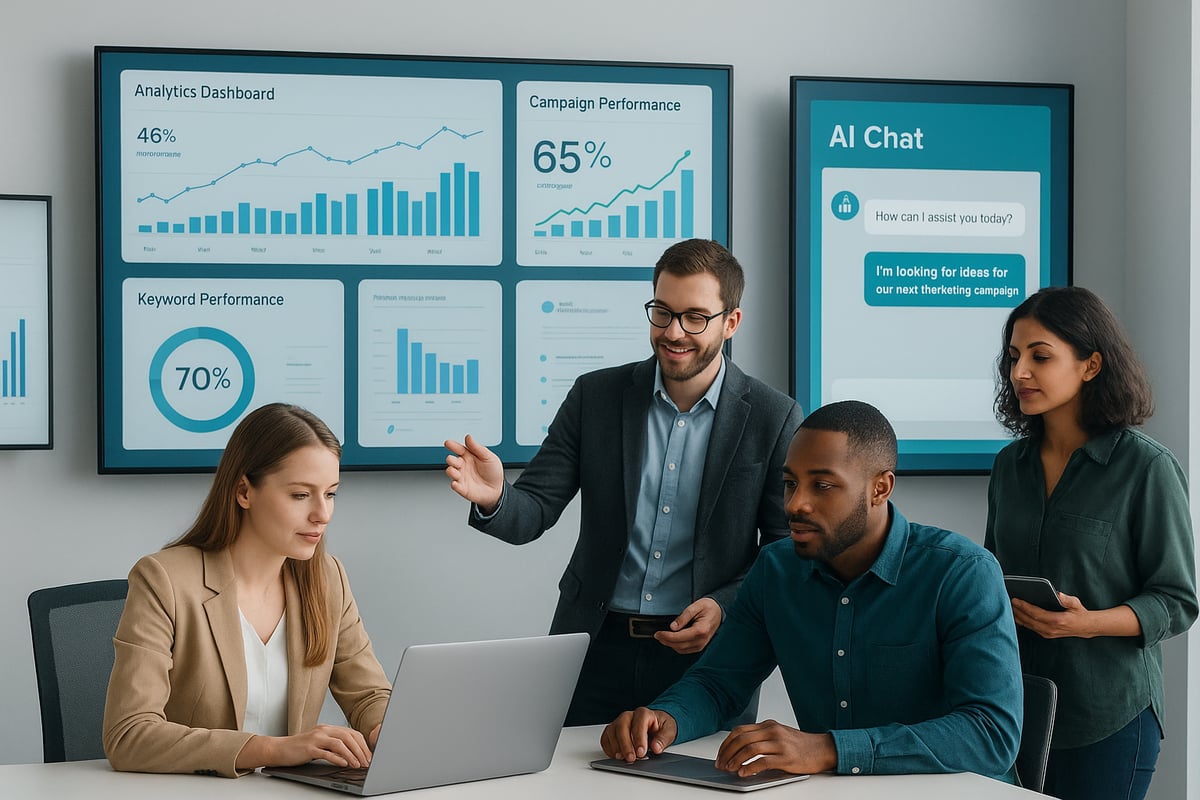
The range of platforms supporting ai in marketing in 2026 is impressive. Industry leaders like Adobe Sensei, Google Marketing Platform, Jasper AI, HubSpot, Optmyzr, and Synthesia are at the forefront. These tools provide everything from automated content generation to sophisticated campaign management and video personalization.
For conversational marketing, ChatGPT powers advanced chatbots, streamlining lead generation and customer engagement. Marketers also leverage Microsoft Copilot to draft plans and content, while Gemini for Google Workspace automates messaging and document tasks. Video content is revolutionized by Synthesia, which creates tailored videos for marketing and training.
A quick comparison of leading platforms:
| Platform | Core Strengths | Use Case Examples |
|---|---|---|
| Adobe Sensei | Creative automation, analytics | Image editing, campaign insights |
| Jasper AI | Content generation, data analysis | Blog writing, email campaigns |
| HubSpot | CRM integration, automation | Lead nurturing, workflow management |
| Synthesia | Video personalization | Product demos, training modules |
| ChatGPT | Conversational AI, chatbots | AI Chat Widget Features for websites, support, lead capture |
These platforms illustrate how ai in marketing is transforming every phase of the customer journey.
Specialized Tools for Financial Advisors and Small Businesses
Not all businesses require enterprise-level solutions. In 2026, specialized ai in marketing tools cater to niche industries such as finance, healthcare, and legal services. These platforms prioritize compliance and data security, which are critical for regulated sectors.
Financial advisors, for example, benefit from AI-driven platforms that automate compliant lead generation, manage personalized outreach, and monitor campaign effectiveness. Small businesses gain access to affordable solutions that integrate seamlessly with existing CRMs and marketing stacks. These tools ensure that even companies with limited resources can harness the power of ai in marketing.
Criteria for Selecting AI Marketing Tools
Choosing the best ai in marketing platform starts with clear criteria. Integration capabilities are essential—look for tools that connect with your CRM, analytics, and sales software. Customization options allow you to maintain your brand voice and target unique audience segments.
Scalability is another critical factor, as your marketing needs will evolve alongside your business. User-friendly interfaces and robust support are vital, especially for teams without deep technical expertise. Before investing, evaluate how well the tool aligns with your goals, workflows, and compliance requirements. The right choice will help you maximize the impact of ai in marketing across all campaigns.
Measuring Tool Effectiveness
To ensure success, it is crucial to measure how ai in marketing tools perform over time. Focus on key performance indicators like campaign ROI, customer engagement, lead conversion rates, and content effectiveness. Many platforms offer real-time analytics dashboards that visualize these metrics, enabling rapid optimization.
Case studies from 2026 show that businesses using AI platforms report significant improvements in lead generation and customer retention. Regularly reviewing data and adjusting strategies ensures that your investment in ai in marketing delivers ongoing value. Track results, refine your approach, and scale winning tactics for sustained growth.
Personalization, Customer Experience, and Predictive Analytics
Personalization has become the cornerstone of customer-centric strategies, powered by rapid advancements in ai in marketing. Brands now have the ability to anticipate needs, tailor messaging, and guide users through seamless journeys that feel intuitive and relevant. This section explores how ai in marketing is redefining every stage of the customer experience.

Data-Driven Customer Journeys
Ai in marketing empowers businesses to analyze vast datasets and map customer journeys with unprecedented precision. By processing information from website interactions, purchase history, and social media engagement, AI models can predict what customers need before they even ask.
Predictive analytics tools forecast user behavior, enabling marketers to trigger proactive campaigns or offers. For example, retailers use ai in marketing to anticipate when a customer is likely to make a repeat purchase and send a timely discount code.
Key benefits of AI-driven customer journey mapping:
| Benefit | Description |
|---|---|
| Proactive Engagement | Anticipate needs, deliver timely offers |
| Optimized Pathways | Reduce friction, streamline decision points |
| Increased Satisfaction | Personalize experiences at every touchpoint |
By leveraging ai in marketing, brands can design journeys that feel both personal and efficient.
Hyper-Targeted Campaigns
Personalization at scale is possible thanks to the segmentation capabilities of ai in marketing. AI analyzes customer interests, behaviors, and demographics to create micro-segments, allowing marketers to deliver hyper-targeted messages.
Programmatic advertising platforms use ai in marketing to automate ad placement, ensuring the right message reaches the right audience in real time. Industries such as healthcare, education, and entertainment have seen significant improvements in campaign results due to this precise targeting.
AI-powered systems can also adapt messaging based on real-time feedback, ensuring that each customer interaction is relevant and engaging. This dynamic approach reduces wasted ad spend and builds stronger connections with target audiences.
Enhancing CRM and Customer Loyalty
Customer relationship management has been transformed by ai in marketing. AI automates routine CRM tasks like data entry, lead nurturing, and scheduling personalized follow-ups, freeing marketers to focus on strategic activities.
AI-powered chatbots now provide instant support, answering questions and guiding users to the right products or services. E-commerce brands, in particular, use ai in marketing to resolve inquiries quickly, driving higher satisfaction and repeat purchases.
Personalized loyalty programs are also enhanced by AI, as data-driven insights allow for tailored rewards and communications that resonate with individual preferences. The result is improved retention and stronger customer loyalty.
Sentiment Analysis and Brand Monitoring
Ai in marketing is essential for monitoring brand reputation and understanding public sentiment. AI tools scan social media, review sites, and customer feedback to detect trends, flag potential issues, and measure overall brand health.
Real-time alerts enable brands to respond quickly to emerging reputation risks. For example, if a negative review trend is detected, marketers can take immediate action to address concerns and protect brand image. AI-powered Review & Reputation Management Tools help automate this process, providing actionable insights and streamlining response workflows.
By using ai in marketing for sentiment analysis, businesses stay ahead of PR crises and maintain customer trust.
Predictive Analytics in Action
Predictive analytics is a game changer for ai in marketing, allowing brands to make smarter decisions with less guesswork. AI-driven lead scoring ranks prospects based on engagement signals, so sales teams can prioritize high-potential customers.
Marketers use real-time performance data to optimize campaigns on the fly, adjusting content and offers for maximum impact. In B2B settings, ai in marketing identifies valuable accounts and recommends personalized outreach strategies.
This continuous optimization results in better conversion rates, increased ROI, and more efficient use of marketing budgets. Predictive analytics ensures that every campaign is data-driven and outcome-focused.
Challenges in Personalization
Despite its promise, ai in marketing faces challenges around privacy, data accuracy, and customer perceptions. Marketers must balance the desire for hyper-personalization with respect for user privacy, complying with regulations like GDPR and CCPA.
Overly personal or intrusive interactions can alienate customers, so it is vital to use ai in marketing thoughtfully. Ensuring data quality is also crucial, as inaccurate information can lead to misguided personalization efforts.
Ongoing audits, transparent communication, and ethical guidelines help brands harness the full power of ai in marketing while maintaining consumer trust.
Best Practices and Step-by-Step Guide to Adopting AI in Marketing
Adopting ai in marketing can be transformative if approached strategically. Success depends on readiness, robust data practices, the right tools, and continuous learning. Here is a step-by-step guide to ensure your organization leverages ai in marketing effectively and responsibly.
Step 1: Assess Organizational Readiness
Begin by evaluating how prepared your organization is for ai in marketing integration. Review your current marketing workflows, data infrastructure, and the team's technical skillset. Identify any gaps in data quality or AI literacy across departments.
Set clear, measurable objectives for implementing ai in marketing. This ensures alignment between business goals and technology investments. Involve stakeholders from IT, sales, and compliance early in the process to foster buy-in and collaboration. A readiness assessment lays the groundwork for a smooth AI adoption journey.
Step 2: Build Robust Data Foundations
Strong data foundations are critical for ai in marketing success. Start by standardizing and cleaning your datasets to eliminate errors and inconsistencies. Integrate data sources such as CRM, analytics, and web platforms for a unified view.
Consider leveraging centralized inbox solutions like the All-in-One Inbox for Marketers to streamline communication and data flow. Investing in scalable, cloud-based infrastructure allows for real-time analytics and seamless AI processing. Reliable data ensures your AI models deliver accurate, actionable insights.
Step 3: Select and Train AI Solutions
Choose ai in marketing tools that fit your organization's size, objectives, and compliance requirements. Evaluate each solution's integration capabilities with your existing stack. Prioritize tools that offer customization for your brand voice and audience.
Train your AI models using high-quality, relevant company data to maximize their effectiveness. Collaborate with AI specialists or data scientists when needed. Regularly update your training datasets to keep your AI solutions current and responsive to market changes.
Step 4: Implement with Governance and Compliance
Implementing ai in marketing demands strong governance to protect customer privacy and ensure regulatory compliance. Establish clear data use policies and document your AI processes. Transparency fosters trust among customers and stakeholders.
Monitor your AI systems for potential bias or errors. Use tools that support compliance with industry standards and data protection laws. Centralized communication platforms can further enhance oversight and streamline compliance documentation.
Step 5: Upskill Teams and Foster AI Literacy
Upskilling your marketing team is vital for successful ai in marketing adoption. Provide ongoing training to build AI literacy and empower staff to work alongside new technologies. Encourage a culture of continuous learning to adapt to evolving tools and trends.
Research such as AI’s impact on marketing productivity highlights the importance of team collaboration and skill development in AI-enhanced environments. Regular workshops and cross-functional projects help bridge knowledge gaps and promote innovation.
Step 6: Monitor, Optimize, and Scale
Continuous monitoring and optimization are essential for maximizing the value of ai in marketing. Define key performance indicators (KPIs) to measure the impact on campaign ROI, lead generation, and customer engagement.
Use real-time analytics to identify opportunities for improvement and adjust strategies promptly. Once initial projects prove successful, scale your AI initiatives across more channels and campaigns. This approach ensures sustainable growth and lasting competitive advantage.
Common Pitfalls and How to Avoid Them
Avoid pitfalls that can derail your ai in marketing strategy. Over-reliance on automation without human oversight can lead to mistakes or misalignment with business goals. Always align AI projects with your overall marketing strategy and monitor for ethical, privacy, or compliance risks.
For example, poorly implemented AI chatbots or data management errors can damage brand reputation. Regular audits, transparent processes, and a balanced approach that combines AI with human creativity help prevent these issues and drive long-term success.
Ethical, Regulatory, and Future Considerations for AI in Marketing
As ai in marketing becomes increasingly embedded in business strategy, ethical, regulatory, and future considerations are more critical than ever. Marketers must balance innovation with responsibility, ensuring that technology adoption aligns with evolving standards and public expectations.
Data Privacy and Security
Data privacy is at the heart of ai in marketing. As AI systems process larger volumes of personal data, businesses face heightened scrutiny from regulators and customers. Compliance with global regulations, such as GDPR and CCPA, is not optional. Failing to meet these standards can result in hefty fines and reputational damage.
Marketers must prioritize robust security protocols. Strategies include data encryption, regular audits, and swift breach response plans. It is vital to train teams on privacy best practices and keep up with regulatory changes. By embedding privacy into all processes, brands can build trust while leveraging ai in marketing for customer engagement.
Ethical Use of AI
Ethical deployment of ai in marketing extends beyond compliance. Brands must avoid misuse, such as deepfakes, copyright infringement, and manipulative targeting. Transparency is essential. Customers should know when AI is influencing their experience and how their data is used.
Establishing clear ethical frameworks helps organizations navigate gray areas. Regular reviews and open communication foster trust. Marketers should consider the long-term impact of their strategies, ensuring ai in marketing enhances value without compromising integrity.
Managing Bias and Fairness
Bias in ai in marketing can lead to unfair treatment of certain groups. Algorithms trained on non-representative data may inadvertently exclude or misrepresent demographics. Regular audits and the use of diverse datasets are necessary to minimize these risks.
Best practices include:
- Regularly testing AI outputs for unintended bias
- Involving diverse stakeholders in data selection and model evaluation
- Documenting decision processes for accountability
By prioritizing fairness, brands ensure ai in marketing delivers equitable outcomes for all audiences.
The Human-AI Collaboration
Ai in marketing is a powerful enabler, not a replacement for human insight. While AI can automate repetitive tasks, marketers’ creativity and strategic thinking remain essential. The shift is towards orchestrating AI-powered campaigns, combining machine efficiency with human empathy.
Ongoing training is key. As entry-level tasks become automated, marketers must develop new skills in AI literacy and data analysis. This collaboration drives better outcomes and keeps teams adaptable in the rapidly changing landscape of ai in marketing.
Future Directions and Innovations
The future of ai in marketing is dynamic. Innovations like multimodal AI, real-time adaptive campaigns, and immersive experiences in AR or VR are on the horizon. Autonomous marketing agents may soon handle complex tasks, freeing humans for higher-level strategy.
To stay ahead, organizations must foster agility, experiment with emerging tools, and encourage lifelong learning. For a deeper look at growth projections and the expanding role of technology, explore the AI marketing tools market size report.
Industry-Specific Considerations
Certain sectors face unique regulatory and ethical demands. Finance and healthcare, for example, require AI solutions that meet strict compliance standards. Custom ai in marketing platforms are emerging to automate compliant lead generation and campaign management for financial advisors and other regulated industries.
Choosing the right tools and maintaining rigorous oversight is essential. Sector-specific training and governance frameworks help ensure that ai in marketing supports both business goals and legal requirements.
Statistics and Data Points
The adoption of ai in marketing continues to accelerate. According to recent statistics, a significant share of marketers worldwide are leveraging AI for data-driven strategies, automation, and campaign optimization. For updated figures on global AI usage in marketing, see the AI usage in data-driven marketing report.
Marketers cite challenges such as lack of strategy, skills gaps, and resource constraints. However, the opportunities are substantial, from efficiency gains to stronger customer loyalty. As technology evolves, staying informed and adaptable will be essential for success.
As we’ve explored, AI isn’t just shaping the future of marketing—it’s actively transforming how financial advisors like you connect with clients, optimize campaigns, and stay ahead in a rapidly changing landscape. If you’re curious about how these strategies and tools can directly impact your business and want to see AI-driven ad creation in action, I invite you to take the next step. Let’s turn these insights into real results for your practice—Schedule a Free Demo and discover how you can harness the power of AI for smarter, more effective marketing in 2026.